Having a graceful, bright and smooth coat is the dream of every husky parent. After all, as a "snow elf", beautiful hair is not only a sign of health, but also a sign of appearance. However, the reality is often that hair is as dry as grass, hair loss is comparable to snow, and the color is dull... So,"What should I eat for beautiful hair and bright hair?" It has become one of the most concerned topics for Kazakh families. Among the many pet hair beauty products,deep-sea fish oil andlecithin are undoubtedly star products with both reputation and sales. But are they really effective? What is the feedback on a dog breed like the husky, which has a double coat and a lot of exercise? Today, let's conduct an in-depth analysis and combine it with real feeding experience to see if these two things are "hair shine artifacts."
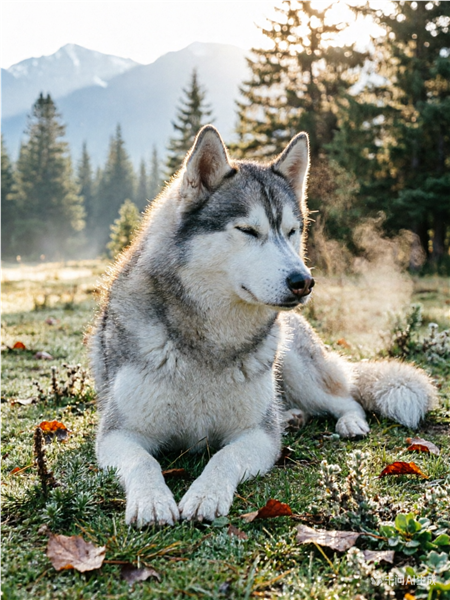
Chapter 1: Understanding the hair of husky-the foundation of hair beauty
Before talking about "what to eat", we must understand the characteristics of husky hair. Huskies have a typical double coat: the outer layer is thick, hard, upright needle hair, which serves as waterproof and dustproof; the inner layer is thick, soft fluff, used to keep warm in extreme cold weather. This structure means that their hair metabolism is strong, and the amount of hair loss is astonishing when the season changes. Healthy husky hair should be elastic, shiny and natural, rather than greasy or dry. The health of hair directly reflects the overall nutritional status of the dog. The lack of protein, fatty acids, vitamins and minerals will be first reflected in the hair. Therefore, hair beauty cannot be solved by a single nutrient. It needs to be based on abalanced diet, moderate grooming, and good health. Any nutritional supplement should be a "icing on the cake" rather than a "gift in need".
Chapter 2: Deep-sea fish oil-the "gloss code" from the ocean
1. Core principle of action
The core hair beauty component of deep-sea fish oil isOmega-3 unsaturated fatty acids, especially EPA (eicosapentaenoic acid) and DHA (docosahexaenoic acid). Omega-3 is an important part of the cell membrane. For skin and hair, healthy cell membranes retain skin moisture, reduce dryness and dander, and provide a good growth environment for hair follicles. At the same time, Omega-3 has a strong anti-inflammatory effect, which can effectively relieve skin inflammation caused by allergies, parasites or food intolerance, and reduce hair loss and rough hair caused by skin problems from the root cause. Simply put, fish oilmoisturizes the skin from the inside, strengthens hair follicles, and reduces inflammation to achieve hair beauty.
2. Real feedback from the Huskies
According to long-term feedback from a large number of husky parents, the effects of deep-sea fish oil are mainly reflected in the following aspects:
- Significant improvement in gloss:This is the most intuitive change. Usually, after 4-8 weeks of continuous feeding, the hair will show a healthy luster from the inside out. Especially in the sun, the hair will have an obvious "flash" effect and the hand feel will become smoother.
- Reduction of dandruff:For huskies that produce dandruff due to dry skin, fish oil has a good moisturizing effect and can effectively relieve the "snowflake" situation.
- Skin health improvement:For huskies with slight skin sensitivity and prone to redness, the anti-inflammatory effect of fish oil can help the skin condition become more stable, the itching feeling is reduced, and the dog's scratching frequency is reduced.
- The amount of hair loss is controlled:note that it is "control" rather than "radical cure". Fish oil can reduce non-seasonal and pathological hair removal by improving skin health and hair follicle nutrition, but it cannot stop the nature of seasonal hair removal in huskies. In the spring and autumn, the hair that should be shed will still fall off, but the overall quality of the hair may be better and the newly grown hair will be healthier.
"Pit" to pay attention to:Fish oil is easy to oxidize, and quality is crucial. Poor quality or oxidized fish oil is not only ineffective, but can also be harmful to health. In addition, excessive supplementation may cause diarrhea or vitamin A/D poisoning. Be sure to choose a product that is dedicated to pets, purified to remove heavy metals, and added with vitamin E (antioxidant).
Chapter 3: Lecithin-the "architect" of hair growth
1. Core principle of action
Lecithin is one of the main components of biological cell membranes. It is rich incholine, inositol, essential fatty acids, etc. In terms of hair beauty, its role is more like an "architect":
- Repair hair follicles:Provide nutrition to hair follicle cells and promote hair growth.
- Improve hair quality:Make the newly grown hair stronger, tough and not easy to break.
- Nourishing the skin:The essential fatty acids can also help maintain skin health.
- May relieve stress-induced hair loss:Some opinions believe that lecithin is beneficial to the nervous system and may indirectly relieve stress-induced hair loss.
Pet lecithin on the market is mainly extracted from soybeans or egg yolk. Egg yolk lecithin is more respected because of its higher absorption rate and nutritional value.
2. Real feedback from the Huskies
The feedback from lecithin is more "subtle" than fish oil:
- Hair becomes thicker and thicker:Many parents find that after long-term feeding of lecithin, the husky's bottom fleece seems to become richer, and the overall hair volume has a visual increase.
- Good quality newborn hair:shaving (it is not recommended to shave huskies unless necessary!) Or after changing the hair, the new hair feels thicker, more elastic, and may be brighter in color.
- It can assist in repairing "bald hair" areas:For thinning hair caused by friction (such as elbows) or local skin problems, supplementation with lecithin while cooperating with treatment may help hair regeneration.
- Slow effect: Thehair beautifying effect of lecithin usually takes longer (more than 2-3 months) to be significantly noticed, and it focuses on improving the hair growth cycle.
"Pit" that needs to be aware of: Be wary of"cheap hair beauty powder" with grains and soybean meal as the main ingredient list, with only a small amount of lecithin added. Preference is given to products with egg yolk lecithin or high-purity soy lecithin as the main ingredient. At the same time, the calories of lecithin are not low, so attention should be paid to the feeding amount to avoid obesity.
Chapter 4: Strong alliance? The true effect of fish oil + lecithin and feeding plan
So, can fish oil and lecithin be eaten together? The answer is yes, and many parents feedback1+1>2. Fish oil focuses on skin health and luster, while lecithin focuses on hair follicle construction and hair quality improvement. The two complement each other.
Real case feedback:A parent who raised two huskies shared that when feeding fish oil alone, the gloss of the hair improved significantly, but the hair still felt a little "soft". Later, after feeding egg yolk lecithin, about three months later, it was found that the dog's hair was not only bright, but also felt more resilient to the touch. The "texture" of the overall hair reached a higher level. During the molting period, the comb-down waste hair was also obviously felt that it was more old hair and the newly grown fluff was stronger.
Scientific feeding plan recommendations:
- Basic priority:Ensure that the main food is high-quality dog food with moderate protein content and good fat source. This is the cornerstone of beautiful hair.
- Step by step:When adding for the first time, start at half of the recommended dose, observe the dog's feces and skin reactions, and increase to the full dose after one week if there is no abnormality.
- Dose control:Feed strictly in accordance with product instructions and dog weight. Fish oil is usually calculated based on EPA/DHA content, and lecithin is calculated based on granules or grams. Don't think that more is better.
- Feeding method:Fish oil can be squeezed directly on dog food and mixed well; lecithin granules can be fed with meals, and powder can be mixed with grains. It is best to take it with meals to facilitate absorption.
- Long-term persistence:Nutritional supplementation is a long-term process, and the initial effect can be evaluated after at least 1-2 months of continuous feeding. Beauty of Mao is a protracted battle.
Chapter 5: In addition to fish oil and lecithin, what are the "assists" for hair beauty?
Comprehensive nutritional support is inseparable from other key elements:
- High-quality protein:The main component of hair is keratin. Without protein, hair will dry and easily break. Ensure that the source of animal protein in dog food is of high quality and sufficient value.
- Vitamin family:Vitamin A (maintains skin epithelial cells), vitamin E (antioxidants, protects skin and fatty acids), and B vitamins (especially biotin B7, which is directly involved in hair and skin metabolism) are all crucial.
- Mineral zinc:Zinc deficiency can lead to hair fading and abnormal skin keratinization. Zinc is found in many hairdressing powders or all-around nutritional supplements.
- "Supplemental" options:Feed 2-3 cooked egg yolks (rich in lecithin and biotin), moderate amount of salmon/saury (rich in Omega-3), and a small amount of animal liver (rich in vitamin A, pay attention to the dosage) every week. It is a natural beauty for hair beauty.
Chapter 6: Treat it rationally and avoid misunderstandings-advice for husky parents
On the road to beautiful hair, please remain rational:
1. There is no "magic medicine", only "persistence": no nutritional product will have immediate results. Hair growth has cycles and improvement takes time.
2. Check for health problems first: If a dog suddenly suffers from severe hair loss, dandruff, redness, or itching, the first priority is to see a veterinarian to check for parasites, fungi, bacterial infections or endocrine diseases (such as hypothyroidism), rather than blindly supplementing nutrients.
3. External care is equally important: Use a suitable needle comb and row comb regularly (recommended 2-3 times a week) to comb the husky's hair. It can remove dead hair, equalize skin oil, stimulate blood circulation, and promote hair growth. The effect is no less than that of oral administration. product.
4. Be careful about taking a bath: Use gentle and moisturizing pet-specific body wash to avoid excessive cleaning (recommended 1-2 times a month or less), and be sure to thoroughly dry after taking a bath to prevent skin diseases.
5. Genetically determined upper limit: Nutritional supplements can only allow dogs 'hair to reach the best state within the range allowed by their genes, and cannot change fundamental genetic characteristics such as coat color and hair weight.
conclusion
Back to the original question: "What do you eat for beautiful hair?" For huskies,deep-sea fish oil and lecithin are effective nutritional supplements that have been proven in extensive practice. Fish oil is like a "skin care expert", bringing surprising luster; lecithin is like an "infrastructure engineer", making hair stronger from the roots. The combination of the two, combined with a balanced diet and careful care, can really help your husky break through the bottleneck of hair status and develop an enviable "satin coat".
But keep in mind that each husky is an individual and may respond slightly differently to nutrients. The most important thing is that while loving them and hoping that they will be more beautiful, we should have more patience for scientific feeding and less anxiety about quick success. Starting today, formulate a long-term, healthy and sustainable hair-beautifying plan for your family Erha. Time will give you the best feedback.