Vertical Social Hierarchy: Claiming Sovereignty by Perching on the Owner's Head? The "Unspoken Workplace Rules" of Budgerigars
When you are focused on work or leisure, a light figure suddenly flits past and lands steadily on your head—for many owners of budgerigars (also known as budgies or shell parakeets), this is almost a daily occurrence. This little creature, adorned in splendid plumage, paces through your hair, preens its feathers, occasionally gently nibbles your hair, and emits contented cooing sounds. You might think this is its unique way of expressing affection, a kind of adorable "kneading" behavior. However, in the eyes of avian ethologists, this seemingly heartwarming scene might be a silent "battle for status declaration." Your head may very well be regarded by your budgerigar as the "commanding height" within its social hierarchy. This article will delve into the social world of budgerigars, unveiling the "unspoken workplace rules" behind their often perplexing behaviors.
Chapter 1: Gregarious Rules from the Wild – The Social Structure of Budgerigars
To understand the behavior of domesticated budgerigars, we must first trace back to the lives of their wild ancestors. Native to the vast arid and semi-arid regions of Australia, budgerigars are highly social, gregarious birds. In the wild, they often form large flocks of dozens or even hundreds, foraging, drinking, and evading predators together. In such dense group living, establishing a clear social hierarchy (also known as the "pecking order") is crucial for reducing conflict and maintaining group stability.
Unlike many mammals, the social hierarchy of parrots is not determined solely by force but by a complex system of behavioral signals. Among these, "vertical spatial position" is a key indicator. In avian cognition, a higher position typically signifies greater safety (offering a broad view, advantageous for spotting danger) and also symbolizes higher status. Within wild flocks, higher-ranking individuals often preferentially occupy advantageous positions like the higher parts of branches or nest entrances. When one bird can freely move above another, even standing on its back or head (occasionally occurring between closely bonded individuals), this is usually an expression of dominant status or a reinforcement of an existing hierarchical relationship.
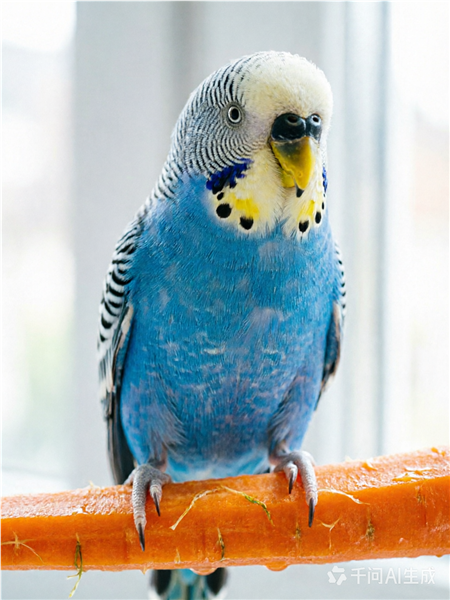
This sensitivity to "height" and "position" is deeply ingrained in the genes of budgerigars. When they enter human homes, this ancient "operating system" is not uninstalled but is applied to a completely new environment—and their new "flock" members are you and your family.
Chapter 2: Is Your Head a "Throne" or a "Watchtower"? – An In-depth Analysis of Behavioral Motivations
A budgerigar flying onto its owner's head can have multiple,复合的 motivations, not explainable by a single reason. Understanding these motivations is the first step in interpreting its "unspoken rules."
1. Seeking Security and the Best Vantage Point
This is the most basic, harmless explanation. To a small parrot, the owner's body is like a moving "mountain." The head is the highest point of this "mountain"; being high up allows for a far view, enabling them to monitor environmental changes, which makes these naturally vigilant creatures feel secure.同时, being close to the owner means being within the protective core of the "flock," effectively alleviating loneliness or anxiety. Many parrots will fly back to their owner's shoulder or head first when in an unfamiliar environment or after a fright, precisely due to this dependence.
2. An Expression of Affection and Bonding
After establishing a deep bond of trust, parrots allow each other into their very close personal space. Mutual preening, snuggling to rest, and sharing food are all intimate social behaviors. Flying onto the owner's head, rubbing against their hair, and gentle nibbling may be mimicking preening behavior, expressing "you are my important companion." Especially when it quietly preens or dozes off on your head, this is more an expression of comfort and trust.
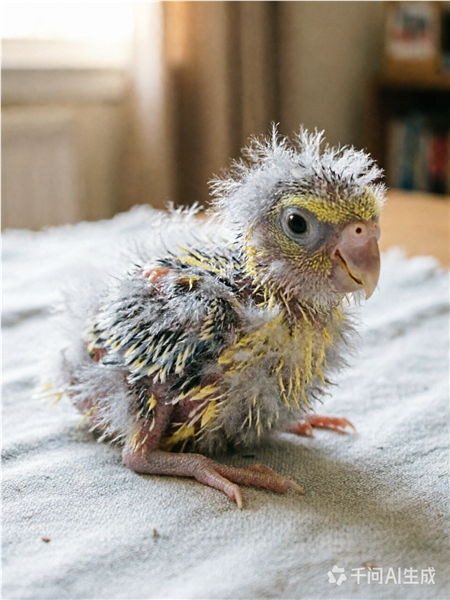
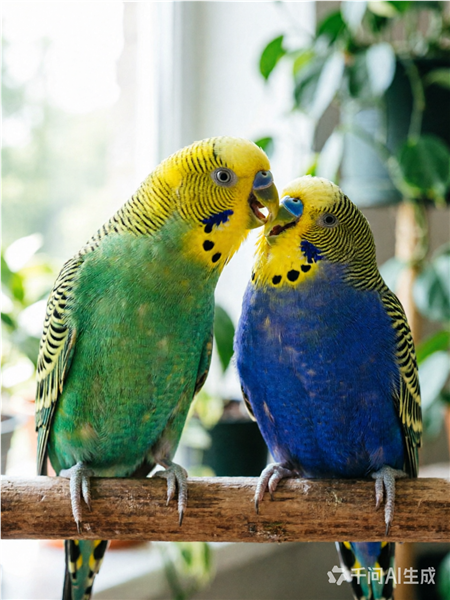
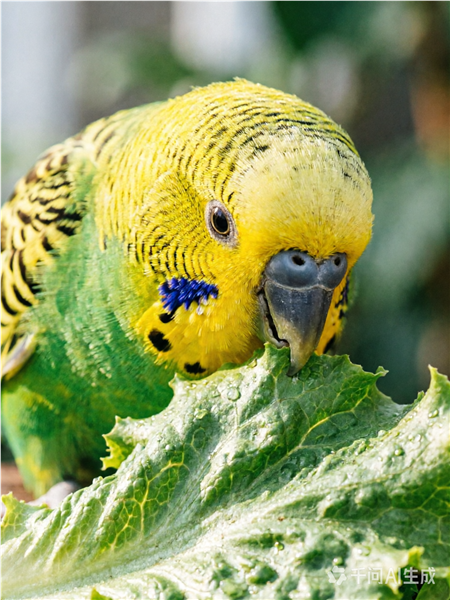
3. Status Testing and Dominance Declaration (The Core of "Unspoken Rules")
This is the focus of this article and the root of many behavioral issues. When a budgerigar frequently and insistently flies onto your head accompanied by the following behaviors, it may go beyond affection and enter the realm of status declaration:
- Refusal to Leave: When you try to get it to come down from your head to your hand or cage, it evades, screams, or even lightly pecks you.
- Looking Down and "Ruling" Posture: Standing tall, chest puffed out, looking down at you and other pets below, as if surveying its territory.
- Chewing Hair and Head Accessories: This is not just play; it might be "dealing with" the "debris" on your head (in its view) or a mild form of dominance behavior (similar to parrots lightly pecking each other's feathers as a reminder or show of superiority).
- Defecating There: While parrots cannot fully control defecation, they usually avoid soiling their favorite resting or sleeping spots. If it deliberately chooses to defecate on your head, it may not regard this as an "intimate area" that needs to be kept clean.
- Forbidding Other Pets or Family Members from Approaching: When it has a "guest" on your head, it shows aggression or驱赶 behavior towards other pets or family members trying to approach you.
In these cases, your head has been marked by it as a "privileged position." Perched on the highest point of the tallest member of the flock, in its cognition, this may reinforce its own high status within the "pecking order," even暗示 it is on equal footing with you or above you.
Chapter 3: Other Signals of Unspoken Rules in the Family "Workplace"
Besides occupying the commanding height, budgerigars also explore and define their position within the family, this "new flock," through a series of behaviors:
1. Control over "Access Points"
Have you noticed that when you try to recall it from its play area (like the sofa or desk) back to its cage, it runs away, hides, or even squawks at you? This is not just playfulness; it may also be a challenge to your control over its movements. In a group, whoever can decide the comings and goings of another individual holds higher authority.
2. Resource Guarding and Allocation
Displaying strong possessiveness over food, toys, and even the owner's attention. For example, attacking other pets (or your hand) that approach its food dish, or loudly calling or flying over to interrupt when you pet another pet. This is declaring priority access to "resources."
3. Assertiveness in "Communication"
Using persistent, sharp calls to demand you fulfill its needs (like coming out of the cage, giving treats) until you comply. If you respond immediately every time, it learns to "direct" you with its calls, reinforcing its perception of主导 interactions.
4. Initiative in Physical Contact
Only allowing it to initiate contact with you (like flying onto you), but disliking when you主动去抓 it or pet it (unless invited by it). This controls the initiative for亲密接触, another subtle manifestation of status.
Chapter 4: Why Pay Attention to These "Unspoken Rules"? – Consequences of Indulgence
You might think: "What's the harm in letting it stand on my head? As long as it's happy." For a parrot with a gentle性格 and generally good behavior, occasional head-perching might be harmless. But if you observe clear status-challenging behaviors and persistently indulge them, it could lead to the following issues:
- Escalation of Behavioral Problems: Light pecking may develop into真正的攻击性 biting, especially when you do things it dislikes (like nail trimming, administering medicine).
- Poor Obedience: Training basic commands like recall or going into the cage becomes异常困难, as it doesn't see the need to follow your "commands."
- Aggression Towards Others: It may perceive other family members or visitors as lower-ranking or threats, leading to驱赶 or attacks.
- Anxiety and Stress: Ironically, a parrot that believes it needs to be "responsible" for managing the flock (i.e., your household) may experience chronic stress, as it bears a "responsibility" mismatched with its capabilities. This can lead to stress behaviors like feather plucking.
- Relationship Displacement: A healthy human-bird relationship should be a partnership based on trust and cooperation, not a hierarchical统治关系 or an inverted依赖关系. Clear, stable interaction patterns provide more安全感 for the parrot.
Chapter 5: How to Manage Gracefully and Establish a Healthy "Workplace Relationship"?
Our goal is not to "suppress" the parrot with force or fear, but to guide it, through clear and consistent interaction, to understand the safe and comfortable rules of coexistence in a human household, establishing a mutually respectful relationship.
1. Controlling the Commanding Height – Redefining the "Privileged Position"
- Provide Alternative High Perches: Set up dedicated parrot play stands or gyms in the room, their height level with or slightly above your head when you are sitting, but not exceeding your head when standing. Encourage and reward its use of these专属 facilities.
- Manage Head Access: If it frequently flies onto your head with signs of status declaration, gently拒绝. When it lands on your head, calmly移它 to your finger or forearm immediately and say "down." If it complies, immediately reward it with its favorite treat. If it refuses and flies away,暂时不与它互动, ignore it for a few minutes. The key is to make it understand that "perching on the hand/stand and following commands" brings more benefits (your attention and treats) than "perching on the head."
- Become the Initiator of Interaction: Try to actively invite interaction (like extending a finger and saying "step up") rather than letting it freely扑到你头顶 anytime. This establishes your guiding role in interactions.
2. Mastering Core Resources – Making Yourself the "Good Boss"
- Food and Toy Management: Place日常主食 in the cage, but high-value treats (like millet sprays, small fruit pieces) should be hand-fed by you as training rewards. New toys can also be introduced and interacted with by you. This reinforces your positive image as a "resource provider," not a "resource competitor."
- Cage Entry/Exit Training: Use target stick training and rewards to make it voluntarily follow commands to enter and exit the cage. Make returning to the cage a rewarding game, not a power struggle.
3. Establish Clear, Consistent Communication Rules
- Ignore Inappropriate Demands: Do not respond to commanding screams. Turn your back or leave the room until it has been quiet for at least 10-15 seconds, then return and interact calmly. Let it learn that calmness attracts you.
- Reward Quiet and Friendly Behavior: When it plays quietly or主动友好靠近, promptly give attention, petting, or轻声夸奖.
4. Respect and Trust are the Foundation
- Always avoid physical punishment or shouting, as this only破坏信任, causing fear or aggression.
- Fill daily interactions with affection and fun: talking, singing, playing with toys together, providing丰富的环境丰容.
- Ensure it has sufficient daily out-of-cage activity time (at least 2-3 hours) to meet its exercise and psychological needs.
Chapter 6: Considerations for Special Circumstances
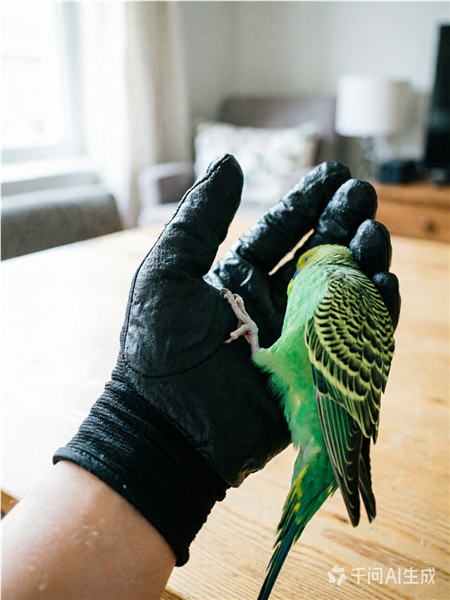
Every parrot is an individual. Some parrots fly onto their owner's head purely out of extreme trust and安全感, behaving gently without any accompanying dominance signals. For such individuals, occasionally allowing them to perch on the head may not破坏关系. The key lies in the owner's Observation and Judgment.
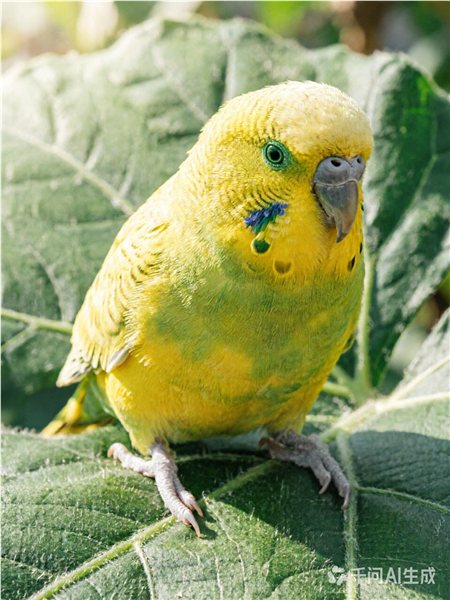
Furthermore, when keeping multiple parrots, they establish their own pecking order among themselves, and their relationship with the owner can become more complex. The owner needs to ensure they remain the ultimate controller of all resources and treat each one fairly to avoid jealousy and fights caused by favoritism.
Conclusion: From "King of the Head" to Partner on the Shoulder
Understanding the "unspoken workplace rules" of budgerigars is not about imposing human scheming thoughts on them, but about interpreting their ancient instinctive behaviors more scientifically and empathetically. They are not intentionally trying to "rule" humans; they are simply using their species-specific ways to test the boundaries and rules of this新奇 "flock."
As the more intelligent party, we have the responsibility to set clear, safe, and loving boundaries for them. Through positive guidance and reward-based training, we can help this little sprite from the Australian wilderness smoothly adapt to life in a human household, transforming that instinct to occupy high places into a love for专属 play stands and their owner's shoulder. Ultimately, what we gain is not a little overlord trying to stand "on top of our heads," but a precious伙伴 willing to stand "on our shoulder," a relationship of mutual trust and companionship. This cross-species friendship is the most beautiful rule in coexistence.
(This article contains approximately 2200 words, systematically exploring the relationship between budgerigars' social behavior and owner interaction, from their wild habits and domestic behavior interpretation to potential issues and positive guidance solutions, aiming to help owners establish a more harmonious human-bird relationship.)