Among the many pet birds, budgerigars have won the hearts of countless owners with their colorful plumage, agile figures, and lively personalities. They are like little sprites from the sky, bringing endless joy to our lives. However, behind this liveliness and beauty lies a significant risk that many novice owners and even some experienced ones easily overlook—water. Yes, these sky sprites can face a fatal crisis due to an accidental fall into water. This may sound paradoxical; aren't birds naturally fond of water? But the truth is, for small parrots like budgerigars, water, especially deep water or improper contact, can be extremely dangerous. This article will delve into why budgerigars "fear water," why falling into water is so deadly, and how, as responsible owners, we can scientifically provide cleaning for them and prevent accidents.
I. Misconception and Truth: Do Budgerigars Really "Fear Water"?
First, we need to clarify a concept. Saying budgerigars "fear water" does not mean they have an extreme psychological aversion to water like cats do. In their natural state, birds need to clean their feathers to maintain flight ability, insulation, and health. Many wild birds engage in "water bathing," splashing in shallow puddles, rainwater accumulations, or dew, or getting their feathers wet with rain. The ancestors of budgerigars lived in the arid and semi-arid regions of Australia, adapting to clean themselves through dust bathing, rubbing against damp leaves, or using morning dew. Therefore, they have an instinctive need for "bathing" or contact with small amounts of water.
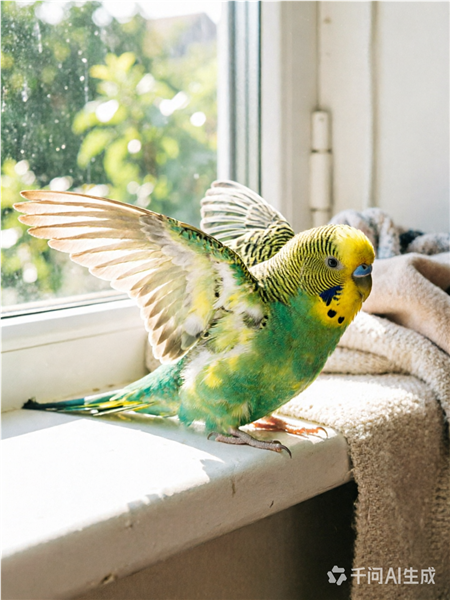
However, the "fear of water" and "fatal crisis" we refer to specifically mean "accidental submersion" or "incorrect bathing methods." This is closely related to their unique physiological structure. Budgerigars are small parrots with delicate builds, very light weight, fast metabolism, but limited energy reserves. More importantly, their feather structure is completely different from that of waterfowl like ducks and swans.
II. The Fatal Feathers: Why Aren't They Waterproof?
This is key to understanding the core of the crisis. The feathers of waterfowl possess a sophisticated waterproof structure. They have well-developed uropygial glands that secrete large amounts of oil. Birds use their beaks to spread this oil over their feathers, forming an effective waterproof film. Simultaneously, the microscopic structure of their feathers is tightly arranged, trapping air and repelling water. Thus, waterfowl can float easily on water, with their down feathers and skin underneath remaining dry.
In contrast, budgerigars and most terrestrial birds secrete relatively little oil from their uropygial glands, primarily used for maintaining beak and foot health and minor feather care, far from sufficient for full-body waterproofing. Their feathers prioritize lightness, insulation, and color, and their structure is more easily penetrated by water. Once feathers become soaked, a series of chain reactions leading to fatality can occur.
III. The Double Fatal Blow After Submersion
When a budgerigar accidentally falls into a water bowl, toilet, open fish tank, or any water container deeper than its ankles, disaster can strike instantly. The danger comes mainly from two aspects: hypothermia and water inhalation.
1. Rapid Hypothermia: The Nightmare of Heat Loss
Birds are warm-blooded animals, and maintaining a high body temperature (normal for budgerigars is about 40-42°C) requires significant energy expenditure. Soaked feathers completely lose their insulating function. Water comes into direct contact with the skin and rapidly draws heat from the body through evaporation. Due to their small size and relatively large surface area, small birds lose heat extremely quickly. At room temperature, a budgerigar with soaked feathers can fall into severe hypothermia within ten minutes to half an hour. Low body temperature leads to slowed metabolism, organ failure, lethargy, coma, and ultimately death.
2. Water Inhalation and Asphyxiation: A Respiratory Disaster
The panic and struggle during the moment of falling can easily cause the parrot to inhale water. Water entering the nostrils and trachea triggers violent coughing and a sense of suffocation. More dangerously, even without inhaling large amounts of water, wet feathers clinging around its face and beak can block the nostrils (located above the base of the beak). Parrots breathe primarily through their nostrils; once blocked, they can fall into extreme panic and respiratory distress. Furthermore, the immense physical exertion from struggling accelerates their collapse.
Even if rescued promptly, the heavy, waterlogged feathers clinging to their bodies make it difficult for the bird to fly or even stand, further exacerbating their panic and helplessness.
IV. The Correct Way to Provide "Water": A Scientific Bathing Guide
Since cleaning is essential and risks are real, how can we safely provide bathing opportunities for budgerigars? The principles are: mimic nature, offer choices, shallow water is best, and supervise throughout.
1. Bathing Frequency and Timing
Bathing is not needed daily. Observe your parrot; the best time is when they show a desire to bathe, such as appearing excited when you use water, trying to fly towards the faucet, or actively pecking at wet leaves. Generally, once or twice a week is sufficient, and it can be reduced in winter or cold weather. Choose a warm, sunny midday for bathing, allowing them to dry quickly afterward.
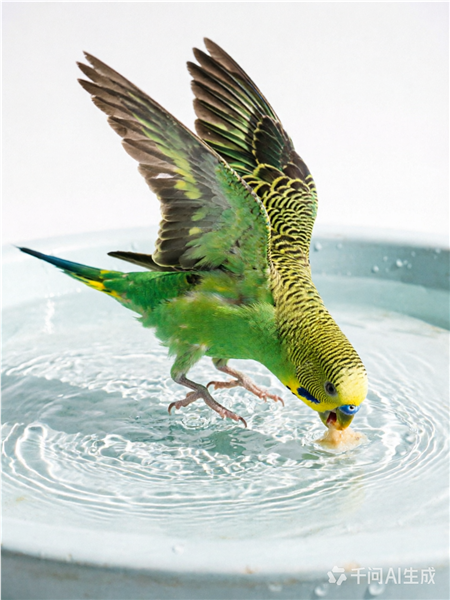
2. Safe Bathing Methods
- Spray Misting (Most Recommended): Use a clean spray bottle filled with room temperature or slightly warm water (never use cold or hot water). Adjust the spray to the finest mist setting and gently spray from above or the side, mimicking a light natural rain. Let the water droplets fall naturally on the parrot and observe its reaction. If it spreads its wings, fluffs its feathers, and seems to enjoy it, you can continue. If it avoids the spray or shows signs of tension, stop immediately.
- Shallow Dish Bathing: Provide a stable, shallow-edged dish or a dedicated bird bath with water no deeper than 1.5 cm (just enough to wet the feet and belly). You can place some of its favorite leaves or toys in the water to attract it. Never force it into the water.
- Wet Green Leaves: Hang clean, wet leaves like kale, bok choy, or mulberry leaves inside the cage. Many parrots enjoy rubbing against and bathing on the leaves, which is both fun and safe.
- Accompanying Shower (Requires Caution): Some parrots enjoy showering with their owner. However, this requires training and acclimatization. Ensure the water flow is very gentle, the temperature is suitable, and the bathroom is enclosed, warm, and draft-free. Never let the parrot be under the direct stream of water.
3. Post-Bath Care
After bathing, place the parrot in a warm (above 25°C), draft-free environment to air dry naturally. You can turn on a heater (keep it at a safe distance from the parrot), but do not use a hair dryer! The hot air from a hair dryer can burn their delicate skin, and the noise and strong airflow cause immense stress. Ensure it is completely dry before returning it to the typically cooler living room or nighttime environment.
V. Emergency Situation: Golden First Aid Steps After a Parrot Falls into Water
If an accident occurs, staying calm and acting quickly is key to saving a life.
- Remove Immediately: Swiftly but gently lift the parrot out of the water.
- Preserve Body Heat: Wrap it gently in a dry, soft, absorbent towel (like paper towels, cotton cloth) to soak up excess water from the feathers. Be gentle to avoid damaging the feathers through excessive rubbing.
- Warm Environment: Transfer it to a warm, quiet, dimly lit small box or travel cage. Place a dry towel in one corner. You can use a heating device, but ensure safety:
- Heating Pad: Set to a low temperature and place it under half of the box, allowing the parrot to choose to be near or away from the heat source.
- Heat Lamp: Use a dedicated pet heat lamp (not an incandescent bulb), maintaining a safe distance to avoid overheating or burns.
- Check Breathing: Gently observe if its chest is rising and falling, and listen for breathing sounds. If the nostrils are blocked, use a cotton swab to gently clean them.
- Do Not Force-Feed or Give Water: Do not attempt to feed or give water until it is completely dry, has normal body temperature, and is fully alert, as this can easily cause choking.
- Close Observation: Closely monitor its mental state, breathing, and mobility for the next few hours. If persistent lethargy, difficulty breathing, or inability to stand occurs, contact an avian/exotic veterinarian immediately. Even if it appears to have recovered, submersion can lead to aspiration pneumonia, a delayed and potentially fatal danger that requires professional diagnosis and treatment.
VI. Home Safety: Prevention is Better Than Cure
Prevention is far better than emergency treatment. Carefully inspect your home:
- Cover Up: Ensure toilet lids are always closed. Cover fish tanks and hydroponic plant containers with mesh or lids.
- Manage Water Containers: When washing hands, vegetables, or mopping the floor, temporarily keep the parrot in its cage or away from the water source. Do not leave cups, buckets, or other containers filled with water open in areas where the parrot is active.
- Supervise Bathing: Always supervise when providing bathing water.
- Be Wary of Weather: On rainy days, do not let the parrot be on an unenclosed balcony where it could get drenched.
VII. Understanding and Empathy: Their World is Different from Ours
As owners, we sometimes try to understand our pets from a human perspective. We see water as refreshing and pleasant, but for a tiny life weighing only a few tens of grams with delicate and intricate feathers, what we see as a "small puddle" can be an inescapable abyss. Understanding the physiological vulnerabilities of budgerigars is not about fostering an excessive fear of water, but about enabling us to care for them more scientifically, attentively, and responsibly.
They bring the sky of flight to our windows and their clear songs to our ears. What we can give in return, while enjoying the joy they bring, is to hold up an umbrella of safety for them, guarding against the invisible risks hidden in daily life. Let these sky sprites, under our care, always be able to spread their dry, fluffy feathers, singing and living healthily and happily.
Remember, loving them starts with understanding them, with preventing every tiny danger. Safety is no small matter, especially for these fragile and precious little lives.