How Many Breeds of Pomeranian Are There? Key Points for Distinguishing Purebred Pomeranian
The Pomeranian, with its luxuriant fluff and spirited personality, has captured the hearts of dog lovers worldwide. A common question among enthusiasts and prospective owners is: "How many breeds of Pomeranian are there?" The answer is nuanced. Officially, kennel clubs like the American Kennel Club (AKC) recognize only one breed—the Pomeranian. However, within this single breed standard, there are significant variations in size, head type, and build that are often colloquially referred to as different "types" or "breeds." Understanding these variations and knowing the key points to distinguish a purebred Pomeranian is crucial for anyone looking to bring one of these charming companions into their home.
Official Breed vs. Unofficial Types
According to major kennel clubs worldwide, including the AKC, the Kennel Club (UK), and the Fédération Cynologique Internationale (FCI), there is only one breed standard for the Pomeranian. This standard specifies a range of acceptable traits for a purebred dog. The variations we discuss are not separate breeds but rather phenotypes—observable physical expressions—that fall within or sometimes deviate from this standard. The most common classifications you will encounter are based on size and facial structure.
Size-Based Classifications
This is the most prevalent way people categorize Pomeranians. It's important to note that extreme sizes outside the breed standard are often the result of questionable breeding practices.
1. Standard Pomeranian: This is the true Pomeranian as defined by the breed standard. The AKC specifies an ideal weight of 3 to 7 pounds, with any dog over 7 pounds being faulted in the show ring. They are small, compact, and well-balanced.
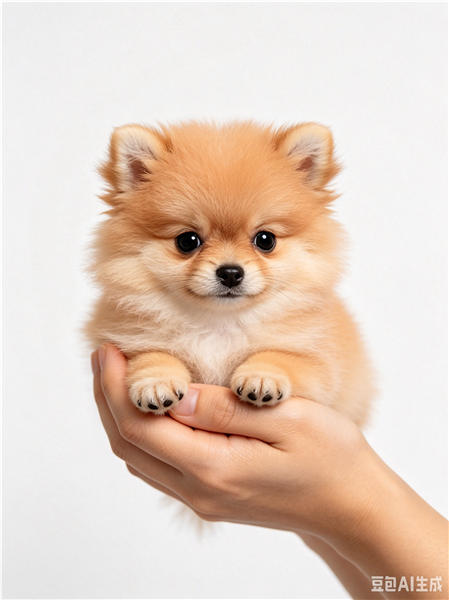
2. Teacup or Micro Pomeranian: These are not an officially recognized classification. "Teacup" is a marketing term for Pomeranians bred to be significantly smaller than the breed standard, often weighing under 3 pounds. While undeniably tiny and cute, they are prone to severe health issues including fragile bones, hypoglycemia, heart defects, and a shortened lifespan. Reputable breeders do not purposefully breed "teacup" dogs.
3. Throwback Pomeranian: Occasionally, a Pomeranian litter may produce a puppy that grows much larger than its parents, reaching 10, 15, or even 20 pounds. This is a "throwback" to the breed's larger Spitz ancestors. These dogs are still purebred Pomeranians genetically but are disqualified from conformation shows due to their size. They often retain the classic Pomeranian appearance and temperament.
Head Type (Face) Classifications
The shape of the Pomeranian's muzzle and head is another key differentiator. The breed standard calls for a distinct muzzle that is "rather straight," fine, and free of lippiness. The ratio of muzzle to skull is approximately 1:2.
1. Fox Face Pomeranian: This type most closely aligns with the official breed standard. It features a longer, more pointed muzzle, almond-shaped eyes, and erect, pointed ears—giving the dog a foxy, alert expression. This is the preferred type in conformation shows.
2. Baby Doll or Teddy Bear Face Pomeranian: This type has gained immense popularity due to its ultra-cute, rounded appearance. It features a much shorter muzzle, a more pronounced stop (the indentation between the eyes and muzzle), and large, round eyes that are set further apart. While incredibly appealing, an extremely short muzzle can border on or constitute a fault according to the breed standard and can be associated with brachycephalic syndrome (breathing difficulties).
3. Doll Face Pomeranian: This term is sometimes used interchangeably with "Fox Face" but often refers to a middle ground—a muzzle that is shorter than the classic fox type but longer than the extreme baby doll type, maintaining a sweet expression without the ultra-flat face.
Key Points for Distinguishing a Purebred Pomeranian
Whether you are looking at a show-quality dog or a beloved pet, certain hallmarks indicate a well-bred, purebred Pomeranian. Here are the essential points to examine:
1. Overall Proportion and Build
A purebred Pomeranian is compact and well-balanced. The length from the point of shoulder to the point of buttock should be equal to the height at the withers, giving a square profile. The bone structure is fine but sturdy. The dog should carry itself with a proud, alert posture.
2. The Head: The Crowning Glory
- Skull and Muzzle: The head should be wedge-shaped when viewed from above. The stop should be well-defined but not abrupt. The muzzle should be straight and fine, not coarse, downturned, or upturned.
- Eyes: Dark, bright, almond-shaped, and medium in size. They should have an intelligent, alert expression. Very round or light-colored eyes are deviations.
- Ears: Small, set high, and carried erect. They should be triangular and pointed.
- Bite: A perfect, regular scissors bite is preferred (upper teeth closely overlapping lower teeth). An undershot or overshot bite is a serious fault.
3. The Double Coat
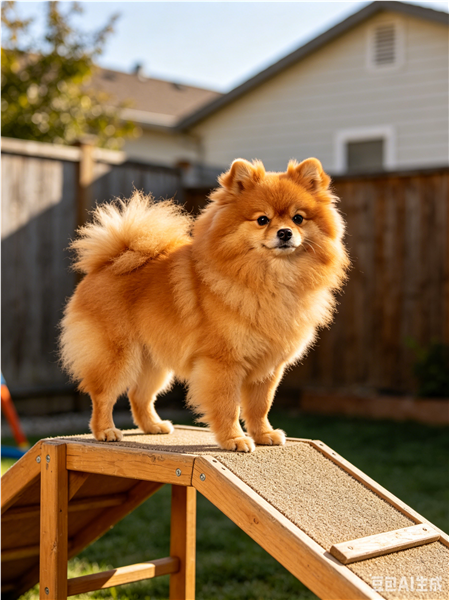
This is a defining feature. The Pomeranian has a double coat consisting of a soft, fluffy undercoat and a longer, harsher-textured outer coat that stands off from the body. The coat should be abundant, particularly around the neck and chest (forming the ruff), and on the hindquarters. The tail is a hallmark: it is set high, lies flat and straight on the back, and is profusely covered with long, harsh hair.
4. Tail Set and Carriage
As mentioned, the tail is a key identifier. A purebred Pom's tail is one of its most distinctive features. It should be set high and carried flat over the back. A low-set tail or a tail that curls over to one side is incorrect.
5. Gait and Movement
The movement should be smooth, free, and balanced. The Pomeranian should not paddle, roll, or move with a hackneyed (high-stepping) action. When viewed from the front and rear, the legs should move in parallel lines.
6. Temperament
While not a physical trait, temperament is inherited and part of the breed standard. A purebred Pomeranian is typically extroverted, intelligent, lively, and inquisitive. They are often confident and bold, sometimes unaware of their small size. Excessive shyness or aggression is not characteristic of a well-bred Pomeranian.
7. Pedigree and Documentation
The most definitive proof of a purebred Pomeranian is its pedigree papers from a recognized kennel club (AKC, KC, etc.). These documents trace the dog's lineage for several generations, confirming its purebred status. Reputable breeders will provide these papers upon purchase.
Common Misconceptions and Red Flags
Color as a Breed Indicator: Pomeranians come in a wide array of colors and patterns—orange, red, cream, sable, black, blue, chocolate, parti-color, and more. No color is indicative of a separate "breed." A "Blue Pomeranian" is simply a Pomeranian with a blue (diluted black) coat.
Extreme Sizes: Be wary of breeders who heavily promote "Teacup" or "Miniature" sizes as a separate, more valuable type. This is often a sign of irresponsible breeding focused on novelty over health.
Unusually Low Price: A well-bred, healthy Pomeranian from health-tested parents is a significant investment. Prices far below the market average often indicate a puppy mill or backyard breeder, where purebred status, health, and temperament are not guaranteed.
The Importance of Reputable Breeders
The best way to ensure you are getting a purebred, healthy Pomeranian that conforms to the breed's ideal characteristics is to seek out a reputable breeder. Such breeders:
- Prioritize health, temperament, and conformation to the standard.
- Perform genetic health testing on their breeding stock (for issues like patellar luxation, heart conditions, and eye disorders).
- Raise puppies in a home environment with proper socialization.
- Are transparent, welcome visits, and ask you as many questions as you ask them.
- Provide a written contract and health guarantee.
- Are committed to taking back any dog they breed, at any point in its life.
In conclusion, while there is officially only one breed of Pomeranian, the diversity within the breed in terms of size and head type is fascinating. Distinguishing a purebred Pomeranian requires a keen eye for the details outlined in the breed standard: the balanced build, the foxy head with correct eyes and ears, the magnificent double coat and plumed tail, and the confident, lively spirit. By focusing on these key points and sourcing your companion from a responsible breeder, you can be confident in welcoming a true representative of this magnificent Spitz breed into your life.