The moment you end a tired day's work and push open the door, you find your fluffy Persian cat master already sitting properly in the entryway, that fluffy big tail like an elegant flagpole, standing straight in the air with the tail tip playfully curled into a little question mark. In that moment, it seems all fatigue is healed. But have you also wondered: How does it know I'm coming home at this time? What is that raised tail trying to "say"? Today, let's uncover the secret behind the Persian cat's "precisely timing the end of work" and raising the "welcome" sign tail.
1. Not Mysticism, But Science: Persian Cat Biological Clock and Conditioned Reflex
First, we must break the fantasy of "cats having psychic powers". Persian cats can "punctually" greet you mainly relying on two things: a powerful biological clock and conditioned reflexes formed by keen environmental perception.
1. Internal Biological Clock (Circadian Rhythm): All creatures, including cats, have a physiological clock close to 24 hours. It regulates cycles of sleep, wakefulness, hormone secretion, and more. Your Persian cat, through day-after-day observation, has tightly associated a series of environmental cues like "daylight", "sounds of you waking", "duration of daytime solitude", and "changes in outdoor light" with the event "you're about to return". Its body enters "waiting mode" in advance.
2. Environmental Cues and Conditioned Reflex: Cats' hearing and sense of smell far exceed humans. They can distinguish familiar footsteps in the hallway, the unique sound of key chains, and even your car engine noise. These "key signals" that appear daily, like a dismissal bell, trigger its anticipatory behavior. Over time, this forms a stable conditioned reflex. When you come home early or late one day, disrupting this "ritual", the cat may show confusion or anxiety—proof of its reliance on regular routines.
2. Raised Tail: Interpreting the Cat's "Emotional Flag"
A cat's tail is the "barometer" of their emotional state, and different postures represent completely different meanings. The Persian cat's signature fluffy tail expresses emotions even more vividly.
Raised High with Slightly Curled Tip: This is one of the most positive and friendly signals in cat tail language, equivalent to a human smile and wave. When a cat is confident, content, happy, and holds a friendly and welcoming attitude toward you, it will raise its tail like this. That little hook at the tip is like a happy exclamation mark. So when you see a Persian cat greeting you in this posture, it's actually loudly saying: "Hi! You're back! I'm happy to see you!"
Comparison with Other Common Tail Signals:
- Tail Low or Tucked Between Legs: Indicates fear, submission, or physical discomfort.
- Tail Lashing Quickly and Widely: Usually indicates irritation, impatience, or intense focus (like preparing to pounce on prey). This is completely different from a dog wagging its tail.
- Tail Puffed Up (Enlarged): Startled or feeling threatened, trying to look bigger to scare off the opponent.
- Tail Slowly Swaying Side to Side: May indicate it's thinking, hesitating, or has mild interest in something.
Therefore, next time you see a Persian cat's raised tail, be sure to give it positive feedback—gentle calling, light petting. This will reinforce this positive welcome behavior.
3. Persian Cat Breed Characteristics: Deep Affection Beneath the Aloof Exterior
Persian cats are often labeled "aloof", "quiet", and "lazy". They indeed don't scramble around all day like some lively breeds, but this absolutely doesn't mean they're indifferent. On the contrary, many Persian cats have established very deep and subtle emotional bonds with their owners.
Their way of expressing love is more introverted and enduring: perhaps quietly staying by your side, watching you with those big round eyes; perhaps silently jumping onto your lap when you sit down; and waiting at the door at a fixed time daily with a welcoming raised tail is precisely the profound embodiment of seeing you as family and a source of security. This "sense of ritual" is part of their daily life order, and confirmation of your belonging.
4. How to Respond and Reinforce This Beautiful "Welcome Ritual"
When you understand the meaning behind cat behavior, correct response can not only enhance affection but also sustain this heartwarming ritual.
1. Give Immediate Positive Feedback: After entering, the first thing is to call its name in a calm, happy voice and give gentle head or chin scratches. Avoid sudden loud sounds or dramatic movements that might startle it.
2. Establish a "Post-Home Routine": For example, put down your bag, change shoes, then open a can for it, or have a few minutes of teaser wand interaction. This will make the cat have even more beautiful expectations for "your return" ("master coming back = yummy food/fun play").
3. Maintain Stable Life Rhythm: Cats hate sudden changes. Try to keep feeding, play, and your bedtime regular. This will make them feel more secure, and their "biological clock predictions" will be more accurate.
4. Never Punish or Ignore: Even if you're in a bad mood that day, don't treat the cat greeting you coldly or push it away roughly. This will make it feel confused and hurt, potentially gradually wearing away its enthusiasm for greeting you.
5. Abnormal Situations to Watch For
While greeting behavior is usually healthy, also watch for possible abnormalities:
Excessive Clinginess or Separation Anxiety: If you're away for just a little longer and the cat shows problems like destroying furniture, excessive howling, or not using the litter box, it may have separation anxiety disorder, needing more environmental enrichment (like toys, cat trees) and even behavioral training.
Greeting Accompanied by Other Body Language: If the cat raises its tail while pinning back its ears (airplane ears), stiffening its body, and dilating pupils, this may indicate it's in a tense or alert state rather than pure welcome. Check if there are changes in the home that make it uneasy (like new furniture, strange smells).
Sudden Behavior Change: If a cat that always greeted you suddenly stops appearing or becomes listless, it may be a sign of illness. Promptly check its eating, elimination, and mental state, and consult a veterinarian if necessary.
Conclusion: Understanding That Silent Love
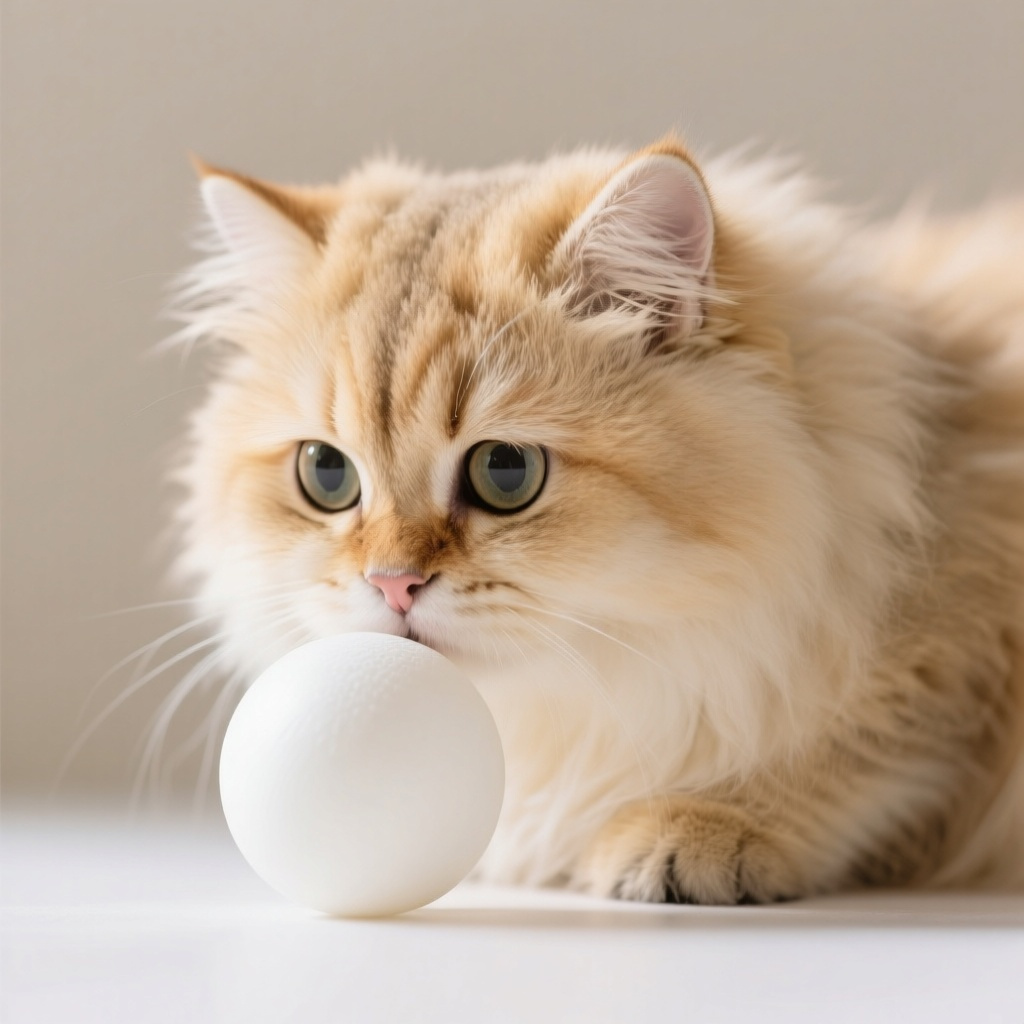
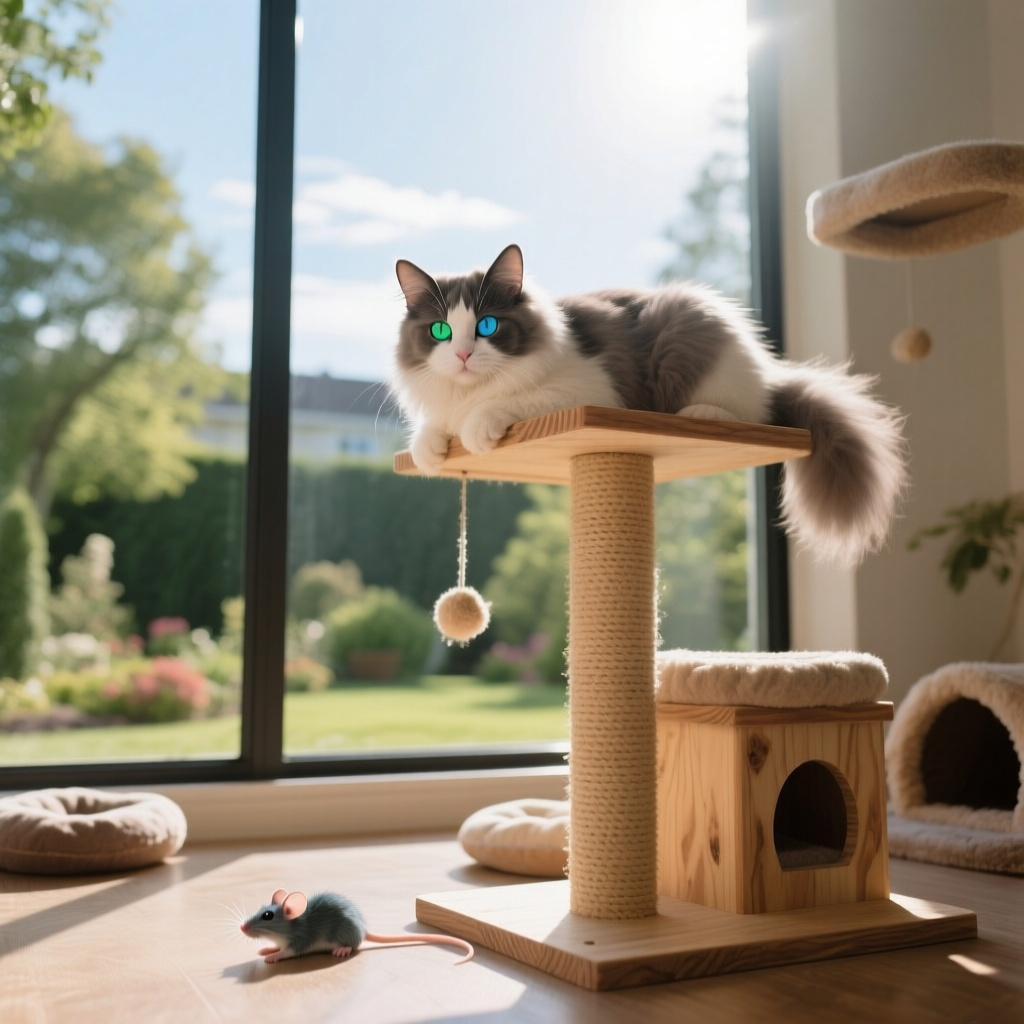
Persian cats measure the time spent with you in their quiet way. That punctually raised tail is not a simple conditioned reflex, but proof that they've deeply incorporated you into their own life rhythm. In their world, there's no concept of clocks, yet there exists the most precise expectation regarding you. This daily "welcome" that arrives as scheduled is the warmest healing unique to cat owners. So please cherish this silent and deeply affectionate waiting, and respond to that silent yet enthusiastic greeting from its tail tip with your love and understanding.
Through observing and understanding cat body language, we can not only better meet their needs but also establish truly profound emotional connections with these elegant little lives. The Persian cat's "after-work greeting ritual" is an incomparably wonderful microcosm of this cross-species emotional communication.