Emergency Action Guidelines: Medical Criteria for Husky Patients with Excessive Rectal Temperature and Sudden Diseases
As energetic and unique "Erha" parents, in addition to enjoying the joy they bring, they also need to master the knowledge and skills to deal with sudden health crises. Because of its double coat and original dog breed characteristics, husky needs special attention on certain health issues. Among them, abnormal body temperature is a key indicator reflecting their health status, and rectal temperature is the most accurate method to judge core body temperature. This guide aims to provide you with a clear and actionable first-aid action plan to help you quickly identify the danger and make the most favorable decision when your dog experiences hyperthermia or other emergencies.
Chapter 1: Understanding the normal body temperature of a husky and its measurement methods
Unlike humans, dogs have a higher normal body temperature range than ours. Normal rectal temperatures in huskies are usually between 37.5°C and 39.2°C. The body temperature of puppies may be close to the upper limit of the range, while older dogs or dogs at rest may be close to the lower limit. After exercise, excitement, tension, or high ambient temperatures, there may be a brief, small increase in body temperature (usually no more than 0.5°C), but should return to normal quickly.
Steps to correctly measure rectal temperature:
- Preparation tools:Use a pet-specific electronic thermometer (preferably with a soft tip) and apply enough water-soluble lubricant (such as Vaseline, KY glue).
- Comfort the dog:Ask family members to help soothe and stabilize the husky and keep him standing or lying on his side. For dogs that do not cooperate, gentle but firm control may be required.
- Measurement operation:Gently lift the tail and slowly and rotationally insert the thermometer into the anus to a depth of about 2.5 cm (small dogs) to 5 cm (medium and large dogs, such as husky). Wait for the electronic thermometer to sound.
- Reading and recording:Read the temperature after removal, record the measurement time, environmental conditions and dog activity status at that time. Snacks will be rewarded after measurement, forming a positive correlation.
Warning:Do not use a human oral or axillary thermometer to measure dogs, as the results are extremely inaccurate. The error of the ear thermometer on dogs is large and is for reference only. In critical moments, the rectal temperature should be the basis.
Chapter 2: Definition, causes and emergency assessment of excessive rectal temperature
When the rectal temperature of a husky continues to be above 39.5°C, it is considered to be fever (Fever). When the body temperature exceeds 41°C, it isa life-threatening high fever and must be treated immediately.
1. Common causes of fever (39.5°C - 41°C):
- Infections:Bacterial, viral, parasitic infections (such as canine distemper, parvovirus, uterine empyema, severe traumatic infections).
- Inflammation:Autoimmune diseases, pancreatitis, meningitis, etc.
- Other diseases:Certain tumors, drug reactions, etc.
2. Overheat/heat stroke (often exceeding 41°C):This is an emergency that Huskies need to be particularly vigilant in summer. Due to their heavy coat and relatively primitive heat dissipation mechanism (mainly relying on breathing and foot pads), they are prone to heat stroke when exercising vigorously in a high temperature and humidity environment and being locked in a closed compartment. Heat stroke is the main cause of uncontrolled rise in body temperature and can quickly cause multiple organ failure.
3. Emergency assessment of the "danger triangle":When excessive body temperature is found, the following three points need to be quickly assessed within 1 minute:
- State of consciousness:Are you awake, unresponsive, comatose, or experiencing convulsions?
- Respiratory status:Do you experience extreme rapid and difficult breathing, or do you have a color of mucous membranes (gums) turning bright red, blue, purple, or gray white?
- Body temperature:Has it reached or exceeded 41°C?
As long as there is an abnormality </strong in any item in the "danger triangle", especially if your body temperature is ≥41°C or consciousness/breathing is abnormal, please skip home treatment and immediately enter the medical treatment process!
Chapter 3: Preliminary Family Treatment and Taboos
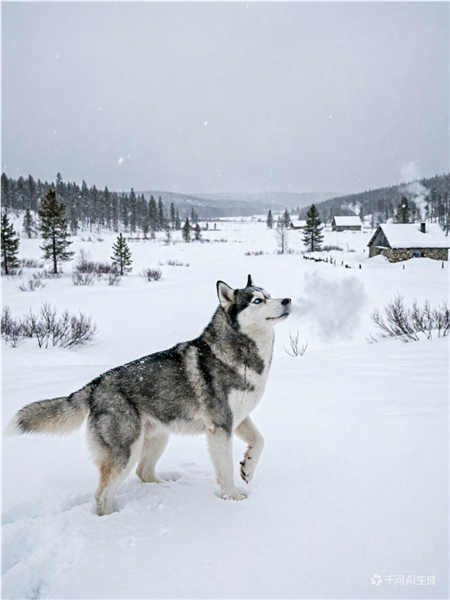
(Only applicable to dogs with a body temperature between 39.5°C and 40.5°C, conscious, breathing smoothly, and during the process of contacting the veterinarian and going to the hospital or during waiting period)
Correct cooling steps:
- Move to the shade:Immediately move the husky to an air-conditioned room or a ventilated, cool place.
- Provide drinking water:Provide a small amount of drinking water at room temperature and do not force it to drink.
- Physical cooling:Soak a towel withcold water (non-ice water)and wipe the abdomen, groin, underarms, foot pads and inner auricles. You can also use a small stream of cold water to wet these areas. At the same time, turn on the fan to promote evaporation and heat dissipation.
- Continuous monitoring:Measure the rectal temperature every 5-10 minutes. Once the body temperature drops below 39.5°C, or the dog begins to tremble, stop actively cooling immediately and dry it with a dry towel to prevent hypothermia.
Absolute Taboos:
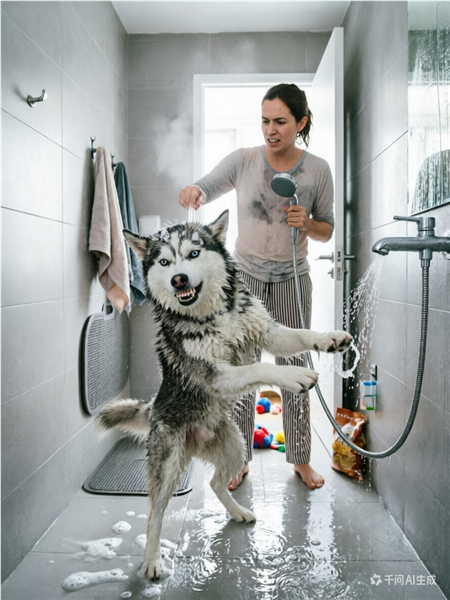
- Never use ice water or ice packs to wrap the body directly:this can cause severe contraction of peripheral blood vessels, which instead locks heat to the core of the body and may trigger shock.
- It is prohibited to take human fever-reducing drugs:such as ibuprofen and acetaminophen are highly toxic to dogs and can cause acute liver failure, gastric bleeding and even death.
- Do not over-wrap or place it near a heat source.
Chapter 4: The "red alert" standard that must be sent to hospital immediately
Time is life. When your husky experiences any of the following conditions, do not hesitate to contact the nearest pet hospital immediately and go to emergency treatment!
1. Temperature related alarms:
- Rectal temperaturescontinue to be higher than 40.5°C, and home cooling is ineffective or ineffective.
- Body temperatureexceeds 41°C (regardless of mental state).
- Body temperaturebelow 37°C (hypothermia may also be associated with severe infection or shock, which is equally dangerous).
2. Nervous system symptom alert:
- Confusion, listlessness, and no response to name calls.
- Ttics, seizures, muscle tremors, ataxia (unstable walking, turning).
- Sudden aggression, mania or extreme fear (may be related to brain disease).
3. Respiratory and circulatory system alarms:
- Difficulty breathing, gasping for breath with noise, and rapid breathing rate (more than 50 breaths per minute at rest).
- Abnormal gum color: bright red (carbon monoxide poisoning or early stages of heat stroke), blue/purple (hypoxia), gray white (shock or severe anemia).
- After pressing the gums, the capillary refilling time exceeds 2 seconds (normally 1-1.5 seconds).
- The heartbeat is too fast or too slow to touch the pulse.
4. Digestive system and systemic status alarms:
- Frequent and severe vomiting or diarrhea, especially bloody, coffee-ground or jet-like watery stools.
- Suspected of accidental ingestion of poisons (such as rat poison, chocolate, onions, grapes, etc.).
- The abdomen is abnormally swollen, hard, and shows pain (unwilling to be touched, praying posture).
- Propulsion, inability to stand, sudden paralysis.
- Nystagmus (rapid movement of the eyes back and forth), varying pupil sizes.
Chapter 5: Preparation before being sent to hospital and nursing care during the journey
After deciding to be sent to the hospital, orderly action can buy time for rescue.
1. Contact the hospital: On the way or before departure, call the hospital to inform the dog's breed, age, main symptoms (especially body temperature, awareness, breathing), treatment that has been carried out and estimated arrival time, so that the hospital can make preparations in advance.
2. Safe transfer:
- Use an aviation case or a car seat belt to secure it to prevent secondary injuries caused by discomfort or convulsions.
- Keep the compartmentcool and ventilated, and continue to wipe your body with a cold water towel (for dogs with high heat).
- For dogs with convulsions, remove hard objects around them,do not put hands or anything in their mouths, and record the duration and manifestation of convulsions.
- For vomiting dogs, keep your head lower than your body or lie on your side to prevent suffocation from inhaling vomit.
3. Carry belongings: Carry poison samples or packaging suspected of accidental ingestion, recent stool/vomit photos, past medical records and drugs being taken as much as possible.
Chapter 6: Diagnosis and treatment processes in hospitals
Upon arrival at the hospital, the veterinarian will conduct a quick assessment and may take the following actions:
1. Emergency stabilization: For dogs with high fever, intravenous infusion, controllable medical cooling equipment (such as cooling blankets), oxygen support, etc. will be used.
2. Comprehensive examination: Including detailed physical examination, blood routine, full biochemical items, blood gas analysis, coagulation function, X-ray or B-ultrasound, etc., to find the root cause of fever or emergency (such as infection, organ failure, internal bleeding, etc.).
3. Targeted treatment: Depending on the diagnosis, it may include antibiotics, anti-inflammatory drugs, antidotes, surgery (such as uterine empyema), plasma infusion, etc. The treatment process may require inpatient care.
Chapter 7: Daily Prevention and Health Monitoring
Prevention is far better than first aid. Build a healthy defense line for your husky:
1. Heatstroke management: Avoid going out during the high temperature hours during the day (10 a.m. to 4 p.m.) in summer. Ensure adequate and clean drinking water 24 hours a day. Outdoor activities must choose early morning or night and shorten the time. It is absolutely forbidden to leave dogs alone in the car, even if the windows are sewn and the weather is "not too hot."
2. Regular physical examination: Conduct a comprehensive physical examination at least once a year, including blood tests. For middle-aged and elderly huskies, it is recommended to do it every six months.
3. Establish a health record: record the dog's daily resting breathing rate (normally 10-30 beats/minute), gum color, appetite, spirit, and bowel movements. Only by understanding its normal state can we detect abnormalities as soon as possible.
4. Skills reserve: Learn basic vital signs examination methods (measuring body temperature, counting breathing and heartbeat, looking at gums), and keep the contact information of the nearest 24-hour pet emergency center.
As the owner of a husky, your calm judgment and quick action are the most solid guarantees for its life. Please collect and share this guide with your family members who share your pet, review it regularly to prevent problems before they occur. Remember that when it comes to health issues, it is far safer to "over-stress" than to "take it lightly." May every "Erha" grow up healthily and happily under the scientific care of its owner!