A Small Gene Science Knowledge About White and Orange Pomeranian Dogs
The vibrant, fox-like face and luxurious double coat of the Pomeranian make it one of the most recognizable toy breeds. While their personality is consistently bold and lively, their coat colors present a stunning array of possibilities, from deep reds to pure whites. Two of the most popular and striking colors are orange (which encompasses a spectrum from light cream to deep red) and white. But have you ever wondered what determines whether a Pom puppy grows into a fluffy orange ball or a snowy-white companion? The answer lies in the fascinating world of canine genetics.
This article delves into the small but complex science of coat color genetics specific to Pomeranians, explaining the key genes and inheritance patterns that paint these tiny dogs in such beautiful hues.
The Basic Palette: Understanding Canine Coat Color Genes
Before focusing on Pomeranians, it's essential to understand the fundamental genetic players in dog coat color. Coat color is not controlled by a single gene but by several interacting genes. The main ones include:
- MC1R (Melanocortin 1 Receptor) Gene (E Locus): This gene controls the production of eumelanin (black/brown pigment) and phaeomelanin (red/yellow pigment). The dominant 'E' allele allows for the production of both pigments, while the recessive 'e' allele restricts pigment production to phaeomelanin (red/yellow).
- ASIP (Agouti Signaling Protein) Gene (A Locus): This gene dictates the distribution of the two pigments (eumelanin and phaeomelanin) along the hair shaft. It's responsible for patterns like sable, tan points, and recessive black.
- TYRP1 (Tyrosinase-Related Protein 1) Gene (B Locus): This gene affects the type of eumelanin produced. The dominant 'B' produces black eumelanin, while the recessive 'b' produces brown (chocolate/liver) eumelanin.
- MLPH (Melanophilin) Gene (D Locus): The dilution gene. The dominant 'D' allows full pigment intensity, while the recessive 'd' dilutes the color (e.g., black becomes blue, orange becomes cream).
- M (Merle) Locus: A dominant gene that creates a patchy, mottled effect by diluting random sections of eumelanin. It only affects black/brown pigment, not red/yellow.
- S (Spotting) Locus: Controls white spotting patterns, from small chest marks to mostly white coats (piebald or parti-color).
The Genetics of the Orange Pomeranian
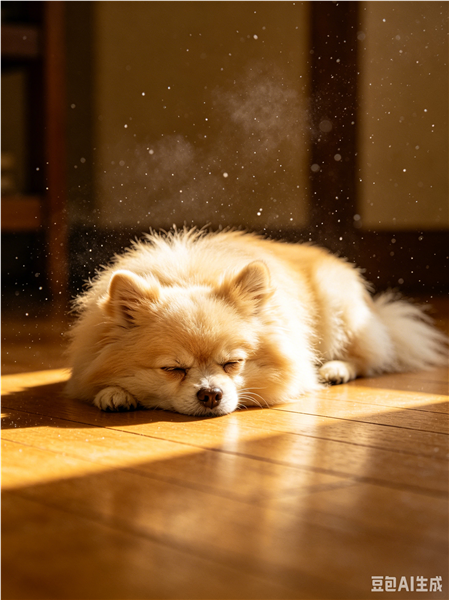
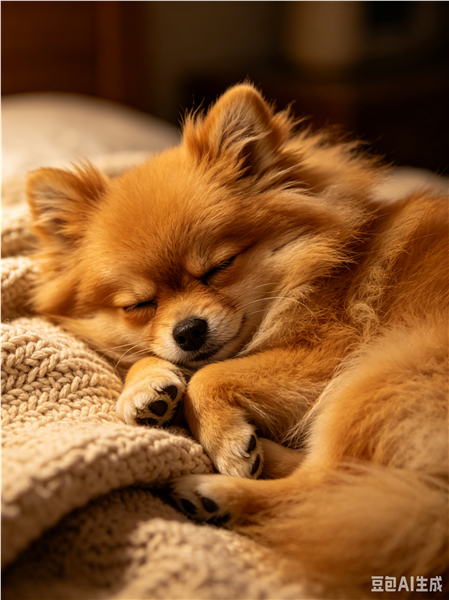
The classic "orange" Pomeranian—which can range from light cream and light orange to a deep, fox-red—is primarily a story of phaeomelanin. The intensity of the orange/red color is influenced by several factors.
Most solid orange Poms are homozygous for the recessive 'e' allele at the E Locus (genotype 'e/e'). This means their genetic code "switches off" the production of eumelanin (black pigment) across their entire body, allowing only phaeomelanin (red/yellow pigment) to be expressed. The specific shade of orange is then modified by other genes, often called "intensity" or "chinchilla" genes. These genes act like a dimmer switch on the red pigment, determining how concentrated or diluted it appears. A Pom with high intensity will be a vibrant red, while one with greater dilution will be a light cream.
It's crucial to note that many orange Pomeranian puppies are not born orange. They are often born a grayish, beige, or dark cream color. The final, rich orange or red color develops gradually as the puppy matures and grows its adult coat, a process that can take up to two years. This is why predicting the exact adult shade of an orange Pom puppy can be challenging.
The Genetics of the White Pomeranian
A true, pure white Pomeranian is not simply an extremely diluted orange. There are two primary genetic pathways to a white coat:
1. Extreme Phaeomelanin Dilution: Some white Poms start with the same 'e/e' genotype as an orange Pom, producing only red pigment. However, they also possess modifying genes that dilute the phaeomelanin to such an extreme degree that it appears white. This is similar to how a cream Pomeranian is a diluted orange, but taken further. These dogs may have faint cream or apricot shadings, especially on the ears, when very young.
2. The Spotting (S) Locus - Piebald/Parti-Color: A more common genetic route for a solid-white appearance is through the piebald or parti-color gene (S locus). A dog with two copies of the recessive spotting allele ('s/s') can exhibit extensive white patterning. In some cases, this patterning can cover the entire body, resulting in a dog that appears completely white. However, it's important to understand that this is technically an extreme white piebald. Genetic testing can sometimes reveal hidden color patches ("ghost markings") that aren't visibly apparent.
A key distinction is nose and eye-rim color. A white Pom from extreme dilution of red pigment will typically have black points (nose, lips, eye rims). A white Pom from the piebald pattern may have these points partially or fully pigmented, but in cases of very high white, they can sometimes have pink or spotted noses, which is a fault in the breed standard.
Color Changes and the "Ugly Puppy" Phase
Pomeranian owners are often surprised by dramatic color changes. An orange Pom puppy may darken significantly. A sable puppy (dark-tipped hairs) may clear to a solid orange as the dark eumelanin tips recede. This "clearing" process is governed by the Agouti (A) gene. The puppy coat is often a poor predictor of the final adult color, especially in oranges and sables. The much-discussed "ugly puppy" phase, where the puppy coat sheds to reveal the adult coat, is when the most significant color transformations occur.
Important Health Notes on Color Genetics
While coat color genetics are fascinating, responsible breeding must prioritize health. Certain color genes are linked to health concerns:
- Merle (M Locus): The Merle pattern, while striking, is not a traditional Pomeranian color and is introduced from other breeds. Breeding two merle dogs together (double merle) has a high risk of producing puppies with severe health issues, including deafness, blindness, and other neurological defects. Ethical breeders avoid merle-to-merle pairings.
- Extreme White (Piebald): Dogs with a very high degree of white spotting, linked to the 's/s' genotype, have a statistically higher incidence of congenital deafness. This is well-documented in many breeds and is something to be aware of.
Reputable breeders focus on producing healthy, temperamentally sound dogs that meet the breed standard. They use genetic testing not just for color but, more importantly, for known hereditary health conditions common in Pomeranians.
Predicting Puppy Colors: A Punnett Square Basic
While predicting exact shades is hard, understanding basic inheritance can give probabilities. For example, two solid orange Pomeranians (both 'e/e') can only produce orange-based puppies (cream, orange, red), as neither parent carries the dominant 'E' allele needed to produce black pigment. However, if an orange Pom ('e/e') is bred to a black Pom (which must have at least one 'E' allele), all puppies will inherit one 'e' from the orange parent and one 'E' from the black parent, making them 'E/e'. These puppies will be able to produce black pigment and may not be orange—they could be black, sable, or other colors depending on their other genes.
Conclusion
The captivating white and orange coats of the Pomeranian are the result of a delicate dance between multiple genes. The orange coat is a celebration of phaeomelanin, often intensified or diluted to create its signature warmth. The white coat can be the ultimate dilution of that warmth or the canvas of the piebald pattern. Understanding this small piece of genetic science not only deepens our appreciation for the breed's beauty but also highlights the importance of responsible, health-focused breeding practices. Whether your Pom is a fiery orange sunbeam or a fluffy white cloud, their true magic lies in their spirited personality, but the science behind their color is equally remarkable.