In countless cat-owning households, a wonderful scene is quietly unfolding: an elegant, aloof Persian cat sits properly on the sofa or cat tree, watching intently as a disc-shaped object on the floor buzzes back and forth. And that smart appliance called a "robot vacuum" diligently and uncomplainingly performs its cleaning task, as if completely unaware of the scrutinizing gaze from above, or perhaps already having a tacit understanding. This can't help but spark wild thoughts: Have they reached some mysterious agreement unknown to humans? One responsible for supervision, one for work? Today, let's deeply explore this interesting phenomenon and unveil the veil of cat-tech product interaction.
Chapter 1: The Supervisor Takes Office—Persian Cat's Territory Patrol and Curious Nature
Persian cats are famous for their dignified and magnificent temperament, sweet and calm personality, and long gorgeous coats. They are usually considered "nobility among cats", liking quiet, comfortable environments with strong awareness of territory. When a new "creature" that autonomously moves and makes low-frequency noise is suddenly introduced into the family, the cat's vigilance and curiosity are simultaneously ignited.
Initially, the robot vacuum may be an intruder to the cat, a strange "big beetle". The Persian cat may arch its back, puff its fur, and issue warning hisses. But soon, their keen observation reveals that this "beetle" seems to have no interest in them, neither providing food nor posing a direct threat. Its movement trajectory is fixed and clumsy, its only function being to vacuum dust and cat fur from the floor. Thus, vigilance gradually transforms into curiosity, and curiosity elevates into a condescending observation.
Persian cats naturally carry an "everything under control" composure. They choose high points in the home—TV cabinets, bookshelves, sofa backs, or the top level of their exclusive cat trees—to supervise every move of the robot vacuum with a posture like a monarch overlooking their territory. Their heads slowly rotate following the robot's "Z" or spiral paths, eyes focused as if evaluating its work efficiency, cleaning coverage, and whether it's crossed some invisible boundary (like near its food bowl or beloved toys). This supervision is not out of fear, but more like qualification review and daily management of the newly appointed "housework servant".
Chapter 2: Agreement Terms?—Interpreting Non-Verbal Communication Between Cats and Machines
The so-called "mysterious agreement" is naturally human's playful words. But from an animal behavior perspective, Persian cats and robot vacuums have indeed established a set of interaction patterns based on conditioned reflexes and behavioral habits, which we can humorously interpret as the agreement's "terms".
Term One: Non-Aggression Pact. The robot vacuum's built-in sensors avoid obstacles, naturally including stationary or slowly moving cats. Smart Persian cats quickly learn that as long as they remain still or walk away slowly, this metal lump won't bump into them. So cats learn to elegantly pace out of the robot's path or simply lie lazily, watching the robot detour around them to continue working, as if enjoying VIP avoidance treatment. This consolidates the cat's self-perception as "master of this territory".
Term Two: Cleaning Service and "Tipping". The robot is responsible for cleaning, especially collecting the floating fur that cats themselves dislike scattering everywhere. And the cat's "tip"? Perhaps permitting it to work in its territory, or occasionally "condescending" to lie on the just-cleaned floor still carrying the machine's residual warmth, using this behavior to signify "inspection passed". More interestingly, some cats will deliberately bat fallen toys (like balls, feathers) in front of the robot, watching the toys be pushed around by the machine, treating it as a novel interactive game.
Term Three: Noise Tolerance and Schedule Synchronization. Robot vacuums make noise when working, but usually this low-frequency humming, once adapted to, can even become white noise for cats. Many owners set the robot to start timing during the day after they go to work. Thus, "supervision activity" is added to the cat's daily routine. When the familiar startup sound plays, the cat jumps onto its "supervisor position" to begin routine patrol. This becomes part of their daily life rhythm.
Chapter 3: Best Partners or Plastic Friendship?—Safety and Fun in Interaction
For cat owners, seeing cats "peacefully coexist" or even "interact cutely" with robot vacuums is undoubtedly full of fun. But safety and hygiene also need attention.
Safety Aspects: Ensure the robot has good anti-tangling and anti-jamming functions to avoid cats' long fur (especially Persian cats' magnificent long fur) or tails being caught. The robot's side brushes and roller brushes need regular inspection and cleaning. Also avoid cats pouncing or batting at close range for extended periods while the robot works to prevent accidental tipping or part damage. Most importantly, never set the robot to operate unattended with new cats or kittens not yet familiar with it.
Hygiene Aspects: Robot vacuums are good helpers for cleaning cat fur and litter particles, but their dustbins and filters need frequent cleaning by owners (recommended after each work session), otherwise they become breeding grounds for bacteria and allergens, actually affecting cats' and family members' health. For long-haired breeds like Persian cats with large shedding amounts, even more frequent robot cleaning may be needed.
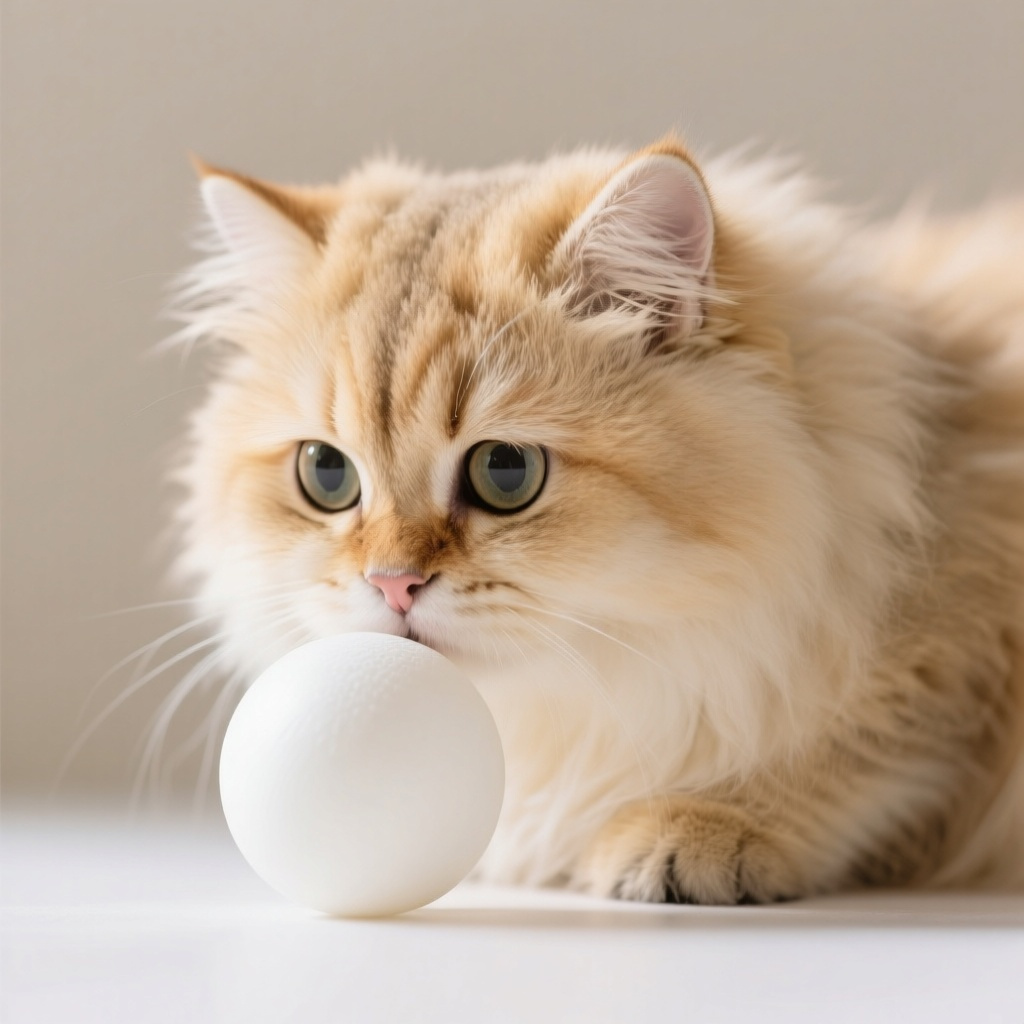
Fun Aspects: Many owners record wonderful moments of cats "supervising" through cameras: some stare unblinkingly with serious expressions; some doze off, supervision turning into "slacking"; some try to "guide work", using paws to attempt changing the robot's direction. These videos shared on social networks always trigger massive resonance and laughter from cat owners. Robot vacuums inadvertently become cats' "toys" and "companions", enriching their environment and providing mental stimulation.
Chapter 4: Beyond Robot Vacuums—More Possibilities for Cats and Smart Homes
The "agreement" between Persian cats and robot vacuums is just a microcosm of pet-smart home interaction. As technology develops, more products are considering pet needs:
1. Automatic Feeders/Water Fountains: Cats can learn to eat when specific sounds or indicator lights appear, forming routines. Flowing water fountains can better attract cats to drink more, benefiting health.
2. Smart Cat Litter Boxes: Automatic cleaning functions free owners, but cats need to adapt to their operation sounds and cycles. Some high-end models can also monitor cats' litter box frequency and weight as health data reference.
3. Interactive Cameras and Laser Toys: Owners can remotely control cameras through phone apps to talk to cats, or activate built-in laser points for cats to chase, achieving remote play.
4. Smart Pet Doors/Environmental Controllers: Ensure cats freely access safe areas while maintaining comfortable living environments through smart temperature control and air purification.
The core principles for introducing these tech products should all be gradual, positive, and safe. Give cats ample time to familiarize and adapt, establish positive associations with food or petting, and always prioritize pet safety and welfare.
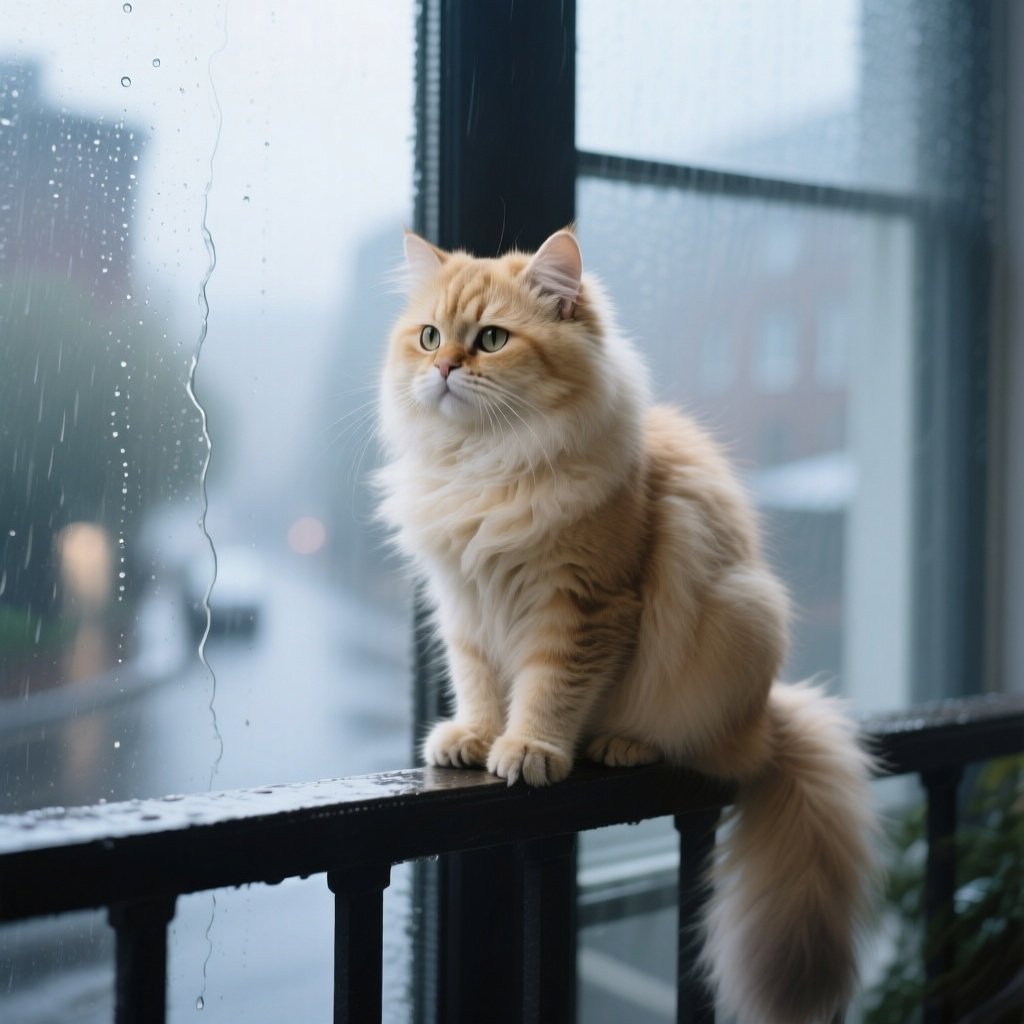
Chapter 5: Seeing the World from a Cat's Perspective—Why "Supervisor" Rather Than "Playmate"?
Unlike dogs being more inclined to view moving objects as play or chase targets, many cats (especially relatively calm breeds like Persian cats) have attitudes toward robot vacuums that lean more toward "observation" and "control". This stems from cat nature:
· Hunter and Observer: Cats are opportunistic hunters, spending much time in stationary observation, evaluating prey movements and environmental changes. The robot vacuum's regular, predictable movement pattern more easily triggers their "observation mode" rather than "hunting mode".
· Territory Awareness: Cats are territorial animals. Any moving object entering their territory needs evaluation and monitoring. As a permanent "moving furnishing", the robot vacuum's status and range of action are naturally on the cat's inspection list.
· Recognition of Non-Living Objects: Cats can actually distinguish between living and non-living things. They may not consider the robot an "animal", but view it as an interesting, moving element in the environment that needs attention. Their interaction is more exploratory and controlling, like using their body to block the path or batting with paws to test its reaction.
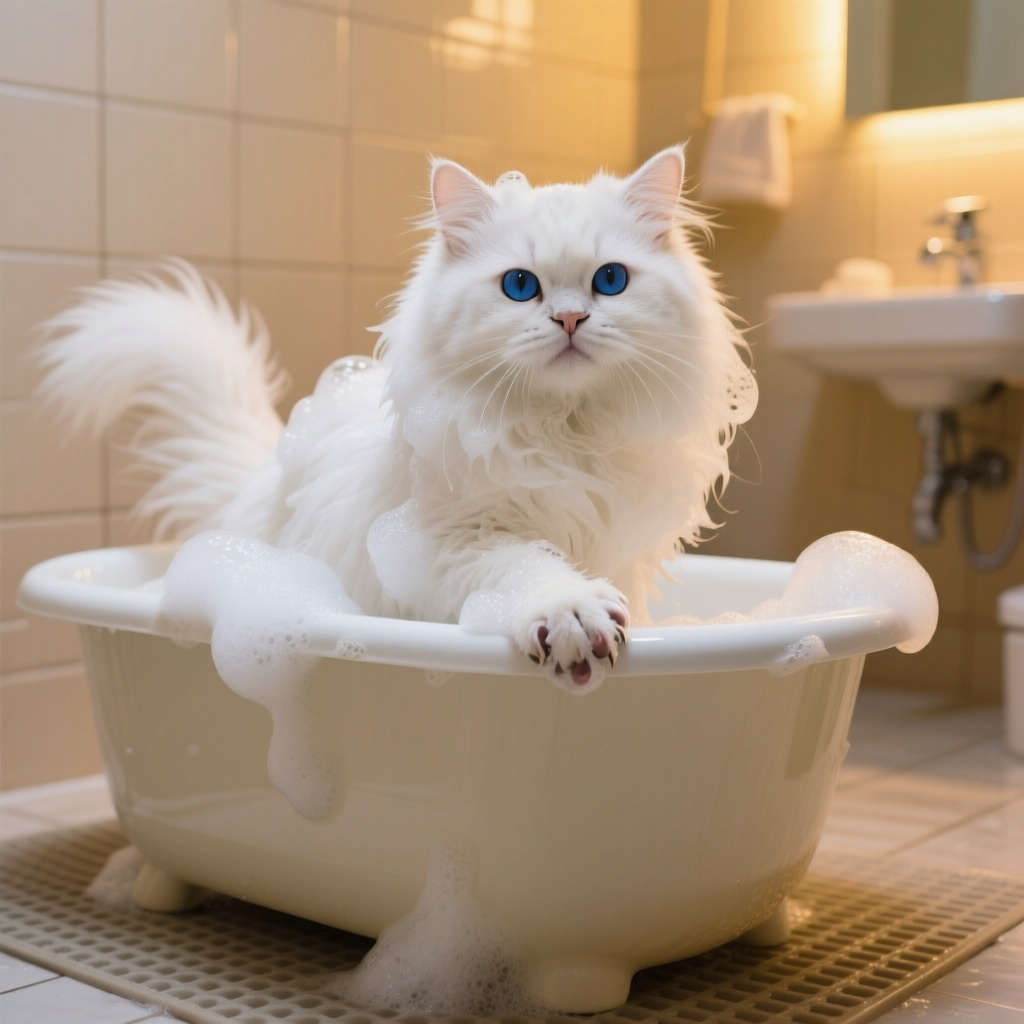
Therefore, using "supervisor" to describe a Persian cat's attitude toward a robot vacuum is extremely apt. They're not seeking a playmate, but fulfilling a lord's supervisory management rights over all active affairs in their territory.
Chapter 6: Cat Owner's Self-Cultivation—How to Facilitate a "Harmonious Working Relationship"
If you also want your Persian cat and robot vacuum to establish this harmonious relationship of "one supervising, one working", you can refer to the following steps:
Step One: First Meeting, Keep Distance. First place the stationary robot in the room, letting the cat explore and sniff on its own to familiarize with its scent. Don't force the cat to approach.
Step Two: Start Demonstration, Build Association. In a situation where you can control the scene, start the robot for short, low-intensity work. Meanwhile, you can use a gentle tone to soothe the cat and give its favorite treats or petting, building the positive association "robot starting = good things happening".
Step Three: Provide Safe "Viewing Platform". Ensure the room has stable elevated areas (like cat trees, cabinet tops) where the cat can safely overlook the robot working, satisfying its observation needs and eliminating ground-level nervousness.
Step Four: Gradually Extend Work Time. As the cat adapts, gradually extend the robot's single work session until completing whole-house cleaning. Always observe the cat's reaction—if it shows continuous tension or aggression, pause progress and return to the previous step.
Step Five: Respect the Cat's "Management". Once the cat is accustomed, it may develop its own unique interaction style. As long as safety is ensured, respect its behavior. Maybe it likes lying on the robot while it charges (enjoying residual warmth), or likes tossing toys in front of the robot. These are all part of their "agreement".
Conclusion: Coexistence Wisdom in the Age of Technology
The "mysterious agreement" between Persian cats and robot vacuums is essentially an interesting adaptation and coexistence between human-made objects across species and natural life. It reflects cats' powerful environmental adaptation ability and curiosity, and also embodies that modern tech products, when integrating into family life, need to consider the needs and feelings of all family members (including furry ones).
As owners, we're the creators and maintainers of this relationship. We introduce technology to make life more convenient, but absolutely cannot sacrifice pet welfare as the cost. Through patient guidance and careful observation, we can completely make smart appliances a beneficial supplement to pet life, even becoming a source of daily fun for them.
So next time you see your Persian cat master sitting properly, intently watching the hardworking robot vacuum on the floor, please don't disturb. Maybe a serious work report is in progress, or maybe just a quiet, era-specific companionship. After all, in their "agreement", we humans are perhaps just the "logistics minister" responsible for charging, emptying dustbins, and providing ultimate canned food.
This quiet yet ongoing "supervision" drama triggered by technology plays out daily in countless homes. It's insignificant yet full of life's charm and philosophical meaning—about adaptation, about control, about how to find one's comfortable and authoritative place in a constantly changing world. And our Persian cats are undoubtedly masters well-versed in this way.