Among many dog breeds, the husky is undoubtedly a "walking emoji" and a "paragraph player". One second, they can growl and tremble at an unfamiliar delivery box at the door, and the next second, they can't help but can't help but sneak up and smell it, or even scratch it with their claws. This classic contradictory behavior of "being afraid and wanting to get together" is jokingly called "the contrast between two Kazakhs" by the majority of favorite owners. It not only makes people laugh, but also often makes people sigh. So, what kind of natural code and behavioral logic are hidden behind this seemingly comical behavior? Today, let's take an in-depth analysis of the Siberian sled dog-Husky, this unique and charming "contrasting cute" nature.
1. Tracing the origin: "Social cattle" and "thinkers" on the ice sheet
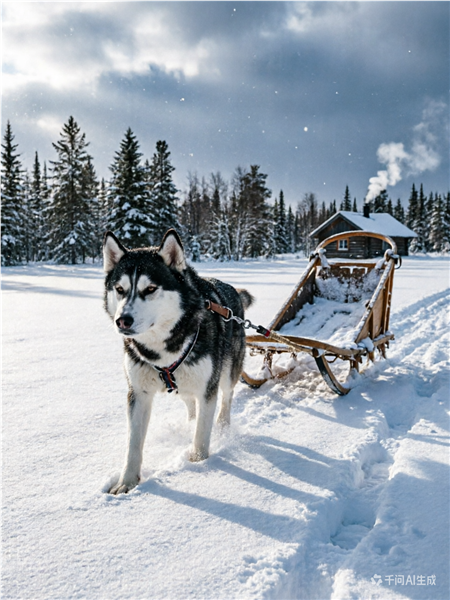
To understand the current behavior of huskies, we must go back to their origins. The husky originated in northeastern Siberia and is an ancient dog breed bred by the Chukchi people. Its main job is pulling sleds. The nature of this work profoundly shapes their core character:
1. Highly social and team collaboration needs: sledding is strict team work, requiring dogs to get along well with each other, and fatal fights rarely occur (otherwise the team cannot work). Therefore, the husky is born with a high degree of social willingness and friendliness to its own kind and humans (regarded as team leaders or partners). It is a well-known "natural acquaintance" and "social cow" in the dog world. They are eager to interact, extremely curious, and full of exploration of the world.
2. Independent decision-making ability: Traveling in the extremely harsh Arctic environment, the leading sled dog needs to have certain independent judgment ability to deal with emergencies, such as ice cracks, wind and snow stray, etc. This gives the Huskies the quality of independent thinking and even a little "opinionated". They are not machines that blindly obey, but working dogs that can "use their brains".
The combination of these two characteristics lays the foundation for "contrasting cuteness": strong social curiosity ("wanting to gather together") drives them to explore all new things; and the ancient survival instinct and independent thinking ability ("fear" or "caution") allow them to not blindly charge or retreat like some dogs that are highly dependent on their owners when facing potential risks, but will observe and evaluate first, showing a complex state of hesitation and temptation.
2. The psychological theater decomposition of "being afraid and wanting to get together"
When your Erha is faced with a new toy that can make sounds, a swaying sweeping robot, or a visitor wearing an exaggerated hat, a wonderful inner drama is playing out in its little head:
Scene 1: Alarm sounds (source of "fear")
Any unfamiliar, sudden, loud or irregular moving object triggers the dog's most basic vigilance system. Although the Huskies are friendly, they are quite vigilant. This kind of "fear" is not pure fear, but more a kind of "cautious assessment." Their body language becomes tense, their ears lean forward or turn to capture sound, their eyes focus, and they may let out a low sound or take half a step back. This is gathering information to assess "whether this item poses a threat."
Act 2: Burning curiosity (motivation to "want to gather together")
Almost as soon as the alarm sounded, the husky's strong desire for exploration and social instincts began to "move around". As a working dog, understanding every element of the environment was once necessary for survival. "What is that?" "Can it move?" "Can it eat? (Everything can be tasted)"" Does it have any intention to interact with me?" These issues drive them. Moreover, the Huskies are extremely energetic, and any new stimulation is an excellent opportunity to break the boredom.
Act 3: Contradictions and Temptation ("Contrast Cute" scene)
This is the most exciting stage. Caution and curiosity collide fiercely in the brain, leading to the classic "repeated cross-jump" in behavior: stick your nose forward and retract quickly; circle around the object and observe from all angles; slap it quickly with your paws and jump away; There may even be "barking provocation"(come here!) But the body keeps a safe distance. In this process, they are actually conducting "risk-controllable" exploration and testing the reactions and properties of objects in their own way.
Act 4: Resolution and Acceptance
After some testing, if they find that the object is harmless (such as a static carton), they may approach it boldly and eventually "incorporate" it into a sleeping nest or chewing toy; if the object continues to make unpredictable movements (such as a sweeping robot), they may choose to keep a distance and observe it or regard it as an interesting moving target that requires regular "supervision".
3. Why is "contrast cuteness" so prominent in huskies?
Not all dogs present contradictory behaviors as dramatically as huskies. This is due to their several unique "bonus" characteristics:
1. Rich expressions and outstanding acting skills: The husky's facial expressions and muscles are abnormally developed, coupled with unique ice-blue or heterochromatic pupils, can accurately convey complex emotions such as "doubt","shock","cowardice","cheap", and "curiosity", which are comparable to the "movie emperor" among dogs. The same inner conflict may not be obvious in the dog breed with a dull expression, but it is amplified into a comedy effect on Erha's face.
2. Body language is exaggerated: Their movements are often large and have a "funny" feeling. For example, the classic tentative step of "hunched back, sideways, with tail tucked but wanting to move forward" is full of dramatic tension.
3. IQ is online, but obedience "depends on the mood": Huskies have a high IQ and a fast learning ability, but they have a strong self-awareness. This means that they will not immediately turn off the alert system just because their owner says "don't be afraid", nor will they completely give up exploration because of "danger." They trust their own judgment more, so they externalize the entire "analysis-decision-making" process into the "contrast" behavior we see.
4. Excessive energy leads to "drama" when nothing happens: If you have no place to vent your abundant physical energy, it will turn into excessive attention to various things and "extra drama" behavior. An ordinary plastic bag, in the eyes of the boring Erha, may be a "romantic fate" that needs to be treated with caution.
4. How does the owner respond and guide correctly?
Understanding is the first step, and correct guidance can keep Erha's "contrasting cuteness" within a cute and safe range and avoid developing into real fear or destructive behavior.
1. The golden age and continuity of social training: Systematically exposing huskies to various people, dogs, the environment, sounds and objects during the puppy period (3-14 weeks) is the key to reducing excessive "fear" in adulthood. However, socialization is not once and for all, and should run throughout the dog's life. For new things, encourage the owner to guide it in a positive and calm way.
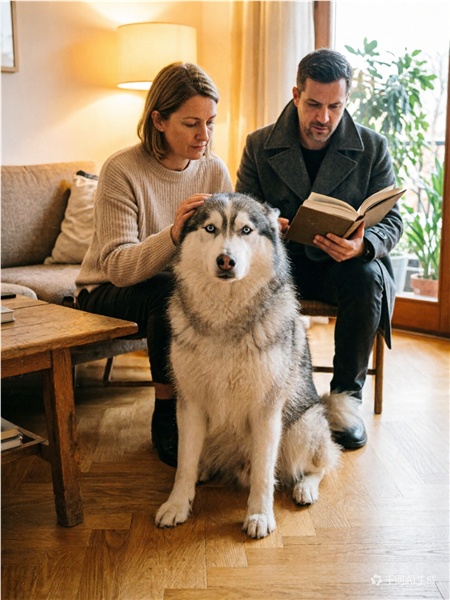
2. Be a "reassurance" rather than a "booster": When Erha shows caution, the owner should remain calm and encourage. You can speak in a relaxed and pleasant tone, first touch new objects calmly, and then encourage your dog to come and smell them. Avoid two extremes: one is to force it to come into direct contact, which will aggravate fear; the other is to over-comfort (such as hugging it tightly and constantly saying "don't be afraid"), which will be interpreted by the dog as "the owner is so nervous, this thing is really scary."
3. Use curiosity for positive correlation: Connect new things with good experiences while safely. For example, place snacks next to new toys and rice bowls near new mats. Let the dog discover for himself that "good things can happen when approaching this new thing."
4. Provide sufficient energy outlets: Ensure sufficient hours of outdoor exercise (running, sniffing, pulling cart training, etc.) and mental expenditure (missing toys, obedience training, learning new skills) every day. A physically and mentally exhausted Erha (although it is difficult) will respond much more calmly to novel things and not have so many "plays" to play.
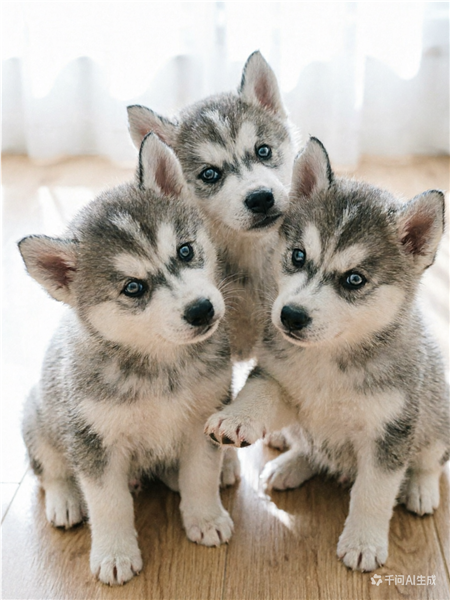
5. Respect its "safe distance": If the dog expresses strong discomfort about something, don't laugh or force it. Allow it to keep observing from a distance until it decides to get closer. The process itself is an important lesson in learning how to respond to the world.
5. The deep needs behind "contrast cuteness"
We appreciate the contrast between Harbin and Harbin, essentially appreciating a kind of vivid vitality: the never-ending curiosity about the world and the courage to bravely explore within safe boundaries. This nature makes them extremely interesting family partners. They remind us with their seemingly comical behaviors:
Life does not have to always be serious and certain. It is a valuable spirit of exploration to retain a little "afraid and eager" of the unknown. They need the understanding of their owners, not to shape them into obedient "good babies", but to protect their unique, contradictory but extremely real happiness and curiosity on the premise of ensuring safety.
So, next time when your Erha performs the "Annual Courage Show" in front of the vacuum cleaner, please don't just make a video and post it to your circle of friends. Might as well squat down and look at this "monster" from its perspective. Perhaps you will rediscover that there are still so many corners worth exploring with caution and excitement in this world we have long been accustomed to. And this is exactly the profound gift that Husky, the master of "contrast cuteness", brings us that transcends the companionship of pets.