For every new budgie owner, the first major task in welcoming this little life home is often preparing a warm and comfortable home—a cage. However, among the dazzling array of cages on the market, there hides a "beautiful trap" overlooked by many beginners—the round cage. It may seem delicate and cute, but it can pose a serious threat to the physical and mental health of budgies, even being called the "deadly round cage." Today, we will thoroughly dissect the knowledge of selecting a budgie cage, teaching you how to avoid pitfalls and choose a truly safe, spacious, and happy home for your little sprite.
Chapter 1: Why You Must Say No to the "Round Cage"?—Unveiling the Truth of the "Deadly Round Cage"
Many bird enthusiasts, especially first-time keepers, are easily attracted by the elegant, retro appearance of round cages. But in fact, round cages are highly discouraged in bird keeping for the following reasons:
1. Wasted Space and Restricted Movement: The circular structure eliminates corners, depriving parrots of a place to retreat for a sense of security. More importantly, when parrots move inside the cage, such as during short flights or hops, their movement is typically linear or zigzagging. The curved walls of a round cage constantly interfere with their movement paths, resulting in extremely low effective space utilization. A round cage that appears large in diameter has a much smaller usable area than a square cage occupying the same floor space.
2. Disorientation and Psychological Stress: Birds need clear reference points to orient themselves. The corners of a square cage provide distinct spatial landmarks. In a smooth, reference-less round cage, parrots can easily become disoriented. Prolonged exposure to such an environment can lead to anxiety, tension, and even behavioral issues like feather plucking.
3. Multiplied Safety Hazards: The doors on round cages are often small and located on the curved surface, making it difficult to securely install food dishes, water containers, and toys. Parrots are also more prone to slipping from the smooth, curved top when climbing. Furthermore, many cheap round cages may have weak connections and weld points, posing risks.
Therefore, the first iron rule in choosing a cage is: Resolutely choose a square or rectangular cage! This is the foundation for providing a budgie with mental well-being and physical safety.
Chapter 2: Detailed Explanation of Core Metrics—The Gold Standard for Budgie Cages
Choosing the right shape is just the first step. Next, focus on the following core metrics:
1. Size: Bigger is Better, But There's a Baseline
"The cage should only be for sleeping and eating; the parrot should spend most of its time outside." While this is the ideal, a sufficiently large cage is still a necessity. For a pair of budgies, the minimum recommended size is 50 cm long x 35 cm wide x 45 cm high. This is merely "survival space." If possible, a cage longer than 60 cm and taller will be much more comfortable for the birds. Remember a principle: Length and width are more important than height, because parrots engage more in horizontal movement (hopping, short flights) rather than simply climbing upward.
2. Bar Spacing: The Lifeline, Must Be Strictly Controlled
This is the most important safety metric! Budgies are small, and their heads can easily get stuck between bars that are too wide, leading to suffocation or serious injury. The standard bar spacing must be controlled between 10 mm and 12 mm (approximately 1-1.2 cm). It absolutely must not exceed 1.5 cm! Be sure to measure with a ruler when purchasing.
3. Material and Craftsmanship: Guarantees of Durability and Safety
Material: Stainless steel or rust-proof treated galvanized iron (ensure the coating is safe and non-toxic) are preferred. Avoid cages with paint that easily chips, as parrots may ingest it and suffer from heavy metal poisoning.
Craftsmanship: Check that the weld points are smooth, sturdy, and free of sharp burrs. The cage door should open and close smoothly and be equipped with a reliable latch (like a spring lock or bolt lock) to prevent clever parrots from opening it and "escaping." The cage bottom should ideally have a pull-out tray for easy daily cleaning of droppings and food debris.
Chapter 3: From "Shell" to "Fully Furnished"—A Checklist of Essential Cage Accessories
An empty cage is just a frame. The proper combination of the following accessories turns it into a real home.
1. Perches: Diversity and Natural Materials
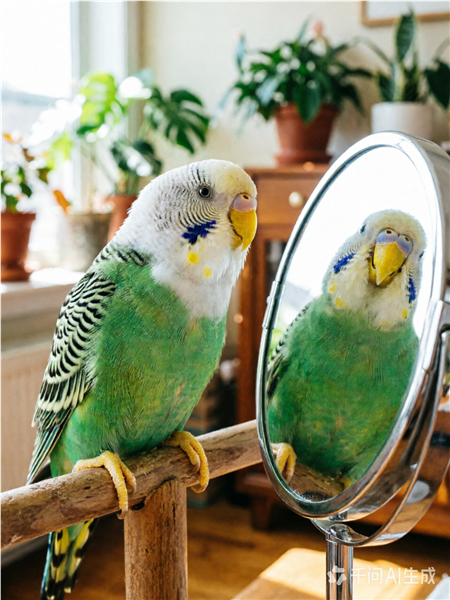
Avoid using perches that are all uniformly thick, smooth plastic or wooden dowels. This leads to single pressure points on the parrot's feet, easily causing bumblefoot. Provide natural branches of varying diameters (recommended range 1.2-2 cm) (such as applewood, pearwood, willow—ensure they are non-toxic and thoroughly cleaned/disinfected). The natural texture of branches helps wear down nails and exercise foot muscles.
2. Food and Water Dishes: Hygiene and Security are Key
Food bowls and water containers should be made of ceramic or stainless steel, which are easy to clean and less prone to bacterial growth. They must be securely attached to the cage walls to prevent them from being knocked over by the parrot or contaminated by droppings. It's recommended to have two sets of dishes: one for staple food (seed mix/pellets) and one for fresh vegetables and fruits.
3. Toys: Necessities for Enrichment and Stress Relief
Toys are not luxuries; they are key to preventing psychological issues like depression and feather plucking in parrots. Provide a variety of toy types:
Chewing Toys: Vine balls, cork blocks, cardboard toys to satisfy their natural chewing instinct.
Exploration Toys: Foraging toys that hide food, stimulating their intelligence and exploratory instincts.
Climbing Toys: Rope ladders, swings, etc. Note: Ropes must be natural cotton or sisal rope; synthetic ropes pose a risk of entanglement.Important Principle: Toys should be rotated regularly to maintain novelty, but avoid placing too many at once to prevent crowding out activity space.
4. Rest and Safety Areas: Nest Boxes and High Perches
Although budgies don't necessarily need a closed nest box for sleeping (unless for breeding), setting up a platform or a wider perch at the highest point inside the cage allows them to rest and observe their surroundings in peace. Ensure one corner of the cage is relatively quiet and less disturbed, serving as their "safe haven."
Chapter 4: Cage Placement and Daily Maintenance—The Final Piece of the Healthy Environment Puzzle
Even with the perfect cage, placing it incorrectly or neglecting upkeep can negate all your efforts.
1. Placement "Three Dos and Three Don'ts"
Three Dos: Place it in an area where family members are often active (like the living room) so the parrot can acclimate to humans and feel part of the family; place it near a wall or corner to provide a sense of security; ensure it's in a bright environment with natural light but no direct sunlight.
Three Don'ts: Do not place it in the kitchen (cooking fumes, toxic fumes from overheated Teflon coatings can be fatal); do not place it in drafts (air conditioning vents, directly in front of windows) or areas with sudden temperature changes; do not place it in a completely isolated, dark room.
2. Cleaning Routine: Daily and Weekly
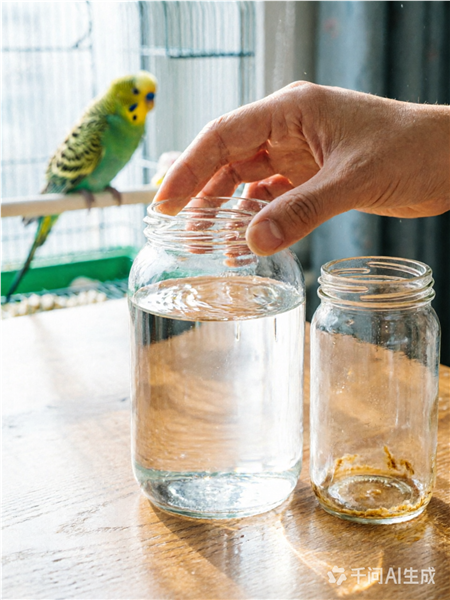
Daily: Change drinking water and wet food (vegetables/fruits). Wash food and water dishes. Clean droppings and hulls from the tray.
Weekly: Perform a thorough cleaning. Move the parrot to a safe temporary cage. Remove all accessories (perches, toys, dishes) and scrub them with hot water and a bird-safe disinfectant or vinegar solution. Thoroughly wipe down the cage bottom and walls. Let all items air dry or dry them completely before returning them. Replace all bedding material (e.g., newspaper, corn cob bedding, pet pads).
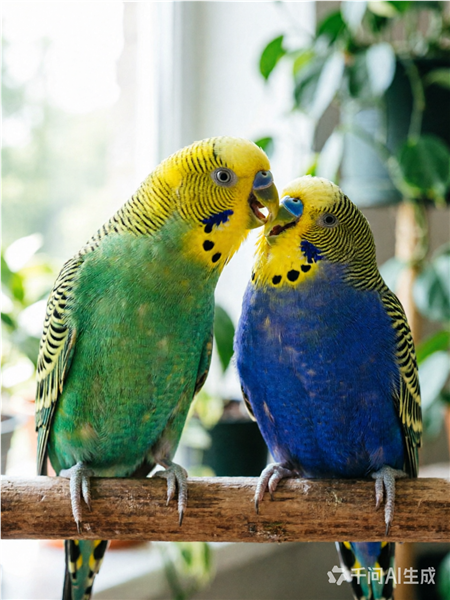
Regular deep cleaning is fundamental to preventing mite, bacterial, and fungal infections.
Chapter 5: Frequently Asked Questions (FAQ)
Q1: Can I DIY a bird cage?
A: Yes, but you must ensure all materials used (wood, glue, wire mesh) are absolutely safe and non-toxic for birds, and strictly meet the requirements for bar spacing, ventilation, and safe structure. For beginners, purchasing a professional bird cage is more reliable.
Q2: Does the cage need a cage cover?
A: It depends. At night or when the parrot needs quiet rest, covering the cage on three sides (leaving one side for ventilation) with a breathable dark cover can simulate a nesting environment, helping them feel secure and ensuring sleep. Remove it during the day.
Q3: Is there a big difference in cage requirements for one budgie versus a pair?
A: If keeping only one, the minimum cage size can be slightly more flexible, but it's still recommended to provide ample space, as a single parrot needs more toys and space to alleviate loneliness. For a pair, you must use the recommended minimum size or a larger cage to provide them with hiding places and room for individual activities.
Q4: Can I buy a second-hand cage?
A: Be very cautious. You must confirm the previous owner's birds were healthy and free of disease, and perform an extremely thorough and rigorous disinfection of the cage (including every crevice) to prevent residual pathogens. Check its structural safety and for any rust.
Conclusion
Choosing a suitable cage for a budgie is far from simply buying a "pretty house." It concerns the life safety, mental health, and quality of life of your beloved bird. Reject flashy but impractical "deadly round cages." Investing in a spacious, safe, and sturdy square cage, and thoughtfully enriching it while maintaining cleanliness, is the first and most important commitment you make as a responsible bird owner. When you see your budgie happily hopping, chirping, and exploring toys in its cage, you'll understand that all this careful selection and preparation is worthwhile. May every little budgie reveal its most vibrant vitality in a truly wonderful home that belongs to it.