How to Create a Quiet and Comfortable Breeding Environment for Arowana
Arowana, known as the "living gemstone" in the ornamental fish world, is highly sought after by high-end fish enthusiasts for its majestic posture, shimmering scales, and kingly demeanor. However, this beautiful and sensitive ancient fish species has extremely stringent requirements for its breeding environment, especially regarding "quietness" and "comfort." An improper environment can easily cause Arowana to become stressed, refuse food, crash into the tank, or even fall ill. Therefore, meticulously creating a stable, tranquil, and wild-like habitat is the core of successfully raising Arowana. This article will systematically explore how to create an ideal home environment for Arowana from the dimensions of environmental location, hardware configuration, water quality management, light and shadow control, and daily operations.
I. The Foundation of Stability: Aquarium Location and Placement
The "quietness" of the environment first stems from the stability and low interference of its physical location. Placing an aquarium is not a casual matter; it determines whether the Arowana can attain a basic sense of security.
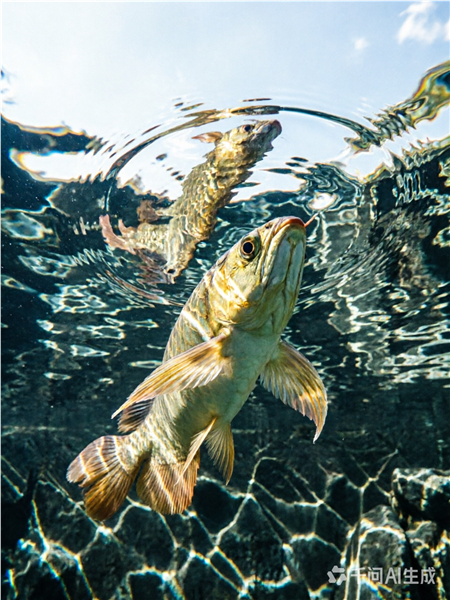
1. Keep Away from High-Traffic Areas and Noise Sources: Never place the aquarium near doorways, hallways, the center of the living room, or other areas with frequent human traffic or sudden loud noises. Vibrations and sound waves from washing machines, speakers, and televisions can be transmitted through the water, continuously startling the Arowana. Choose a relatively quiet location such as a study, a corner of a bedroom, or a dedicated media room.
2. Avoid Areas with Drastic Natural Light Changes: Avoid placing the aquarium by a window where direct sunlight can hit it. Strong sunlight not only causes drastic water temperature fluctuations and promotes algae growth but also the rapidly moving shadows outside the window (like tree shadows, car shadows) can be perceived as threats by the Arowana, triggering stress and shadow-chasing behavior.
3. Ensure Absolute Level Ground and Adequate Load-Bearing Capacity: A large Arowana tank, along with water, the cabinet, and decorations, is incredibly heavy. Before placement, ensure the floor is level and use a professional level to calibrate the cabinet. Any slight tilt will exert continuous pressure on the tank structure, leading to risks of leakage or even tank bursting. Load-bearing capacity must be strictly calculated.
4. Back Against a Solid Wall to Increase Sense of Security: Try to have at least one side of the aquarium (usually the back) tightly against a solid wall. This reduces visual disturbances and airflow from behind, providing the Arowana with a reliable "backing," mimicking the feeling of being backed against rocks or a riverbank in nature, significantly reducing its anxiety.
II. A Peaceful Abode: Scientific Configuration of the Aquarium and Equipment
Hardware is the skeleton of the environment; its selection and setup directly determine the physical comfort of the environment.
1. Tank Size: Bigger is Better: For adult Arowana, the tank length should be at least 150 centimeters, width no less than 60 centimeters, and height preferably between 60-80 centimeters. Ample space allows the Arowana to turn and swim freely, reducing stress caused by spatial confinement. Narrow space is a primary cause of its irritability and jumping.
2. Efficient and Quiet Filtration System: Water quality is the lifeline of a comfortable environment. A "sump filter" system is recommended due to its large filtration volume, strong biological processing capacity, and its isolation of pump and equipment noise inside the cabinet. Choose a reputable brand water pump to ensure sufficient flow rate (circulating the tank volume 6-10 times per hour) and low operating noise. Use soft tubing or noise-reducing rings at pipe connections to minimize resonance noise.
3. Silent Guarantees for Temperature Control and Aeration: Heaters should be reliable, with precise temperature control and explosion-proof features. It's usually better to use two lower-wattage heaters rather than one high-wattage one, placed evenly in the filter sump to ensure uniform and safe heating. An air pump is key for aeration and eliminating dead water spots but can generate noise. Place it inside the cabinet on vibration-absorbing foam or choose an ultra-quiet model. The air stone should produce fine, gentle bubbles, avoiding large, turbulent bubbles that cause disturbance.
4. The Necessity of a Tank Cover: A tight and secure tank cover is absolutely essential. This not only prevents tragedies caused by the Arowana's surprising jumping ability but also reduces water evaporation, maintains temperature, and blocks dust. The cover should have sufficient ventilation holes and be convenient for feeding and maintenance.
III. The Source of Life: Meticulous Water Quality Management
The comfort of "feeling at home" fundamentally lies in the water. For Arowana, the requirement for water quality is stability above all else.
1. Stability of Core Parameters: Water temperature should be constant at 28-30 degrees Celsius, with a day-night variation not exceeding 1 degree. Maintain pH within the slightly acidic to neutral soft water range of 6.5-7.5. The key is stability; avoid frequent, large adjustments. Ammonia and nitrite must be consistently 0, and nitrate levels should be kept below 20 ppm as much as possible.
2. The Science and Art of Water Changes: Regular water changes are key to diluting harmful substances and replenishing trace elements. It is recommended to change 1/4 to 1/3 of the water weekly. The new water must be "aged water" that has been dechlorinated through aeration for at least 24 hours and is at the same temperature as the tank water (difference not exceeding 1-2 degrees). When changing water, use a soft hose to add water slowly along the tank wall, avoiding direct impact on the fish or substrate, which could cause drastic fluctuations in temperature and water quality.
3. Reducing Water Current Impact: Arowana originate from relatively calm waters. Excessive artificial wave-making forces them to constantly fight the current, depleting energy and causing stress. Adjust the direction and angle of the filter outlet, or add a spray bar to disperse the flow, creating a gentle, uniform circulation current in the tank. Ensure there are both areas with resistance for body exercise and calm water areas for the fish to rest.
IV. The Art of Light and Shadow: Psychological Application of Lighting and Background
The visual environment profoundly affects the mood and color development of Arowana.
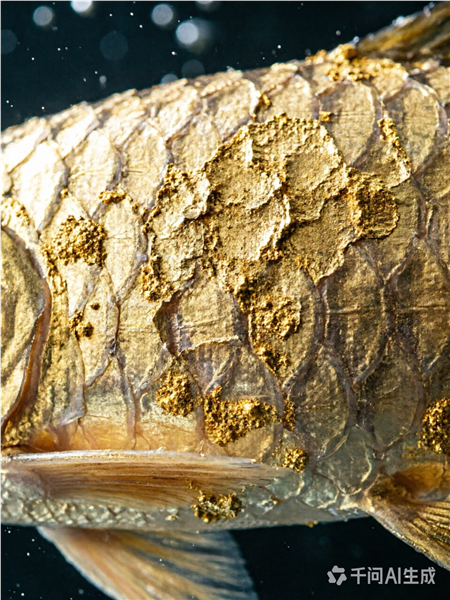
1. Lighting Selection and Rhythm: It is highly recommended to use Arowana-specific LED submersible lights or overhead lights, which offer soft light and good color rendering. The primary purpose of lighting is to promote gold intensity and scale development ("climbing"), not just illumination. 8-10 hours of light per day is sufficient. Using a timer is advised to simulate natural sunrise and sunset, avoiding sudden light-on or light-off actions that might startle the fish. A very dim night light can be left on at night to prevent the fish from panicking and crashing in complete darkness.
2. The Calming Effect of Background Color: The background color of the tank walls is crucial. For juvenile Arowana (below 30 cm), use white or light blue backgrounds to help them acclimate and reduce stress. For sub-adult and adult fish (above 30 cm), it is strongly recommended to switch to a dark background, such as black, dark blue, or opaque dark brown. A dark background greatly enhances the Arowana's sense of security, making its body color richer, its gold more intense, and reducing external activity interference.
3. Considerations for Aquascaping and Substrate: A bare-bottom tank (no substrate, minimal or no decorations) is the easiest to maintain and best for observing the fish's condition. It also prevents injuries from decorations if the Arowana chases live food or gets startled. If aquascaping is desired, choose smooth, non-abrasive driftwood or large river stones, securely anchored to create a simple, elegant layout. If substrate is used, choose a neutral, smooth-grained type and ensure strong bottom flow to prevent decay.
V. The Etiquette of Daily Care: The Philosophy of Quiet Maintenance in Upkeep and Interaction
Even the best hardware environment cannot withstand the disturbance caused by improper daily operations by the owner.
1. Regularized Daily Routine: Perform feeding, turning lights on/off at fixed times as much as possible. This helps the Arowana establish a stable biological clock, knowing when to expect food and when to rest, thereby reducing anxiety from uncertainty.
2. Gentle and Slow Movements: When approaching the tank, move calmly and gently. Avoid sudden, large gestures like waving, running, or jumping in front of the tank. Maintenance tasks like cleaning the glass or changing filter media should be done step by step with gentle movements.
3. Scientific Feeding Strategy: Use a balanced diet of specialized pellets, shelled shrimp meat, processed loach segments, etc., as the main food. A fixed signal (like a gentle tap on the tank cover) can be given before feeding, but never tease the fish by waving food quickly in front of it. Remove uneaten food promptly to prevent water fouling.
4. Emergency Response to Fright: If the Arowana is severely startled (e.g., lying down after crashing into the tank), immediately turn off the main light, keep the environment dark and quiet, and avoid watching by the tank. Usually, after several hours of rest, the fish will recover on its own. During this time, appropriate amounts of water conditioner and vitamins can be added to help alleviate stress.
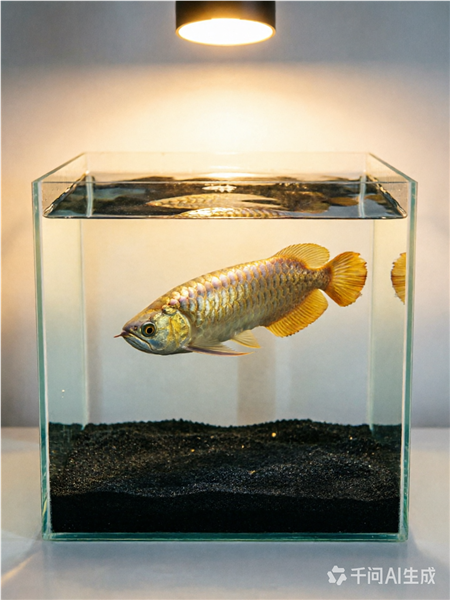
5. Cautious Approach to Community Tanks: For Arowana seeking an extremely quiet state, a single-species tank is the best option. If community stocking is desired, choose tank mates with gentle temperaments and non-conflicting activity zones (e.g., stingrays, Siamese Tigerfish, large, mild-mannered Characins). Ensure sufficient space and monitor closely. Isolate immediately if persistent fighting occurs.
VI. Long-term Monitoring and Mindset Adjustment
Creating a quiet and comfortable environment is an ongoing, dynamic process that requires the owner's careful observation and patient adjustment.
1. Become an Attentive Observer: Spend some time each day quietly observing the Arowana's condition. Is its swimming posture relaxed? Are its fins spread naturally? Is its appetite stable? Is there anything unusual on its body? Is its breathing rate normal? These details are the "barometer" of environmental comfort.
2. Regular Equipment Maintenance: Check monthly that the water pump and heater are functioning properly, and clean filter pipes to prevent water quality fluctuations or abnormal noise caused by aging or declining equipment efficiency.
3. Maintain the Owner's Own Calm Mindset: Fishkeeping is meant to be a practice of self-cultivation. The owner's impatience and frequent tinkering (like repeatedly changing backgrounds, adding/removing tank mates, performing large water changes) can directly translate into environmental instability. Trust in the power of stability, and give your beloved fish time and space to adapt and display its beauty.
In summary, creating a quiet and comfortable environment for Arowana is a systematic project that combines scientific knowledge, aesthetic design, and patient care. It requires us to start from the instinctive needs of the fish, building a stable, controllable, low-stress micro-ecosystem across multiple levels: physical space, water chemistry, visual light and shadow, and human interaction. When you see your Arowana swimming unhurriedly in the tank, its scales shimmering with golden light, its gaze calm and majestic, you will deeply understand that all the meticulous investment and attention to detail from the beginning have culminated in this moment of unparalleled satisfaction and achievement. This is not only a success in breeding but also the art of harmonious coexistence with an ancient life form.