The Arowana, with its majestic posture, shimmering scales, and kingly temperament, is hailed as the "feng shui fish" and the living gem of the ornamental fish world. However, raising an Arowana to achieve ultimate gold intensity and perfect condition is no easy feat. It requires the keeper to invest immense patience, meticulous observation, and scientific care knowledge. This article will delve into the various details of daily Arowana care, helping you cultivate brilliant golden scales and create a dazzling star in your aquarium.
Chapter 1: Foundational Preparation – Creating a Five-Star Home for Your Arowana
To do a good job, one must first sharpen one's tools. Before welcoming an Arowana home, it is essential to prepare a stable, comfortable, and safe living environment for it.
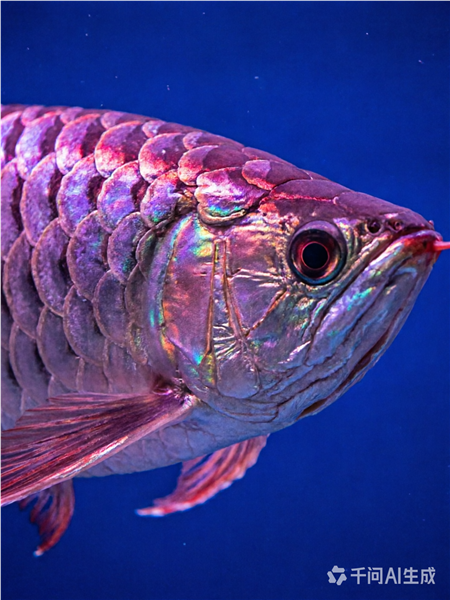
1.1 Aquarium Selection: Space is the Starting Point of Dignity
Arowanas are large, surface-dwelling, patrolling fish that can reach over 60 cm in length as adults. Therefore, aquarium size is the primary consideration. The recommended minimum aquarium dimensions are: length 150 cm, width 60 cm, height 60 cm. Width is particularly important; sufficient width ensures the Arowana can turn smoothly, preventing body deformities or nervous stress due to cramped space. A larger water volume (e.g., length over 180 cm) provides superior swimming space, benefiting the Arowana's physical and mental health and body development.
1.2 Filtration System: The Source of Life, the Foundation of Clarity
A powerful filtration system is the core of successful Arowana keeping. Arowanas have large appetites, produce significant waste, and heavily pollute water. A "sump" filtration system is recommended due to its maximum filter media capacity and efficient water circulation. Filter media should be combined scientifically: mechanical filtration (filter floss, magic pads) traps feces and leftover food; biological filtration (bio-balls, ceramic rings, quartz balls) cultivates nitrifying bacteria to break down toxic ammonia and nitrite; chemical filtration (activated carbon, purigen) serves as an emergency or special treatment method to adsorb medications, pigments, or adjust water parameters. Ensure the pump flow rate can circulate the entire tank volume 5-10 times per hour.
1.3 Temperature Control & Lighting: Creating a Tropical Rainforest Atmosphere
Arowanas originate from tropical waters, with an ideal water temperature range of 26-30°C, optimally maintained at 28°C. An accurate, reliable heater is essential; a dual-heater setup is suggested to distribute wattage and provide backup, preventing a single unit failure from causing a sudden temperature drop. Lighting is crucial not only for viewing but also for influencing scale gold intensity and color development. For gold-based Arowanas, white-spectrum or super white lights with a color temperature above 6700K are suitable, helping to enhance scale brightness. For crossback Arowanas, lower color temperature yellow lights or halogen lights can be used to promote thick gold rims and back climbing. Control daily lighting to 8-10 hours, simulating a natural day/night cycle.
1.4 Background & Substrate: Stabilizing Mood, Accentuating Beauty
Environmental color has an inducing effect on Arowana coloration. For juvenile stages (body length <20 cm), using a white or light blue background and tank bottom helps reduce environmental stress, promotes feeding and adaptation, but is not conducive to gold deposition. For sub-adult stages (20-35 cm), you can switch to a dark blue background to begin inducing color. For adult stages (35 cm+), a solid black background is strongly recommended, and dark substrate (like black quartz sand) can be added to the tank bottom. This maximally stimulates the Arowana's pigment cells, making its scale gold more intense and rich, while reducing the risk of dropped eyes. Background changes should be gradual to avoid startling the fish.
Chapter 2: Water Quality Management – The Invisible Lifeline
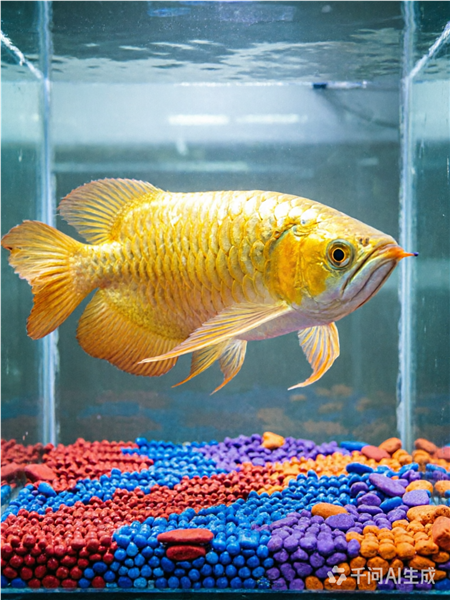
"Raise water before raising fish." For sensitive Arowanas, stable water quality is more important than pure water quality.
2.1 Core Parameters: Precise Monitoring
- pH Value (Acidity/Alkalinity): Maintained within a slightly acidic to neutral range of 6.5-7.5 is ideal. Arowanas can adapt to minor fluctuations, but avoid drastic changes. Use a pH tester for regular monitoring.
- Ammonia & Nitrite: Must be zero. Any detectable level is lethally toxic to Arowanas. This relies entirely on a健全的 nitrification system.
- Nitrate: The end product of nitrification; control below 50 ppm through regular water changes—the lower, the better.
- Hardness: Soft water is more beneficial for Arowana coloration and health. Use an RO unit to prepare pure water for blending and adjustment.
2.2 Water Change Procedure: Details Determine Success
Regular water changes are the most effective method to dilute nitrates and replenish trace elements. It is recommended to change water 1-2 times per week, each time replacing 1/4 to 1/3 of the total water volume. Water changes must follow this golden rule: Equal Temperature, Equal Quality, Slow Flow. The new water's temperature should be 1-2°C higher than the tank water (to prevent thermal shock), and it should be pre-aerated or treated with a water conditioner to remove chlorine. During the change, use a hose to slowly add the new water, avoiding direct flow impact on the fish. After the change, you can add an appropriate amount of nitrifying bacteria solution to help the system recover quickly.
2.3 Daily Maintenance: Perseverance
Observe water clarity daily, promptly clean physical debris from filter floss. After each feeding, use a fish net to remove surface oil film and uneaten food. Clean filter media once a month, using only tank water for a gentle rinse—never use tap water to avoid killing nitrifying bacteria. Regularly check all equipment (pump, heater, lights) for proper operation.
Chapter 3: Scientific Feeding – Fuel for Building Physique and Gold Intensity
"You are what you eat." Feeding directly relates to the Arowana's growth rate, body shape, gold intensity, and health condition.
3.1 Food Selection: Diversified Nutritional Balance
- Staple Diet: High-quality, dedicated Arowana pellets are the most nutritionally balanced, safe, and convenient choice. Select brands with high protein content and added color-enhancing ingredients like astaxanthin and spirulina.
- Live/Fresh Food: Can serve as important supplements but require strict handling.
- Small Fish & Shrimp: The best natural food. Shrimp are rich in astaxanthin, extremely helpful for coloration, but sharp rostrums and tails must be removed. Small fish need quarantine to prevent introducing pathogens.
- Insects: Such as crickets, centipedes, mealworms. Excellent as "treats" and for enticing finicky eaters; high in protein but also fat. Should not be overfed to avoid pickiness and obesity.
- Loaches, Frogs: Nutrient-rich, but loaches are tenacious. Before feeding, they must be properly handled (e.g., cut into pieces, frozen) to prevent them from injuring the Arowana's digestive tract.
3.2 Feeding Methods & Schedule
Juvenile Stage (<30 cm): Feed 2-3 times daily, following the 80% full principle to promote growth. Food should primarily consist of shelled shrimp meat, chopped small fish, and pellets. Sub-Adult Stage (30-45 cm): Feed once daily, begin controlling body shape to avoid excessive obesity. Increase the proportion of shrimp to enhance coloration. Adult Stage (>45 cm): Feed once every 1-2 days, even consider a weekly fasting day to maintain an elegant physique and strong appetite. Feed at fixed times and locations to cultivate good habits.
3.3 Color Enhancement & Gold Deposition
The essence of gold intensity is the deposition of guanine crystals in the fish's skin cells. Besides genetic factors,后天 lighting and environment are external factors, while nutrition is the internal factor. Consistently feeding foods rich in astaxanthin (from shrimp, krill) and spirulina provides raw materials for gold deposition. Simultaneously, a stable dark environment stimulates the Arowana to secrete more pigment for "camouflage," thereby deepening the gold intensity. This is a slow process measured in "years," requiring patience.
Chapter 4: Daily Observation & Disease Prevention
Preventing disease is far better than curing it. Daily meticulous observation is key to identifying problems.
4.1 Health Status Checkpoints
- Swimming Posture: Is it smooth and steady? Any tilting, rubbing against tank, floating, or sinking?
- Appetite: The most sensitive health indicator. Sudden refusal to eat requires high alertness.
- Body Surface: Are scales intact and glossy? Any white spots, red streaks, ulcers, or pineconing (dropsy)? Are fins spread out and undamaged?
- Eyes: Are they bright and clear? Any signs of cloudy eyes or dropped eyes?
- Feces: Are they well-formed? Any trailing feces or white feces (signs of enteritis)?
4.2 Common Disease Prevention & Response
Pineconing (Dropsy): Often caused by sudden temperature changes or water quality deterioration. Prevention lies in maintaining stable water temperature and quality. Early stages can be treated by raising temperature (to 32°C), adding salt (3‰ concentration), and increasing water change frequency.
Fungal Infection (Saprolegniasis) / White Spot Disease (Ich): Fungal or parasitic infections, more common at lower temperatures. Maintain suitable temperature; strictly quarantine new fish and items before adding to the tank. Treatment requires isolation and specific medications.
Dropped Eyes: Complex causes, related to uneven lighting, long-term looking down at objects outside the tank, or fat accumulation. Preventive measures include: using overhead lighting, covering tank sides, avoiding placing objects on the tank bottom that attract downward gaze, and controlling feeding to prevent obesity.
Enteritis: Mainly caused by unclean food or indigestion. Ensure food disinfection; do not feed spoiled food. Mild cases can be treated with fasting and temperature increase; severe cases require medicated baths.
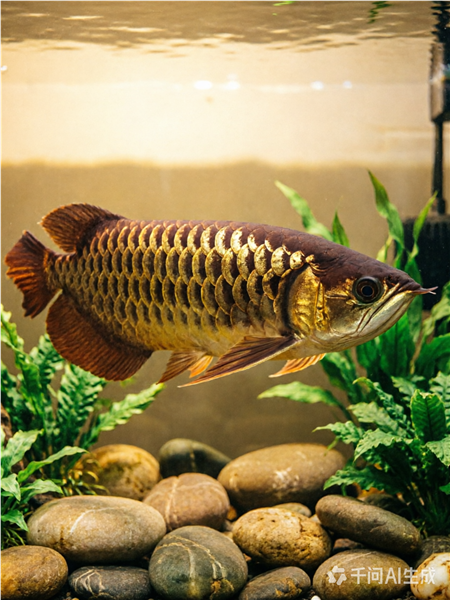
4.3 Community Tanks vs. Solitary Keeping
Arowanas are territorial; solitary keeping best showcases their kingly demeanor and simplifies management. If attempting a community tank, start with juveniles, provide a sufficiently large space with plenty of hiding spots, and be prepared mentally and materially (antibacterial medication, yellow powder) for potential fights and injuries. Common tank mates include: Siamese Algae Eaters (cleaners), Tiger Fish, Stingrays (require soft water), etc. Community keeping is a test of patience.
Chapter 5: Patience & Mindset – The Final Cultivation
Keeping Arowanas, especially pursuing极致 performance, is a long cultivation. For a crossback Arowana, gold intensity may take 3-5 years or even longer to fully mature. During this time, you will encounter fluctuations in condition, disease troubles, stalled coloration, and various other issues. Avoid being impatient for quick results and frequently making changes (like suddenly altering the environment, overusing additives, or hastily trying random treatments when sick).
The true secret lies in: Providing a stable, almost "boringly" high-quality environment, supplemented with balanced nutrition and patient等待. Every bit of细心 you invest will, tempered by time, transform into that stunning golden radiance on its scales. Enjoying each day with the aquatic king, observing its growth and changes, is in itself the greatest pleasure and reward of keeping Arowanas.
May every Arowana enthusiast raise the perfect beloved dragon from their heart—one with璀璨 scales and飞扬 spirit!