At three o'clock in the morning, the world was so silent that only heartbeats and tinnitus were left. I curled up in the corner of the sofa, submerged by that invisible tide called despair for the countless time. Breathing becomes difficult, and the future is endless darkness. Just as I felt like I was about to be completely swallowed up, a warm, fluffy body leaned over gently. It didn't bark, just touched my cold hand with its moist tip, and then quietly rested its head on my knees. At that moment, the boiling tears finally burst. It is not an ordinary pet dog. It is called Lucky and it is the savior who accompanied me through the darkest moments.
The intruder in the darkest hour
I met Lucky at the lowest point of my life. Continuous work stress, failed relationships, and a long-term backlog of emotional problems eventually pushed me into the abyss of major depression and anxiety. I quit my job, cut off most of my social interactions, and my daily life is just to spend my day in bed and fight with countless negative thoughts in my mind. The medicine numbed my emotions, but the hollow inside became bigger and bigger. The love and care of family and friends are like a layer of frosted glass. I can feel it, but I can't really touch it.

At that time, a friend who had also undergone psychological recovery carefully said to me: "Maybe you could consider getting a dog." I resisted almost instinctively. I can't even take care of myself, how can I be able to take charge of another life? But in countless insomnia nights, this idea flashed repeatedly like a faint spark. In the end, with an almost self-defeating "give it a try, it won't get worse" mentality, I went to the local animal shelter. Among a group of lively barking dogs, I saw him immediately-a quiet golden retriever that didn't squeeze into the front of the cage, but just looked at me with gentle, seemingly insightful eyes. The staff told me that it was abandoned because its former owner moved and had a very calm personality. This is it. I named it Lucky, hoping it would bring me and myself a little luck.
Forced to "live" daily life
The first week of owning a dog, I almost collapsed. Lucky's arrival completely shattered the rhythm of my self-indulgence. No matter how much I want to stay in bed, at seven o'clock in the morning, it will rub against my door with its claws on time, making a groan sound. It needs to eat, drink water, and go out to the toilet. For the first time, my world was forced to shift from "I" to "we".
I remember the first time I took it to the park, I was so nervous that my palms were sweating, afraid of meeting acquaintances and afraid of any social interactions. Lucky, however, was excitedly pulling the leash, full of curiosity about every tree and every piece of grass. It will roll on the grass, chase butterflies, and wag its tail excitedly when it finds a squirrel. Through its eyes, I seem to see again a world that I have forgotten for a long time-a world where simple happiness and vitality still exist. It forced me to go out of my house, into the sun, and into an environment with wind, grass, and chirping birds. The endorphins produced by exercise, coupled with the exposure of the sun, made my body feel a sense of relief for the first time.
The process of taking care of it also allowed me to re-establish the order of my life. Feeding, walking the dog, grooming, playing... these simple and repetitive routines are like anchors that temporarily fixed me from the stormy emotions. When I focus on preparing a nutritious meal for it, or patiently teach it a new command, the self-accusations and fears hovering in my mind will miraculously fade for a while. Psychologists often say that action is one of the most effective ways to change emotions. Lucky is the motivation to push me to "take action" in the gentlest and most irresistible way.
Silent empathist and emotional container
But Lucky means far more than just a "life supervisor" to me. The most amazing thing about it is that it seems to be able to accurately sense my emotions. On days when my mood is relatively stable, it will lively bring toys and invite me to play. When I fell into depression and sat on the sofa crying silently, it would immediately calm down, walk to me, put its big head on my lap, look at me with eyes full of understanding and care, and gently lick the back of my hand from time to time.
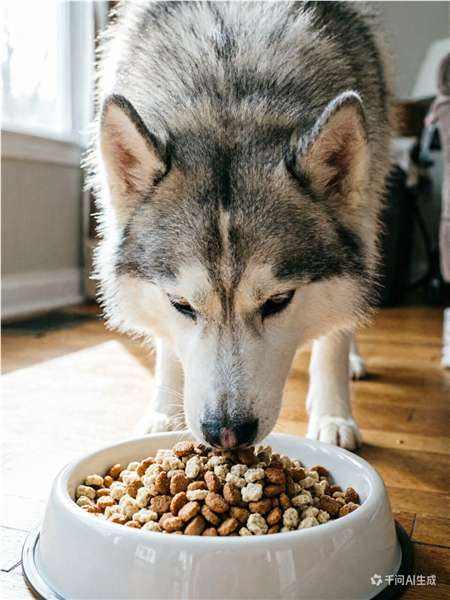
It never judges, never asks,"Why are you like this again?", and never gives any empty comfort. It was just there, telling me with its full existence: "I saw your pain, I was here with you, and it didn't matter." This kind of unconditional acceptance and companionship is something that no human can give 100%. It is like a warm and silent emotional container, carrying all my unspeakable sadness, anger and fear. On those nights when I couldn't talk to anyone, holding its thick and soft hair and listening to its smooth breathing and heartbeat could I feel a little safe and barely fall asleep.
Scientific research has shown that interacting with dogs can significantly lower levels of the stress hormone cortisol, while also raising levels of oxytocin (a hormone related to love and bonding) and endorphins (which make people feel happy). Lucky is my "living medicine". During a severe anxiety attack, I felt palpitations and suffocation. Lucky seemed to notice the abnormality. He did not panic, but trained (I later learned that this was a skill of some service dogs) to place his front paws on my chest and use his body's weight to apply gentle but continuous pressure. This method, known as "deep stress stimulation", magically alleviated my sense of panic and helped me regain the rhythm of my breathing.
Rebuilding the bonds of trust and love
Depression and traumatic experiences often undermine a person's trust in others and the world. I became suspicious, sensitive, and afraid of being abandoned. But the relationship with Lucky is an extremely pure exercise of trust. Its dependence on me is so direct and pure: come to me when you are hungry, come to me when you are thirsty, and come to me when you want to go out to play. And I must also become someone worthy of its trust. I had to feed it on time, safely carry it across the road, and comfort it when it was afraid of thunderstorms.
This feeling of being needed and absolutely trusted repaired my broken sense of self-worth little by little. I am not a "useless","drag down" piece of trash. I am Lucky's world, the source of its happiness and security. Although this responsibility is heavy, it is full of healing power. At the same time, Lucky also taught me what unconditional love is. Whether I am dressed well or unkempt today, happy or tearful, successful or failed, its attitude towards me has never changed. Its love has no strings attached and does not require me to be excellent, successful, and always positive. It loves me, the imperfect, struggling, real me. This kind of love became the starting point for my self-acceptance.
Through Lucky, I also learned again to connect with the outside world. When walking your dog, you will inevitably encounter other dog owners. From the initial rush past with his head lowered, to the brief pleasantries that he had to have because of the interaction of the dogs ("Your dog is so cute "," How old is he?"), Later, we could exchange some tips on dog raising and even ask to walk the dog together. These tiny, low-risk social interactions, like bridges, slowly redirected me back to human society. Lucky is my most natural "social lubricant". It resolves my embarrassment and gives me the safest and easiest reason to talk to strangers.

From "being redeemed" to "growing together"
Today, it has been three years since Lucky came into my life. I did not "miraculously recover". Recovery from depression is a long and tortuous road. I still need to manage my emotions and I still have times when I am in a bad state. But the difference is that I am no longer alone in the face of darkness. Lucky is like a constant light source in my life. It may not be dazzling enough, but it is enough to illuminate the road under my feet and make me no longer afraid to move forward.
I returned to work, albeit in a less stressful position; I reconnected with some friends; I started learning mindfulness and yoga, and took Lucky for simple outdoor activities. We even went together to obtain a basic pet healing certificate, and occasionally went to the community nursing home to volunteer, allowing Lucky to use its inherent gentleness to soothe other lonely souls. From "redeemed" to "co-growth partners", our relationship has completed the most beautiful sublimation.
Many people say that I saved the abandoned Lucky and gave it a home. But I know the truth is the opposite. It was Lucky who saved me with its purest vitality, unconditional love and silent wisdom when I needed it most. It taught me about responsibility, about the present, about non-judgmental acceptance, and about the resilience and beauty of life itself.
It is not just a pet, it is a family member and a benefactor
So, when you see this golden hair next to me, please don't just think of it as a "pet dog". It is the claw I stretch out when I am on the verge of collapse, the warmth I rely on in the long night, the teacher who makes me learn to smile again and look forward to tomorrow, and the furry savior who pulls me away from the abyss. Our story is about how two injured souls leaned against each other and healed each other.
If you are also going through difficult moments in your life and feel lonely and helpless, please don't completely close yourself off. Perhaps seeking professional psychological help is the first step. In addition, if conditions permit, consider letting an animal companion into your life. It could be a dog, a cat, or even a rabbit. The simple, direct and unswerving companionship they give can sometimes really create miracles. They remind us that love can be so pure that living itself is worth celebrating.
Thank you, Lucky. My luck, my light, my savior. In the future, we will continue to walk together.
(This article aims to share personal experiences and insights. Pets can be an important source of emotional support, but they cannot replace professional medical treatment. If you or someone close to you is experiencing mental health problems, be sure to seek help from professionals such as psychiatrists and psychotherapists promptly.)