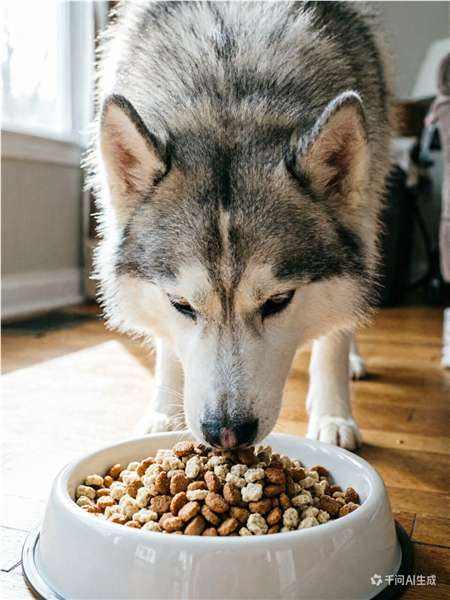
The cold wind of minus 52 degrees, like countless invisible skates, cuts the snowy plains of eastern Siberia that are shrouded in eternal silence. The moonlight was pale, reflecting the endless, undulating white waves, as if time itself had been frozen. In this Jedi, where even the most cold-resistant pine trees have shrunk their branches, a rapid but slightly sluggish breathing sound is tenaciously penetrating the roar of the wind. It was a team of sled dogs. The leader's hair had turned from the silver-gray in his youth to almost gray, especially around his nose and nose, as if it had been covered with a layer of frost. Its pace is not as light and elastic as the young companions behind him, and every step takes a heavy and solid feeling honed over time. Its name is 'Thunder', and it was once a legend of speed and endurance in this wasteland. Today, it is sixteen years old. For a sled dog, this is already the end of its life. Its eyes no longer have the sharpness of flames, but have the depth and tranquility of polar stars.
Emergency call: Isolated island deep in the ice sheet
The story begins three days ago, when a six-person geological research team encountered a rare "albino day" snowstorm while exploring deep into the no man's land east of the Lena River. Visibility dropped to zero in a few minutes, satellite communication equipment failed due to extreme low temperatures, the temporary camp they built was buried in two meters of snow, and the only snowmobile engine froze to death. Low temperatures, food shortages, and an infection caused by severe frostbite by one team member put the team in a desperate situation. The battery of the emergency beacon they carry is about to run out after continuing to emit distress signals. Hope is losing little by little with body temperature.
The nearest seasonal supply station with permanent personnel is 422 kilometers away. This is almost an overland distance considered "impossible" in winter. Taking off by a helicopter in such harsh and persistent snowstorm weather is tantamount to suicide. The only slim chance lies in an ancient mode of transportation-dog-drawn sledding. In the supply station, Ivan, the most experienced driver, received a vague coordinate signal. He counted all the sled dogs in the station, and finally his eyes fell on Lei Lei in the corner. Young dogs are full of vitality, but lack the experience and tenacity of navigation in long-distance and extremely harsh environments. This 422 kilometers is not an ordinary gallop, but an expedition racing against death. It requires the heart of a veteran who has experienced countless snowstorms, knows how to conserve physical strength, and knows why to run in desperate situations.
Ivan squatted down and stroked Thunder's back covered with old wounds and scars with his rough hands. "Old man," his voice hoarse,"this is the last time, for six lives." Thunder raised his head and licked Ivan's wrist with his warm tongue. Something was ignited in his old eyes. It was not the flame of youth, but the calm light of steel that was about to be thrown into the furnace.
Journey begins: Veterans and Their Team
The team set off during the respite of the snowstorm. Ivan did not choose the Thunder's usual leading position, but let it run in the middle of the team, hoping that the relatively relaxed environment would conserve its strength. However, less than fifty kilometers after departure, the new storm vanguard caught up. The strong wind swept up the snow on the ground, forming a terrifying "Snow Dragon Scroll", causing chaos between heaven and earth. The young dog began to panic in fear of completely losing his vision and sense of direction. The team's route became skewed and inefficient, and his physical strength was rapidly exhausted in unnecessary struggle.
Ivan blew a sharp command whistle. I saw a gray figure accelerating steadily and firmly from the middle of the team, walking step by step against the wind to the front. It's thunder. It did not try to hold its head high against the wind like a young dog, but lowered its head slightly and put its nose and nose close to the snow surface-there was weak airflow information and "memories" of the ancient path of reindeer migration that was half-hidden by the snow and it had stepped on countless times many years ago. It relies not on eyes, but on an intuition deeply rooted in the blood about every inch of the land's ups and downs. The team immediately quieted down and found its rhythm again. It was like a sharp arrow that split the wind and snow and moved steadily in the established direction. Ivan looked at the firm back that was looming in the snow curtain, his eyes burning. He knew that Thunder had not only taken over the lead, but also all the hope for the entire team to survive.
Extreme Challenge: Life and Death Test on 422 kilometers
The next journey was a purgatory test. They need to cross the ice rift valley known as the "Ghost Crying Depression", where deep ice crevices are hidden under the seemingly flat snow surface. Thunder's footsteps became extremely cautious. It sometimes stopped, gently slapped the snow with its front paws, tilted its head to listen, and sometimes led the team around a huge arc. Once, a young sled dog rushed forward due to excitement. His front hooves missed the air, and half of his body instantly fell into a crevice in the ice. At the critical moment, Thunder suddenly turned around and bit the dog's leash. His muscles bulged, and together with Ivan and the other dogs, he forcibly dragged it up. After the rescue, Thunder panted for a long time, but it did not rest. It just licked the young companion who was still in shock and turned around and started on the road again.
Hypothermia is another silent killer. During rest, Ivan would try his best to build a small fire, roast the frozen jerky until soft, and feed it to Lei Ning and other dogs first. He noticed that Thunder ate very little, often giving only a few symbolic licks before ceding food to younger, more expendable companions. Its sleep is also very shallow, any disturbance will immediately wake up, alert to observe the surroundings. Its physical strength continued to be exhausted, and its originally steady pace began to falter imperceptibly, but it never stopped, and it did not even show the slightest hesitation. Every time Ivan tried to slow down, Thunder would turn around and make a low, urging whimper. Time is the lives of those trapped scientific research team members.
At the 280th kilometer, they encountered the most terrible enemy-the ice storm. On the unobstructed frozen river, the wind speed reaches 30 meters per second, and the temperature drops to minus 60 degrees. The sled could hardly move forward and the dogs were blown sideways. Ivan himself reached his limit, and he felt a numbing tingling pain in his fingers and toes, a precursor to frostbite. Despair began to spread. At this moment, the thunder let out a long and loud howl. The sound penetrated the storm and seemed to come from the ancient soul of the wilderness. It began to move forward in a peculiar zigzag route, taking advantage of subtle changes in wind direction to create a small zone of weak wind resistance for the team and sled behind it. It was completely dragging its body forward with will power, and every step it took seemed to snatch distance from the cold hands of death. The eighty-kilometer glacier was the longest journey Ivan had traveled in his life. What he saw in his eyes was not just a dog, but a saint who burned his life and kept his promises.
The final journey: the finish line of burning life
The 390th kilometer. The lights of the supply station were already like faint stars in the sky, flashing at the end of his vision. Hope is close at hand. But Thunder's state made Ivan's heart sink to rock bottom. Its running posture has been completely deformed, and the swing of its rear legs seems stiff and uncoordinated, a sign of extreme fatigue and recurrence of old joint injuries. Its breathing sound was like a broken bellows, heavy and hoarse, and even some foam appeared at the corner of its mouth. Ivan shouted loudly, trying to make it stop, even if it rested for ten minutes. But Lei Lei only looked back at him. At that glance, Ivan would never forget-there was no pain, no pleading, only a clear peace that had completed his mission, and a trace of unquestionable determination. It turned its head, used all its strength, made a short urging sound, and accelerated its pace again. It was no longer a running, but a tragic leap forward again and again.
The last thirty kilometers were completed in silence. All the sled dogs seemed to feel the will of the leader. They silently and mechanically followed the swaying figure that never fell. Ivan burst into tears, and his tears instantly turned into ice marks on his face. He knew that Thunder was running towards its end, not a supply station, but a complete end to its dignity and loyalty in life.
The 422nd kilometer. The sled crashed into the wooden fence of the supply station. The lights were bright and the voices were noisy. The rescue team immediately assembled, armed with medicine, supplies and new navigation equipment, ready to reverse to the trapped site. Ivan rolled off the sled and rushed to the front of the team. Lei Lei stood there quietly, maintaining a leading position, his head slightly raised, looking in the direction where the scientific research team was trapped. Its chest no longer heaved violently, and its hoarse breathing also stopped. Ivan gently stroked its head with a trembling hand. Lei Lei slowly turned his head and used his last ounce of strength to lick Ivan's palm. The rough and warm touch was the last touch of warmth Ivan felt. Then, it was like an ice sculpture that had completed all its missions. Its limbs softened slightly, and it fell safely and straight on the white snow, never getting up again. Its eyes were not closed, but it was still looking into the distance, as if confirming that the rescue team had set off.
Remnants echo: claw prints that never fade
Seven days later, all six scientific expedition team members were rescued. The team member with frostbite infection was out of danger because he received medicine in time. They heard the story of the old sled dog named Lei Lei. The youngest scientist among the rescued team members couldn't get up on his knees at the place where the thunder fell at the supply station.
Thunder was buried on a sunny hillside next to the supply station, where you could overlook the vast snowfield that it had guarded all its life. There are no gorgeous tombstones, only a simple wooden sign with its name and a line of words engraved on it: "It ran 422 kilometers not to prove strength, but to explain what loyalty and love are."

Ivan no longer leads the bobsleigh team. He said the greatest run he had ever seen in his life was over. But he would often come to that hillside and sit for a while. The Siberian wind is still harsh, but whenever the wind blows across the snowy plains and rolls up layers of snow waves, Ivan always feels that it is thunder and its ancestors, still running freely and silently in this white wilderness. Their claw prints are buried by the wind and snow, but their stories, together with the brilliance of life that transcends species and shines in desperate situations, will always be engraved in the memory of this land, warming everyone who knows it.
The value of life is never measured by its length, but by the weight it carries and the brightness it blooms. Lei Lei spent sixteen years of his life, especially the last 422 kilometers that burned out, to write an epic about courage, responsibility and unconditional love. It reminds us that on this planet, there are some bonds that can span all severe cold; some run, the end point is eternal. The snowy plains of Siberia will continue to be silent, but the last footprints of the old sled dog have turned into stars, guiding all those lost in the cold to find warmth and the direction of home.