The sun outside the window is still bright, but for this family, the sky seems to be covered with a layer of gray gauze forever. 16-year-old Maomao, a golden retriever who has accompanied the family throughout adolescence, was diagnosed with a brain tumor during a recent physical examination. The doctor said that the location of the tumor was extremely risky, and considering Mao Mao's age, he recommended conservative treatment to accompany him through his few last days.
1. Silent alarm: Early symptoms of brain tumors can easily be ignored

Looking back, everything was not without signs. About half a year ago, my mother discovered that something was "wrong" with Maomao. Occasionally, it will bump into furniture for no reason, seem to lose its sense of direction when walking, and the instructions it once mastered become sluggish. The most heartbreaking thing is that it sometimes stands blankly in the corner, facing the wall, for ten minutes at a time, as if lost in another world.
"At first we thought we were just getting old and confused." Her mother's eyes turned red when she recalled it."It is 16 years old, equivalent to a hundred years old in humans. It seems reasonable to be slow in movement and decline in cognition. We supplemented it with nutrients and took it to get more sun, but we never thought that something was growing in our brain." In fact,the early symptoms of brain tumors in older dogs are very confusing: behavioral changes (such as becoming withdrawn or excessively clingy), circling in place, loss of balance, seizures, decreased vision or hearing, changes in appetite, etc. These signs are often simply attributed to "old age and frail health", thus delaying the best time for intervention.
It was not until Mao Mao showed obvious systemic convulsions for the first time and foaming at the mouth that his family was sent to the hospital in panic. After an MRI examination, the cruel diagnosis finally surfaced: there was a tumor in the frontal lobe area of the brain. The doctor pointed to the shadow on the image that should not exist and explained the severity of the condition in a heavy tone.
2. Difficult choices: treatment or hospice care?
Faced with the diagnosis certificate, the whole family fell into great pain and choices. Surgical resection is theoretically the most thorough method, but for Mao Mao, who is 16 years old and whose heart and lung function has declined, the risk of anesthesia is extremely high, and postoperative recovery is an unimaginable challenge. Moreover, the tumor is located close to important functional areas, and the operation is likely to cause serious sequelae. Radiation therapy (radiotherapy) has a certain effect on canine brain tumors, but it requires multiple anaesthesia to locate and irradiate, which is also a heavy burden on elderly dogs.
After in-depth communication with the veterinarian and a comprehensive assessment of Maomao's quality of life (QOL), the family made a loving and reluctant decision: to abandon radical treatment and turn topalliative care and hospice care. Treatment options include the use of low-dose steroids such as prednisone to reduce brain edema and relieve neurological symptoms, and antiepileptic drugs to control possible convulsions. The primary goal is no longer to cure the disease, but to minimize Mao Mao's pain and allow him to live comfortably and with dignity for the rest of his life.
"We don't want the last stage of its life to be spent in a cold hospital, undergoing various painful examinations and treatments." Dad said,"It has loved us all its life. We want it to feel the warmth of home last."
3. The final dependence: "Mom, don't leave me"
After being diagnosed and returned home, Mao Mao's behavior changed significantly. It became extremely clingy, especially to mom. It used to like to bask in the sun alone on the balcony, but now it follows its mother wherever she goes, never leaving her. When his mother goes to the kitchen, he lies on the kitchen door; when his mother watches TV on the sofa, he must rest his head on his mother's feet; even when his mother gets up in the middle of the night to go to the toilet, he will struggle to get up and stay sleepy. Outside the bathroom door.
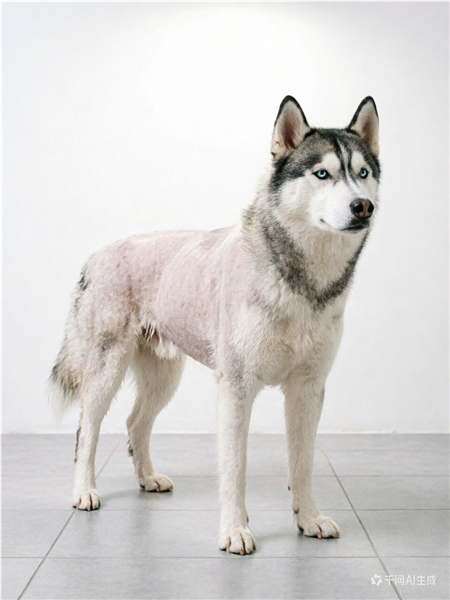
The most heartbreaking thing is its eyes. Those eyes, which were once clear, bright and full of vitality, are now often shrouded in confusion and uneasiness. But when it looks at its mother, its eyes will show a complete dependence and supplication, as if to say: "I know I am sick, I am afraid, please don't leave me alone."
Animal behaviorists point out that sick pets, especially those with diseases that affect the nervous system, such as brain tumors, may show strong dependence due tocognitive dysfunction and lack of security. Their world has become chaotic and unpredictable due to disease, and familiar owners (especially the main caregivers) have become the only "anchor" they can grasp and a source of safety and comfort. Mao Mao's "clingy" is not a coquettish, but a signal for help and attachment to the person she trusts most, driven by her life instinct.
Mom quit part of her job and stayed at home as much as possible. She prepared the softest and warm nest for Maomao and placed it in the center of the living room to ensure that he could see his family when he looked up. She learned to massage Maomao and gently stroke its head and spine, which slightly relieved its tension. Feeding medicine has also become a task full of skill and patience, always hiding the pill in its favorite food and watching it swallow can only feel at ease.
4. High-quality companionship: How to spend the last days
During this countdown, the whole family adjusted the pace of life, with only one core: making Maomao comfortable and happy.
1. Environmental adjustment: In order to prevent Mao Mao from being injured due to dizziness or vision problems, the home cleared all obstacles in the aisles and wrapped anti-collision strips on the sharp corners of furniture. Its water and food bowls are placed in fixed and easily accessible positions. The ground is covered with non-slip mats to make it easier for it to get up and walk.
2. Dietary care: Brain tumors and drugs may affect appetite and swallowing. The family prepared high-calorie, easily digestible liquid or semi-liquid food for Maomao and ate less and more meals. Sometimes you need to feed it bit by bit with your hands to encourage it to eat and maintain basic physical strength.
3. Comfort care: Due to reduced activities, family members regularly help Mao Mao turn over and gently comb her hair to prevent bedsores and hair knots. Use pet-specific wipes to clean your body and maintain hygiene. When it was awake and in a slightly better condition, it would be pushed in a wheelchair to the garden downstairs, allowing it to smell the familiar scent of flowers and plants, feel the breeze and sunshine-these were all its favorite enjoyment.
4. Pain and symptom management: Strictly follow doctor's advice and closely observe Mao Mao's condition. Record the frequency, duration of its seizures, and manifestations of pain (such as groaning, restlessness, hiding, resistance to touch specific areas). Maintain close contact with your veterinarian and adjust pain relief or sedation plans in a timely manner.
5. Create calm moments: Family members will sit next to Maomao, talk to it softly, recall interesting things about its childhood, and play some soothing classical music. Avoid loud noises and sudden sounds and create a peaceful, low-pressure atmosphere for it.
5. Read its language: When to say goodbye
This is the most difficult lesson for any pet owner when dealing with dying pets. How do we judge when "persistence" is love and when "letting go" is greater love?
Veterinarians often advise owners to focus on severalkey indicators for quality of life assessments:
- Is the pain controllable? Does pain persist and cannot be effectively alleviated with medication?
- Can I eat and drink water? Do you refuse food and water completely, or experience severe difficulty swallowing? < li>Can it be excreted voluntarily? Are you incontinent, or are you unable to get up to drain?
- Are there any happy moments? Do you have any positive reactions to interactions you once loved (such as touching, hearing the owner's voice)?
- Is it more discomfort and pain? Is the time of pain far more than the time of calm or comfort?
For Maomao, her family is clearly aware of the turning point. It began to have frequent seizures, and it was difficult to control even if the drug was increased. It can hardly stand on its own, and its appetite is completely lost, and it needs to be maintained by nutrition injections. Most of the time, it fell into a coma, occasionally waking up with empty eyes and heavy breathing. The most worrying thing is that it doesn't seem to have the strength to express pain.
"It no longer looks at me, no longer responds to my calls, and even when I touch it, its body stiffens slightly. It may be an unconscious painful reaction." My mother said with tears,"We understand that every minute and second left behind is not enjoyment, but suffering. Our reluctance is turning into a selfish torture for it."
6. The final gift: farewell at home in peace
After repeated communication with the veterinarian, the family decided to arrange for Mao Maoto be comfortable at home. They hope that Maomao can leave peacefully in the most familiar and reassuring place, surrounded and comforted by the whole family.
That day, the sun was very good and sprinkled on Maomao's favorite blanket. The family sat around it and told it over and over again: "Maomao, you are the best dog. We will always love you." After the veterinarian arrived, he first injected Mao Mao with a powerful sedative, allowing him to completely relieve himself of his pain and fall into a deep, dreamless sleep. After it completely relaxed, the second dose gently stopped its heartbeat. The whole process was quiet and rapid, without fear or struggle. Mao Mao seemed to have fallen asleep, her face peaceful.
"It finally breathed out a gentle breath, and then its body relaxed completely. I know it doesn't hurt anymore." My mother said,"Although my heart feels like it has been hollowed out, I feel relieved to see that it is finally free of pain. We gave it a complete and beloved life, and gave it a dignified and peaceful ending."
7. The love left behind: sadness and remembrance
After Mao Mao left, the house was horribly quiet. The golden figure was no longer on the sofa, and the sound of expectant footsteps was no longer heard at the door. A huge sense of loss hangs over every family member. They allow themselves to grieve, cry, and remember. They sorted out Maomao's toys, necklaces and photos and made a small commemorative corner.
A few weeks later, they planted a small tree in the backyard and named it after Maomao. "Every time we see this tree, we feel that Mao Mao continues to accompany us in another form, in the wind, in the sun, and in the cycle of the four seasons." Dad said.
This experience also gave the family a deeper understanding of life and companionship. "Pets teach us not only love and joy, but also profound lessons about responsibility, disease, aging and death. Learning to face parting is the last and heaviest gift they leave to us."
conclusion
"In the last days after the diagnosis of a brain tumor, the 16-year-old only clung to its mother every day and refused to let go." This is not just a story of illness and farewell, but a story of understanding, respect and selfless love. When Mao children's lives come to an end, they cannot express their fear and pain in words. They can only seek final comfort in the most instinctive way-snuggle, stare, and follow. As masters, what we can do is to dry our tears, become their most solid support, and fill their final journey with patience and gentleness until the moment when we have to let go. Then, carry on living with all the love they give us, and always remember that they loved us so unreservedly.
If you are going through a similar difficult time, remember that you are not alone. Seek professional guidance from a veterinarian, join a support group for hospice care for pets, and allow yourself to feel and express grief. All the efforts and difficult decisions you make for your child stem from the deepest love. And love is the strongest bond that transcends life and death.