Among many dog breeds, the husky sits firmly at the top of the "dog world drama" with its unique appearance, rich expressions and unpredictable behavior. If you are a husky owner, you have probably seen the "Oscar-level" performance they perform to achieve their goal: one second they are alive and kicking, the next second they suddenly limp; clearly not injured, they are showing tears in the face of the food. Eyes that are about to cry. These behaviors are not simply naughty, but there are complex cognitive abilities and psychological motivations behind them. This article will deeply analyze the secrets behind the husky's "acting" from the perspective of animal behavior and psychology.
1. Record of Husky's "Acting Skills": Common Drama Awards
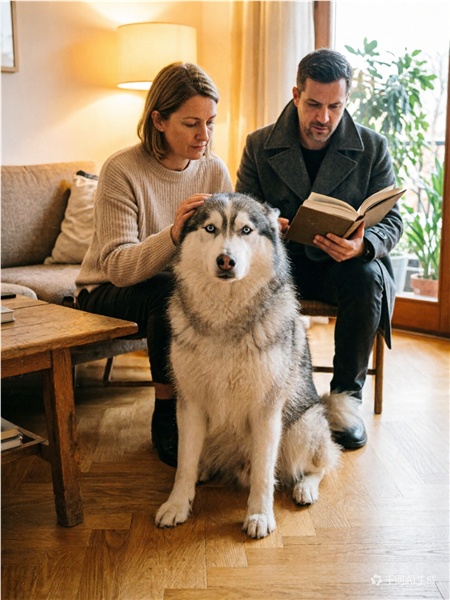
Huskies 'acting talent is reflected in all aspects of life. They understand "prescribing the right medicine" and switch different stages according to different situations and masters' personalities.
1. Classic bitter drama: pretending to be lame and pretending to be injured
This is the most common and most worrying move for the owner. It usually happens in the following scenarios: when walking home at the end of a walk, when refusing to follow an order (such as returning to the cage), or when seeing the owner take out a nail clipper that he doesn't like. The dog will suddenly lift one front or rear paw, carefully not dare to land on the ground, and walk limping, while cooperating with a plaintive look, as if to say: "I'm injured. It hurts so much. I need comfort and snacks." Once their goals are achieved (such as being carried home, canceling fingernail cutting arrangements, receiving snacks), their "injuries" often miraculously heal within minutes or even seconds, and running and jumping resume.
2. Tear-inducing emotional drama: pretending to cry and whimper
Huskies have extremely rich facial expressions and voice expression skills. When they want to eat food in your hand and are rejected, or when they are locked out of the door, they may make a sound similar to whimpers or sobs, and the corners of their eyes may even appear wet (although dogs do not shed tears like humans, moist nasolacrimal ducts can create a similar effect). They will lower their heads, put their ears back, and stare at you with the look of "the whole world has abandoned me" until you soften and compromise.
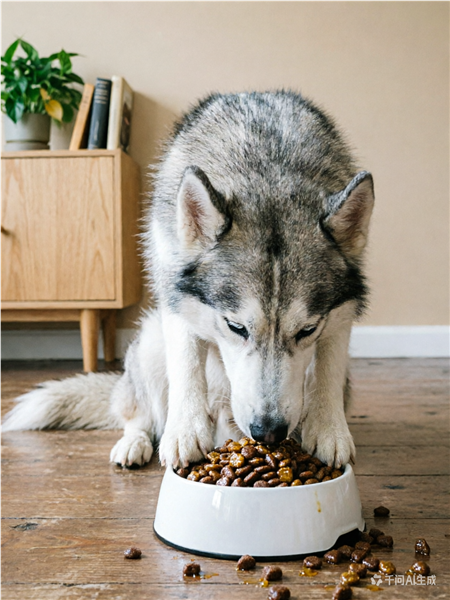
3. Innocent and pitiful drama: pretending not to understand and playing dumb
When you clearly see it taking the slippers into the nest and questioning him, it will look blank and even turn its head to look around, as if to say,"What slippers? I didn't see anything." This kind of "selective deafness" and "pretending to be stupid" are also classic strategies for them to escape punishment or be unwilling to obey.
4. Jealousy competition for favor: pretending to need attention
When the owner is stroking other pets, concentrating on work or playing with his mobile phone, some huskies will suddenly start coughing, sneezing, or use their claws to scratch a non-existent itch, making a loud noise, aiming to attract the owner's attention. Fully attract back to yourself.
2. Is it a "playboy" or a "scheming dog"? Psychological interpretation behind behavior
These behaviors are not unique pranks to the husky, but the result of its high IQ, strong observation and learning ability, and social instincts.
1. Operant conditioning: Trial, error and reinforcement of behavior
This is one of the core theories explaining the husky's acting behavior. American psychologist Skinner proposed that animal behavior is a function of its outcomes. Simply put, if a certain behavior accidentally brings good results (positive reinforcement), the frequency of the behavior occurring in the future will increase.
The chain of acting behavior usually goes like this: Atone point, the dog limps due to real injury or discomfort, and the owner gives extraordinary attention, petting, snacks, and the privilege of being exempt from daily training (which is a strong positive reinforcement). Later, when it didn't want to take a walk home, it accidentally imitated the movement of limping. As a result, its owner also showed concern and satisfied its wish. After a few times, a clear chain of cause and effect formed in the dog's brain: "Limping/pitiful-> Get attention and benefit." As a result, this behavior was consciously retained and "cultivated" into a tool to achieve its goal.
2. Strong observation and learning skills
As a working dog breed (Siberian sled dog), Huskies originally need to collaborate in teams to understand human instructions and intentions. They are very good at observing their owner's emotions, reactions and daily behavioral patterns. They can learn that the owner will be nervous when he sees "injury"; his heart will soften when he hears "crying"; and his anger will be relieved when he faces an "innocent face". Through repeated observation and testing, they accurately mastered the method of touching the owner's "sympathy button" and "guilt button".
3. Social intelligence and emotional manipulation
Research has shown that dogs can understand some of human intentions and even have preliminary "theory of mind" abilities, which means they can infer the mental state of others. The husky's acting behavior can be regarded as a primary, instinct-based "emotional manipulation." They do not have complex plots, but they do know how to trigger human empathy responses by displaying specific emotional signals (imitating pain, sadness), thereby changing human behavior to their advantage. This is an advanced social skill that has evolved in long-term symbiotic relationships.
4. Boredom and seeking excitement
Huskies are extremely energetic and require a lot of mental and physical activity. When they feel bored, they may invent some "games" to entertain themselves, and "acting to deceive people" and observing the owner's reaction is a high-level intellectual game full of variables and fun for them. The owner's surprise, panic, helplessness and other reactions are themselves a reward for them.
5. Alternative behaviors for stress and anxiety
In a few cases, some behaviors that seem to be "acting" may also be a sign of the dog's anxiety or stress. For example, repeatedly licking a non-wound paw (similar to limping) before facing a stressful event (such as going to the vet, taking a bath) may be a stereotyped behavior that diverts anxiety. The owner needs to carefully identify whether it is a "scheming" or a "heart disease".
3. How to deal with the "playboy" husky: A scientific guide to removal
Seeing through a dog's acting skills is only the first step. How to deal with it correctly so as not to hurt feelings and avoid being "manipulated"?
1. Keep calm and don't overreact
When you suspect a dog is acting, the first step is to control your emotions. Don't immediately exclaim, hug or take out snacks. The overly tense response is exactly the positive reinforcement they expect. You can observe calmly, or try to distract it with toys or ordinary instructions. If it is faking, it can easily "play" under interesting interference.
2. Perform a simple physical examination
For suspected limping, you can calmly check its "injured" legs and foot pads, gently press the joints, and observe its true reaction. Real pain can cause muscle tension, avoidance and even growl, while acting dogs usually have no real pain response to your touch, and their eyes may be erratic.
3. Don't reward "acting" behavior
This is the most critical principle. No matter how realistic its performance is, as long as it is confirmed that it is acting, it must never be given what it wants through this behavior (snacks, cancellation of tasks, extra attention). Otherwise, it is equivalent to telling it: "This works, please continue." You can ignore the behavior, or guide it to do the right command (such as "sit down") and reward the right behavior.
4. Meet their real needs
Many acting behaviors are rooted in unmet needs-whether they are insufficient exercise, insufficient mental stimulation, or a desire for company. Make sure you provide adequate exercise (such as long runs, cart training), puzzle games (sniffing pads, leaky toys), and high-quality interactive companionship every day. A husky who is physically and mentally exhausted (in a good sense) prefers to rest quietly rather than plan a "scam".
5. Establish clear and consistent rules
Let dogs understand which behaviors can benefit and which cannot. The whole family must implement uniform standards. For example, it is stipulated that meals can only be eaten by sitting quietly in front of the food basin, rather than by barking or grabbing legs; it is stipulated that you must wear a leash when going out for a walk, and it will not change because you pretend to be pitiful. Clear boundaries can give dogs a sense of security and reduce them to explore the boundaries of rules through exploratory behaviors.
6. Follow the trick and train in reverse
If you have enough training skills, you can even turn a "crisis" into an "opportunity." For example, when it limps, you can say,"Oops, my legs hurt, then we need to have a good rest and can't play with our favorite ball" and take away the toy. Let it realize that this behavior does not bring privileges, but the cancellation of what it likes. After a few times, it may re-evaluate the "value for money" of the strategy. (This method needs to be used with caution to ensure that you can accurately determine whether it is acting rather than real discomfort.)
4. Looking at the unique charm of the husky from "acting"
Although the husky's "fraud" behavior sometimes makes people laugh and cry, it also shows their extraordinary charm:
Performance of high IQ: Beingable to carry out such complex associative learning and situational applications proves that the Husky is by no means a "second", but is smart and flexible.
Deep emotional connection:They go to great lengths to "trick" you precisely because they care so much about your attention and reactions, and you are the center of their social world.
Strong willingness to communicate:They are not satisfied with passive acceptance, but proactively communicate with you in their own way (even if it is a "crooked trick") and try to change the environment.
Understanding the psychology behind husky's "acting" will not only help us raise them more scientifically and avoid being "trapped", but also allow us to appreciate the unique wisdom and emotional expression of this ancient dog breed's relationship with humans from a deeper and more interesting perspective. The next time your husky starts performing as his "Best Actor" again, maybe you can smile with your heart, see through his thoughts, and love this smart and naughty family member even more.
In short, the husky's "deception" is the flower of its intelligence, observation and social skills. As masters, our task is not to kill this wisdom, but to guide this wisdom into more positive and constructive behaviors through scientific guidance and meeting its real needs. In our interactions with this "dog psychologist", we are also constantly learning how to become more attentive, determined and loving owners.