Nothing but appearance? Take stock of the true combat effectiveness of the husky as a working dog
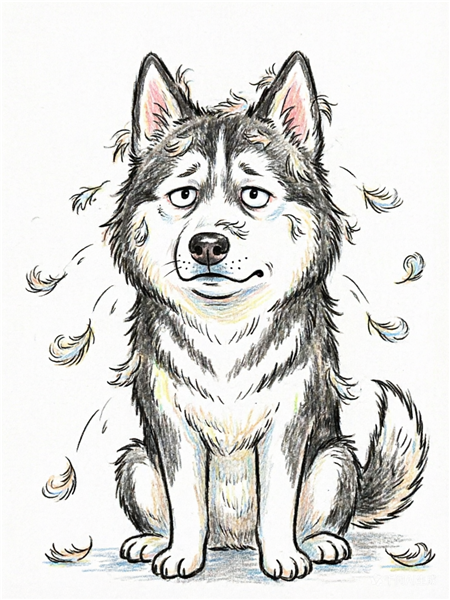
Under the lens of meme culture on the Internet and pet bloggers, huskies (Siberian sled dogs) seem to be labeled as 'director of the demolition office',' IQ basin', and 'king of emojis.' Under their blue or different-colored eyes and handsome wolf-like appearance, there is always a ridiculous behavior of 'delinquent'. As a result, a stereotype gradually formed: Huskies seem to have no strengths other than having a good skin. However, this view is the biggest misunderstanding and injustice of this ancient dog breed. When we lift aside the fog of entertainment and trace its origin, we will find that the husky is a real 'ice and snow warrior' and its 'real combat effectiveness' as a working dog far exceeds ordinary people's imagination.
Chapter 1: Originated in Siberia-Born for extreme cold and running
To understand the combat effectiveness of the Husky, we must start from its origin. The husky's origin is in the extremely cold Siberian region of Northeast Asia, and was cultivated by the local Chukchi people. For the Chukchi people, dogs are not pets, but life-and-death partners. They need a dog that can only: survive in snowstorms of minus 50-60 degrees Celsius; maintain high energy consumption with very little food; travel long distances on the ice sheet day after day with heavy cargo; and have a stable personality that can live in harmony with their families (including children) and provide warmth during the long polar nights.
After hundreds of years of strict breeding, the Chukchi people shaped the embryonic form of the husky-a medium-sized dog. Their small size means they are not easy to sink in deep snow; the double coat (thick bottom coat and smooth outer coat) provides perfect insulation and waterproofing; upright ears reduce heat loss while keenly catching sound; and the malley-shaped tail covers the nose and nose when curled up, warming the inhaled air. Most importantly, they have unparalleled metabolic efficiency, turning limited food into amazing endurance. All of these are top-level configurations that have evolved for 'work'.
Chapter 2: Becoming famous in World War I-1925 Nome Serum Relay
The legend of the husky as a working dog reached its peak in the 1925 Nome Serum Relay in Alaska and became famous around the world. At that time, a diphtheria epidemic broke out in Nome, Alaska, and children's lives were at stake. The closest serum is stored thousands of miles away. Severe snowstorms make all modern means of transportation (planes, boats) impassable. The only hope lies in the dog-sled team.
A relay team of 20 bobsleds and 150 bobsleds dogs traveled day and night in a storm of more than minus 30 degrees and up to 80 miles per hour. Among them, the Huskies, led by Leonhard Seppala, undertook the most dangerous and longest journey. His leading dog, Togo, was 12 years old at the time, but showed amazing wisdom, courage and leadership. He chose the safest route in the dangerous ice and dark snowstorms, and led the team to complete more than 264 miles (about 425 kilometers) feat, buying critical time for the entire relay. In the end, the serum was successfully delivered and the epidemic was controlled.
Although the last leg of the journey was completed by another team, and the honor was given more to Balto, who reached the finish line, Togo's achievements were later recognized as greater. This life-and-death rescue perfectly interprets the Husky's core combat capabilities:survival in extreme environments, unparalleled endurance, strong sense of direction and absolute teamwork spirit . They are not heroes who fight alone, but team members who collaborate closely.

Chapter 3: Analyzing the Husky's 'Combat Attributes'
Putting aside stereotypes, let's take stock of the hard-core strength of the husky as a working dog from a scientific and practical perspective:
1. King of endurance, not sprinter
The husky's physiology is optimized for long-distance, medium-speed sustained exercise. They have strong hearts, efficient blood circulation, and large lungs. Its gait is light and labor-saving, and it can run continuously for hours without showing fatigue. In sled dog racing, it is the norm for a husky team to easily run more than 100 kilometers a day. This endurance ranks among the best in the dog world and is their core combat effectiveness.
2. Excellent cold tolerance and climate adaptability
As mentioned earlier, their coat is a natural top-class 'down outer'. Not only that, the husky's foot mats are thick and can prevent slip and freeze on ice and snow; the bridge of their noses can warm the cold air they inhale; and even their metabolic systems can automatically adjust to times of food shortages. This adaptability to extreme cold is unmatched by most dog breeds.
3. High IQ and independent decision-making ability
'Huskies have low IQ' is the biggest fallacy. In Stanley Collen's dog IQ ranking, the husky ranks around 45th, belonging to 'moderate obedience intelligence'. But this ranking mainly measures 'willingness and speed to obey orders'. Husky's intelligence is reflected in 'work wisdom' and 'survival wisdom'. As sled dogs, they need to always judge whether the ice is safe, whether the route is optimal, and how their teammates are in condition. The leader dog must have strong independent judgment and the ability to solve problems. This independence is misinterpreted in modern families as 'disobeying instructions' and 'having their own ideas', but it is actually a legacy of their working dog talent.
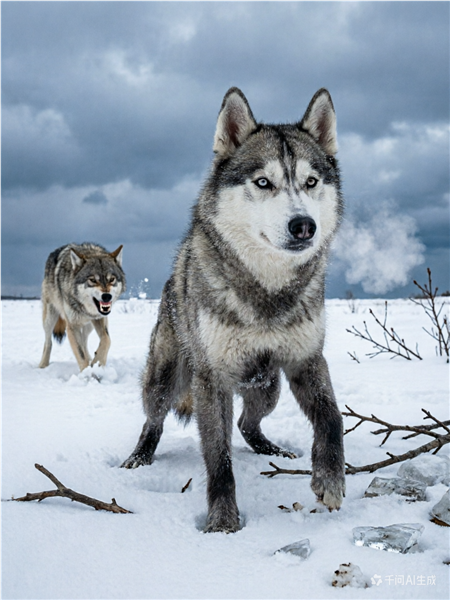
4. Strong teamwork and sociability
Huskies are highly social social animals. In the sled team, they have a strict hierarchical order, communicate with each other through body language and voice, and work together. They rarely launch fatal attacks on their companions, and most of the battles are based on ritual deterrence. This good sociability allows them to work efficiently with other dogs and people, and is the basis for their ability to become part of the family (albeit sometimes overly enthusiastic).
5. Amazing energy metabolic efficiency
The Chukchi people are short of food, so the huskies they breed can do huge amounts of work with relatively few calories. This trait of 'eating less, working more' is a decisive advantage in extreme environments with limited resources.
Chapter 4: Huskies 'work potential in modern society
Although mechanical transportation has replaced most sledding transportation, the husky's working dog potential has not disappeared, but has been demonstrated in new areas:
- Dog pulling sports:Sled dog competitions (such as the Iditarod Race, Yukon Discovery Race) remain the top stage for demonstrating their original abilities. Huskies and their mixed-race descendants are the main force of these events.
- Heavy-weight hiking and cross-country running companions:Many outdoor enthusiasts take trained huskies for long-distance weight-weight hiking or cross-country running, using their endurance to share luggage for themselves and enjoy companionship.
- Search and rescue dogs (specific environments):In avalanche or mountain rescues, some huskies are trained to become special search and rescue dogs due to their excellent cold tolerance, sensitive sense of smell and snow movement ability.
- Treatment dogs:Their friendly, gentle, and fond of getting in touch with people make some huskies excellent treatment dogs and bring comfort to people in hospitals and nursing homes.
Of course, the prerequisite for all this isadequate exercise and correct training. The destructive power of a husky who is locked up in an apartment every day and has nowhere to vent its energy is the distortion and release of its suppressed work energy.
Chapter 5:'Combat Effectiveness' and 'Destructive Power'-The Line Between Them
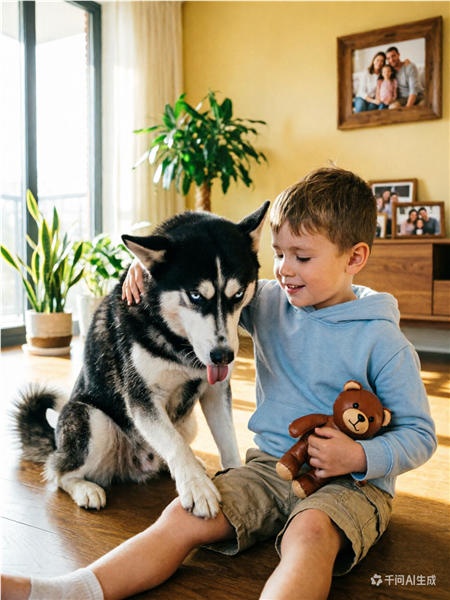
The so-called 'shortcomings' displayed by huskies in modern families are precisely the reverse reflection of their working dog characteristics:
- Excess energy and 'demolishing home':This is the result of his strong endurance not being satisfied. They inherently require hours of high-intensity activity.
- 'Giving up' and poor obedience:This is a reflection of his independent decision-making ability and strong desire to run. They are cultivated to 'think' and 'lead the way' rather than blindly follow.
- Love howling but not barking:This is the communication method of his wolf relatives. On the vast snowfield, howling travels farther than barking and is better able to coordinate the team.
Therefore, treating the Huskies as 'good-for-nothing' is as absurd as complaining that Ferrari can't run fast in the vegetable market. The question is whether we provide a 'track' that suits its talent.
Conclusion: Re-understanding of the ice and snow wise people
Huskies are by no means just for their appearance. They are a masterpiece created by humans to survive in the most harsh environment on earth. They embody endurance, resilience, wisdom and team spirit. Their 'combat effectiveness' lies not in biting and attacking, but in their tenacious vitality to conquer long roads and extreme climates. When we appreciate its handsome appearance, we should understand the rich history and extraordinary abilities behind it. Give them enough space, exercise and meaningful work (or alternative activities), and you will see that this soul under the mask of 'Erha' is a true and respectable polar warrior.
So please don't simply use 'face value' and 'two' to define a husky. What they need is not ridicule, but understanding; not imprisonment, but a stage to release talents. In the right environment, every husky can demonstrate the amazing 'true combat effectiveness' flowing in its blood.