In the cute pet universe of the Internet, Huskies have long occupied a traffic highland with their unique appearance and hilarious "confusing behavior." They are sometimes as handsome as wolves, sometimes with broken expressions, and are jokingly called "Erha". But if you think that all huskies are "funny and responsible" carved out of the same mold, you are wrong. Recently, an Internet celebrity husky named "The Son of Wantiguan" became popular on the Internet with its amazing social skills and "social cow" attributes, making countless netizens exclaim: "So huskies also have e-dogs!" This can't help but lead us to think: Are the Husky's personalities diverse? How to tell whether your husky is an introverted i-dog or an extroverted e-dog?
1."The Son of Wantiguan": An e-dog that redefines the character of a husky
The story of "the son of Wantiguan" begins in Shanghai Xujiahui Sports Park (Wantiguan). This husky is not famous for demolishing homes or howling, but for its infinite enthusiasm for humans, especially strangers. In the video, it actively and amicably approaches every passer-by, asking for touch and interaction, its tail wags like a propeller, and its eyes are full of desire to socialize. It is not afraid of crowds, but rather is like a fish in water in the hustle and bustle, perfectly interpreting the definition of "social terrorist."
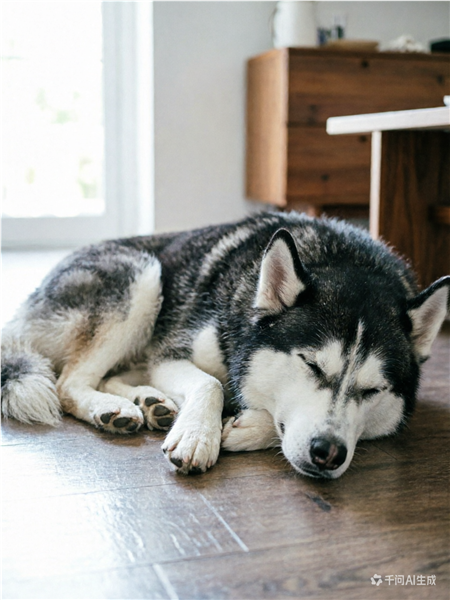
The phenomenon of "the son of Wantiguan" breaks people's stereotypes of huskies. It tells us that not all huskies are crazy running machines that "let go" or "home demolition experts" who are aloof and lonely. Within their groups, there is a significant spectrum of personalities. Some huskies may be like the "sons of Wantiguan", who are energetic and interactive, and may be more sensitive and cautious, and require longer time to adapt to unfamiliar environments and people. They tend to be introverted (i) dogs.
2. The underlying code of the husky's character: history and the shaping of genes
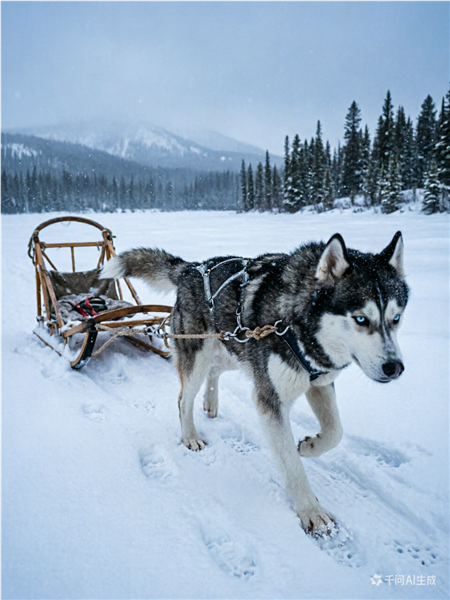
To understand the husky's personality diversity, we must trace its origins. Huskies are Siberian sled dogs. They were bred for a very clear purpose: to pull sled with excellent endurance, speed and teamwork in extremely cold environments. The nature of this work profoundly shapes their core personality traits:
1. High IQ and independent thinking: Pulling a sled is not simply a matter of obeying orders. The lead dog needs to always judge the ice condition, choose a route, and maintain formation. This requires the Huskies to have a high degree of independent judgment and problem-solving ability. Therefore, their IQ is high, but it is not reflected in absolute obedience to their owner's instructions like border collies, but in "having their own ideas." When you call it, it may choose to ignore it because it is thinking about something more important (or more fun). This independence is often misunderstood as "stupidity" or "disobedience".
2. Endless energy and desire for work: They are marathon runners and require a lot of physical exertion. If urban apartment life cannot meet the needs of several hours of high-intensity exercise every day, the excess energy will inevitably turn into destructive behaviors such as demolishing homes, digging holes, and howling. This is not "bad", but driven by instinct.
3. Highly social (to dogs): As team working dogs, they are generally very friendly and less aggressive to other dog companions. This is why many huskies can have fun in dog parks.
4. Innate friendliness to humans: Historically, bobsledding teams were often raised in turns by different families, so huskies were bred to be generally friendly to humans rather than loyal to just one owner. This explains why they are often unwary or even overly enthusiastic about strangers (sometimes "letting go" is not about finding freedom, but about finding new friends).
Based on these commonalities, each husky will develop a unique personality due to differences in inheritance, early experience, and degree of socialization. Just like humans, some are born to be lively, while others like to be quiet.
3. I-dog or e-dog? How to judge your husky's personality type
We can draw on some observation dimensions to roughly judge your husky's position on the "i-e" spectrum:
Extroversion (e-dog) characteristics:
- Social initiators:Like the "son of Wantiguan", they actively seek interaction with people or dogs and show strong interest in strangers.
- Energy release: Whenexcited, the expression method is direct and explicit, such as large tail wagging, jumping, groaning and even howling.
- Environmental enthusiasts:Like a fresh, noisy environment with many people and dogs. When going out for a walk, they are full of exploration and are not easy to be nervous.
- People susceptible to separation anxiety:They may rely more on companionship, and have a higher chance of destruction due to "boredom" and "lack of social interaction" when alone.
Introverted (i-dog) characteristics:
- Socially cautious:Observe and smell strangers or dogs first, approach slowly, and even keep a distance. They may only be enthusiastic about small circles they know.
- Intense energy:When excited or happy, you may just shake your tail gently, your eyes are soft, and you prefer quiet companionship rather than intense play.
- Stable environmental preferences:More sensitive to sudden loud noises and changes in unfamiliar environments, and may take time to adapt to a new place.
- Enjoy being alone:You can entertain yourself more (of course, if you are satisfied with the amount of exercise). When you are alone, you may just sleep or look out of the window, rather than demolishing your home.
It should be noted that many huskies are "mixed" and perform differently in different scenarios. An e-dog that is lawless at home may instantly turn into an i-dog when it arrives at the veterinary clinic.
4. There is no good or bad character, and education needs to be symptomatic: training and ways to get along with different personalities
After recognizing personality differences, parenting strategies also need to be adjusted.
For extraverted (e-dog) huskies:
- Socialization is the top priority: youshould bring it into contact with various people, dogs, and environments in early childhood, teach it correct social etiquette (such as not throwing at people), and guide its enthusiasm in a controllable and polite direction. Otherwise, it may develop into problems such as assault and explosion.
- Provide sufficient social opportunities:Go to dog parks regularly and organize dog parties to meet his social needs. Consider getting a second dog to keep company.
- High energy consumption: Inaddition to running, you can play interactive games such as catching, tug-of-war, and agility training, which consume both physical and mental energy.
- Concentration training: Thee-dog is easy to be distracted and needs to improve its concentration and obedience through training such as "accompanying","waiting", and "paying attention".
For introverted (i-dog) huskies:
- Gentle and gradual socialization:Don't force it into social situations that scare it. Start in a quiet environment, slowly introduce gentle people or dogs, and use snacks and encouragement to establish a positive connection. Excessive stress can cause it to withdraw more or react defensively.
- Create a safe haven:Make it feel safe by setting it up a quiet, uninterrupted resting area (such as a cage or a corner) at home.
- Establish a deep relationship of trust:The dog may be more attached to its owner, and through calm, stable interactions and positive intensive training, establishing a strong bond of trust with it is the key.
- Choose a quiet way to exercise:Long-distance hiking, cross-country running or free running in a quiet, open field may be more suitable for it than a noisy dog park.
5. Beyond "i" and "e": Understand and accept the true nature of the husky
Whether it is i or e, some "deep-rooted" characteristics of the husky need to be understood and accepted by all owners:
Regarding "demolition":This is rarely due to malice, but mainly due to overenergy, anxiety (separation anxiety or boredom anxiety) or desire to explore (puppy stage). The solution is always enough exercise, plenty of mental stimulation (sniffing, educational toys), and the right cage training.
About giving up:They are genetically programmed to run and explore, and recall training is one of the most difficult tasks for huskies. Long-term, repeated training must be conducted in an absolutely safe environment (such as a closed field) with extremely high value rewards. Never expect to 100% recall an instinctive husky in an open environment, so pulling the rope is the lifeline.
About "howling":This is their way of communicating and may express excitement, boredom, calling out to companions, or responding to certain sounds (such as sirens). It can be managed by distracting or ignoring inappropriate howling and rewarding quiet behavior.
The popularity of the "Son of Wantiguan" is like a mirror that reflects the richness of the Husky's character world. It reminds us that every husky is a unique individual, and behind their blue or brown eyes hides a unrestrained or delicate soul. As masters, our task is not to forcibly stuff them into the template of "docile golden retriever" or "loyal moral shepherd", but to understand their character code, respect their nature, and guide them to adapt to human society through scientific methods. rules.
Raising a husky is like embarking on an adventure full of surprises and challenges. Whether you meet the same type as the son of "Sheniu", or a "philosopher" who likes to observe the world quietly, understanding, patience and a lot of exercise and companionship are the only secret to harmonious coexistence with this "Siberian soul singer". After understanding all this, if you are still conquered by their charm, then congratulations, you will have a unique wonderful life intertwined with laughter and tears.