Why Does the Arowana Always Hide in the Corner? Interpreting Its Psychological State
Among ornamental fish, the Arowana is deeply loved by fish enthusiasts for its majestic posture, shimmering scales, and kingly demeanor. However, many keepers have encountered a puzzling and worrying situation: their valuable Arowana, which should be swimming and displaying, instead spends long periods huddled in a corner or at the bottom of the tank, appearing listless and even refusing food. This behavior not only affects its ornamental value but is more likely a health alarm from your beloved fish. So, why does this "golden dragon" of the water choose to hide? What is happening in its inner world? This article will act as an observer of fish behavior and psychology, providing an in-depth interpretation of the secrets behind an Arowana hiding in the corner and offering practical solutions.
1. Stress and Fear: Instinctive Defense in a New Environment
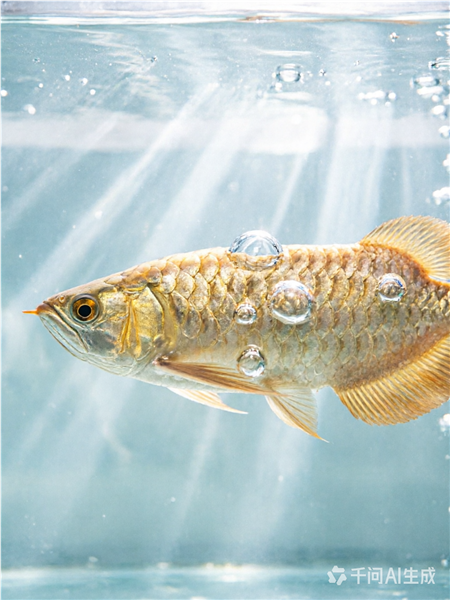
The Arowana is a highly territorial and sensitive fish. When introduced to a brand new aquarium environment, the vast space, unfamiliar water flow, different lighting, and potential "existing residents" can cause a strong stress response. Hiding in a corner is its most instinctive defense strategy under this high-pressure state. A corner provides physical barriers on two or three sides, making it feel safer, as if it has a "backing," reducing the directions it needs to guard against. This state usually occurs within 1-2 weeks after introducing a new fish and is part of the normal adaptation process. At this time, what the keeper needs to do is not to disturb it frequently or try to lure it out, but to keep the environment quiet, the lighting soft, minimize sudden movements in front of the tank, and give it ample time and space to build a sense of security.
2. Water Parameter Fluctuations: The Invisible Killer
Water quality is the fundamental basis for the survival of aquatic life. Arowanas are exceptionally sensitive to changes in water parameters, especially sharp fluctuations in key indicators like pH, ammonia, and nitrite. When water quality deteriorates or changes significantly, the fish experiences extreme discomfort, similar to humans living in severely polluted or oxygen-thin air. This physiological distress directly manifests as abnormal behavior: decreased activity, loss of appetite, and seeking relatively "quiet" corners to hide. Therefore, when you find your Arowana hiding for extended periods, the first task is to immediately test the water. Ensure the water temperature is stable at 28-30°C, the pH is maintained in the slightly acidic to neutral soft water range of 6.5-7.5, and ammonia and nitrite levels must be zero. Regular, quantitative water changes (e.g., 1/4 weekly) and using an efficient filtration system are essential for maintaining stable water quality.
3. Strong Light Fright: A Star Chased by "Spotlights"
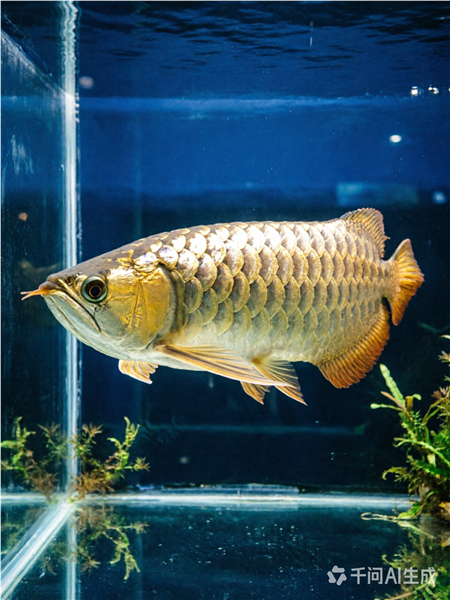
Many fish keepers use strong lighting, especially overhead metal halide lamps, to highlight the golden color of their Arowana. However, lighting that is too strong, turned on suddenly, or at an improper angle is no less than a direct "spotlight" to the Arowana, causing severe fright. In nature, sudden changes in light often signal danger (like the shadow of a predator). If the tank is placed where strong natural or indoor light shines directly from the side or front, it can also make the fish feel uneasy, leading it to seek darker corners to hide. It is recommended to use gentle, gradual lighting, controlled by a timer to simulate a natural sunrise and sunset. Provide an area in the tank with varying light intensity, such as planting some large aquatic plants or placing driftwood on one side to create a shaded area, allowing the Arowana to freely choose a comfortable lighting environment.
4. Territory Invasion: The Lonely King's Domain Crisis
The Arowana is inherently a solitary king with a strong sense of territory. Keeping it with other fish, especially those of similar size, equally aggressive, or overly fast-swimming (like some large cichlids, tiger fish, etc.), can cause continuous competitive pressure and a sense of threat. It may feel frustrated and tense if it cannot drive away the "intruder," leading it to retreat to a corner—a passive defensive and avoidant posture. Additionally, constant external disturbances, such as children frequently tapping the glass, cats or dogs pacing in front of the tank, or a flickering TV screen, can also be perceived by the fish as signals of territory invasion. Review your cohabitation strategy, ensure tank mates are docile and occupy different water levels (like bottom-dwelling plecos), and provide the Arowana with sufficiently spacious quarters (a tank at least 1.5 meters long is recommended for a single Arowana) as key to alleviating its territorial anxiety.
5. Illness Distress: The Silent Expression of Physical Discomfort
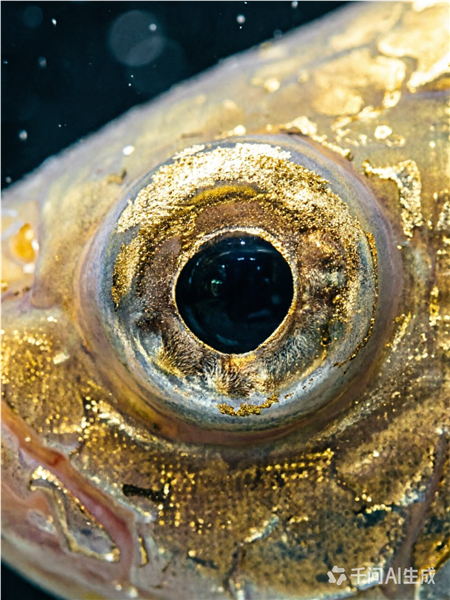
When an Arowana suffers from certain illnesses, hiding and isolation are common symptoms. This differs from psychological fear; it is an instinct driven by physical weakness and the need for rest. Observe carefully if it shows accompanying symptoms: white spots, fungus, ulcers, or abnormal mucus on the body; rapid breathing (fast gill movement); unbalanced or tilted swimming; cloudy or sunken eyes; abnormal feces, etc. Common issues like internal parasites, bacterial infections, or enteritis can cause physical discomfort, leaving the fish too weak to swim and forcing it to hide in a corner to conserve energy. If illness is suspected, immediately isolate it for observation, consult a professional veterinarian or experienced aquarist, and administer targeted treatment. Avoid using medication blindly.
6. Monotonous Environment and Lack of Security: "Psychological Depression" in a Luxurious Prison
A bare, transparent aquarium might be aesthetically pleasing and clear to humans, but to an Arowana, it can feel like a "luxurious prison" lacking cover and exploration interest. Long-term exposure to such an environment can lead to boredom and insecurity, potentially causing "depression," manifested as hiding in one corner and reduced activity. Appropriate environmental enrichment is crucial. You can apply a dark (black or blue) background paper to the back of the tank to reduce external reflections. Safely add some large pebbles, driftwood, or artificial plants inside the tank (avoiding injury to the fish's scales) to create visual barriers and exploration paths. These setups not only beautify the environment but also provide the Arowana with spaces to hide, explore, and establish territory, effectively stimulating its natural behaviors and improving its psychological well-being.
Comprehensive Solutions: Helping Your Arowana Regain Confidence
Understanding the psychological state is key, but action is crucial. Faced with a hiding Arowana, you can employ a combination of strategies:
- Prioritize Checking Water Quality and Illness: Immediately conduct water tests and carefully observe the fish for any signs of disease. This is the foundation for solving all problems.
- Optimize Environmental Setup: Check lighting intensity and cycle, add background and environmental enrichment items to create a complex environment with both bright and dark, open and hidden areas.
- Review Cohabitation and External Disturbances: Assess the suitability of tank mates and minimize sudden noises and vibrations around the tank.
- Establish Trust Through Feeding Interaction: At a fixed time, use long tweezers to offer its favorite food (like peeled shrimp, crickets) and patiently lure it slowly in front of it. Don't give up feeding or just toss food in because it's hiding. This process helps build conditioned reflexes and trust.
- Maintain Patience and Observation: Behavioral changes don't happen overnight, and recovery takes time. Avoid being impatient and frequently rearranging the tank. Spend some quiet time observing daily and note any behavioral changes.
An Arowana hiding in the corner is a signal that requires our careful interpretation. It might be expressing unease about its new home, dissatisfaction with water quality, protest against strong light, fear of companions, or the groan of physical pain. As keepers, we are not just caretakers providing food and cleaning; we should also be confidants who understand its silent language. By scientifically adjusting the environment, patiently building interaction, and attentively observing and caring, we can completely help this "aquatic king" overcome its psychological barriers, allowing it to once again swim confidently and gracefully in its domain, radiating its most dazzling golden light. Remember, the beauty displayed by a healthy and happy Arowana is not just the number on a price tag; it is a splendid tapestry woven from the vitality of life and the keeper's love and care.