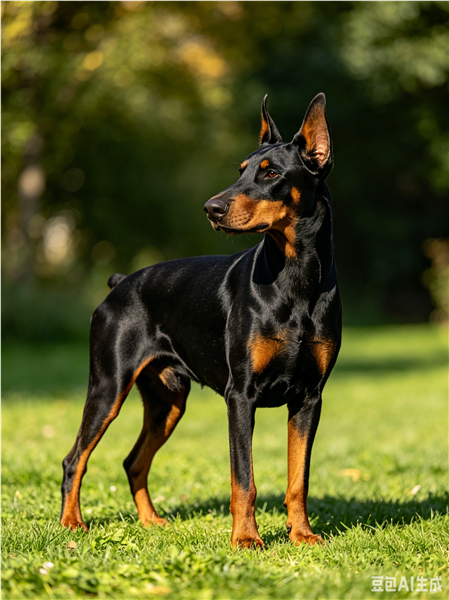
The Doberman Pinscher, renowned for its sharp intelligence and unwavering loyalty, stands as a prime subject for analyzing the obedience behavior of high-IQ canines. This breed, often ranking among the top five most intelligent dog breeds, possesses a unique combination of cognitive abilities, drive, and sensitivity that makes their training outcomes particularly noteworthy. The analysis of a Doberman's response to instructions provides a fascinating window into how advanced canine intelligence processes, retains, and executes commands, offering valuable insights for trainers, behaviorists, and dog enthusiasts alike.
At the core of understanding Doberman obedience lies the recognition of their working dog heritage. Bred originally for protection and guard duties, Dobermans were selected for traits like alertness, trainability, and courage. This genetic predisposition creates a foundation where obedience is not merely about following commands but understanding context and intent. When a Doberman obeys an instruction, it often demonstrates comprehension beyond simple stimulus-response mechanisms. Research indicates that intelligent breeds like Dobermans can understand up to 250 words and gestures, with some exceptional individuals comprehending even more. This linguistic capacity, combined with their problem-solving skills, means their obedience behavior reflects genuine understanding rather than rote memorization.

The training results observed in Dobermans consistently highlight several key behavioral patterns. First is their remarkable speed of acquisition. Compared to many other breeds, Dobermans typically require fewer repetitions to learn new commands. A basic "sit" or "stay" command might be reliably learned in just 5-15 repetitions with proper positive reinforcement techniques, whereas average breeds might need 25-40 repetitions. This accelerated learning curve directly correlates with their intelligence metrics as measured by canine cognition researchers. Second is their exceptional retention. Dobermans don't just learn quickly; they remember commands for extended periods, often demonstrating perfect recall of training exercises months after initial learning with minimal reinforcement. This long-term retention is a hallmark of breeds with superior cognitive abilities.
Contextual adaptability represents another fascinating aspect of Doberman obedience behavior. Unlike some breeds that struggle to generalize commands across different environments, highly intelligent Dobermans often demonstrate understanding that a command given in the living room applies equally in the park, during a walk, or in unfamiliar territory. This ability to transfer learning across contexts indicates advanced cognitive processing. Trainers report that Dobermans frequently exhibit what appears to be "inference" - if they know "sit" and "down," they may more quickly understand related commands like "settle" or "place" without explicit training for each variation. This cognitive efficiency significantly enhances training outcomes and practical utility.
The emotional intelligence component of Doberman obedience cannot be overstated. These dogs are remarkably attuned to human emotional states and often modify their responses based on subtle cues from their handlers. During obedience exercises, a Doberman might respond differently to the same command depending on the handler's tone, body language, or even stress levels. This sensitivity, while sometimes challenging for novice owners, ultimately allows for a deeper level of communication and cooperation when properly channeled. Training results improve dramatically when handlers learn to maintain consistent emotional states, as Dobermans excel at reading and responding to these non-verbal signals alongside verbal commands.
Problem-solving behavior during obedience training reveals much about the Doberman's cognitive processes. When presented with a complex command sequence or a novel training challenge, these dogs often pause visibly, appearing to "think through" the problem before responding. This contemplative pause differs markedly from the immediate but sometimes incorrect responses of less analytical breeds. Neuroimaging studies suggest that intelligent breeds like Dobermans activate different brain regions during such tasks, showing patterns similar to executive function in humans. This problem-solving capacity means that obedience training with Dobermans often evolves into true partnership, where the dog may anticipate commands or offer behaviors based on situational assessment.

The role of motivation in Doberman obedience presents both opportunities and challenges for achieving optimal training results. Unlike some breeds primarily motivated by food, Dobermans typically exhibit a more complex motivational profile including play drive, social engagement, and task satisfaction. Successful trainers leverage this multifaceted motivation by varying reinforcement strategies. One session might emphasize food rewards for precision work, while another utilizes toy rewards for energetic exercises, and yet another focuses on verbal praise and physical affection for sustained attention work. This varied approach keeps the highly intelligent Doberman engaged and prevents the boredom that can undermine training in smart breeds.

Social learning capabilities significantly influence Doberman obedience outcomes. These observant dogs frequently learn by watching other dogs or humans, a phenomenon documented in canine cognition research. In multi-dog households, Dobermans often learn commands more quickly after observing other dogs being trained. Some even learn complex behaviors without direct training simply through observation. This social learning extends to reading human behavior - a Doberman might learn to respond to subtle gestures or routines that were never formally taught as commands. This capacity for observational learning accelerates training progress but requires careful management to prevent learning undesirable behaviors from canine or human models.

The precision of response in trained Dobermans reflects their cognitive advantages. When thoroughly trained, these dogs don't just perform commands; they execute them with remarkable attention to detail. A "heel" command results in perfect alignment and attention, a "stay" produces rock-solid immobility even with distractions, and retrieval commands are carried out with efficiency and care. This precision stems from their ability to understand not just the command itself but the implied standards of performance. It's this quality that makes Dobermans excel in advanced obedience competitions, protection sports, and service dog work where exacting standards are required.
Long-term training results with Dobermans demonstrate the importance of ongoing mental engagement. While basic obedience might be established in adolescence, the most impressive behaviors emerge through continued training over years. Mature Dobermans who receive consistent advanced training often develop what trainers describe as "conceptual understanding" - they grasp categories of behavior, understand sequences, and make appropriate choices in novel situations. This developmental trajectory suggests that the obedience behavior of high-IQ dogs isn't static but evolves with continued cognitive challenge. Owners who engage in regular training sessions throughout their Doberman's life report increasingly sophisticated responsiveness and initiative-taking that goes beyond simple command compliance.
Comparative analysis with other intelligent breeds provides context for understanding Doberman-specific obedience patterns. While Border Collies might excel in precision and speed of response, and German Shepherds in consistency under pressure, Dobermans often demonstrate superior balance across multiple obedience domains. They combine the Border Collie's quick learning with the German Shepherd's steadiness, adding their own distinctive sensitivity and protective awareness. This balanced intelligence profile makes them particularly versatile in obedience applications, capable of excelling in everything from competitive obedience to personal protection to therapeutic assistance work with appropriate training.
The neurobiological underpinnings of Doberman obedience behavior offer scientific insights into their training results. MRI studies of canine brains reveal that intelligent breeds like Dobermans have more developed prefrontal cortex regions associated with decision-making and impulse control. Additionally, their neurotransmitter profiles, particularly dopamine and serotonin systems, support sustained attention and reward processing crucial for advanced obedience training. These biological advantages translate directly to observable behaviors: faster learning, better retention, superior impulse control, and enhanced problem-solving during training exercises. Understanding these biological foundations helps trainers develop more effective, breed-appropriate training methodologies.
Environmental factors significantly moderate the expression of Doberman intelligence in obedience contexts. Proper socialization during critical developmental periods (8-16 weeks) establishes the foundation for later training success. Enriched environments with varied stimuli promote cognitive development that enhances trainability. Conversely, impoverished environments or inconsistent training can lead to the development of undesirable behaviors despite high innate intelligence. The best training results emerge when genetic potential meets optimal environmental conditions - regular training sessions, clear communication, positive reinforcement, and appropriate mental and physical challenges tailored to the individual dog's needs and abilities.
Training methodology profoundly impacts what obedience behaviors a Doberman develops and how reliably they perform them. Force-free, positive reinforcement methods typically yield the best long-term results with this sensitive, intelligent breed. Harsh corrections often create anxiety or resistance that undermines the willing cooperation that characterizes optimal Doberman obedience. Instead, methods that engage their problem-solving abilities while building trust produce dogs that obey not from fear but from understanding and partnership. The most successful Doberman trainers emphasize clarity, consistency, and positive motivation, creating training scenarios that challenge the dog's mind while strengthening the human-canine bond.
The practical applications of Doberman obedience training extend far beyond basic manners. Their intelligence and trainability make them exceptional candidates for advanced working roles. Service Dobermans assist individuals with disabilities, performing complex tasks with minimal guidance. Search and rescue Dobermans navigate disaster scenes, following commands while making independent assessments in dynamic environments. Medical detection Dobermans identify subtle scent changes associated with medical conditions, responding to training with remarkable precision. In each application, their obedience behavior reflects not just trained responses but adaptive intelligence applied to real-world challenges. This versatility demonstrates how obedience training with high-IQ dogs can develop into genuine working partnerships.
Common challenges in Doberman obedience training often stem from the very intelligence that makes them exceptional. Their problem-solving abilities can lead to creative disobedience when commands don't align with their assessment of a situation. Their sensitivity requires exceptionally clear and consistent communication from handlers. Their high energy demands sufficient physical and mental exercise to maintain focus during training. Their protective instincts must be properly channeled to prevent over-vigilance from interfering with obedience in public settings. Successful trainers anticipate these challenges, developing strategies that work with rather than against the Doberman's natural tendencies, transforming potential obstacles into training advantages.
The future of Doberman obedience training looks toward increasingly sophisticated methods that leverage their cognitive strengths. Technology-assisted training using precise timing devices, interactive training tools, and even virtual reality simulations shows promise for engaging their advanced capabilities. Genetic research may eventually identify specific markers associated with different aspects of trainability, allowing for more individualized training approaches. Meanwhile, growing understanding of canine emotions and cognition continues to refine training methodologies that respect the Doberman's intelligence while achieving reliable obedience. As our knowledge expands, so too will our ability to develop the remarkable potential of these intelligent dogs through training that challenges their minds and honors their nature.
In conclusion, the analysis of Doberman obedience behavior provides compelling evidence of how high canine intelligence manifests in training results. Their quick learning, excellent retention, contextual understanding, problem-solving abilities, and precision of response collectively demonstrate cognitive advantages that, when properly nurtured through appropriate training methods, produce exceptional canine partners. The obedience of a well-trained Doberman represents not mere compliance but engaged cooperation based on understanding, a quality that distinguishes highly intelligent breeds. For owners and trainers willing to invest the time and understanding these dogs require, the rewards include not just obedience but a deep, communicative partnership with one of canine's brightest minds.