The Doberman Pinscher, a breed synonymous with loyalty, intelligence, and formidable presence, exhibits a range of behaviors deeply rooted in its genetics and shaped by its relationship with its owner. Among the most compelling is what can be termed "proactive posting behavior"—a vigilant, anticipatory stance where the dog positions itself to monitor and assess its environment, often before a direct command is given. This behavior is intrinsically linked to another cornerstone of the Doberman temperament: an almost absolute trust in its owner's judgment and performance. This article delves into the intricate analysis of these two interconnected traits, exploring their origins, manifestations, and the profound bond they signify.
Proactive posting is not mere random alertness; it is a calculated behavior. Observant owners will note their Doberman consistently choosing strategic vantage points—near doorways, at the top of a staircase, or between the owner and a perceived approach vector. This positioning is rarely passive. The dog's body is tense yet controlled, ears pricked, eyes scanning. It is a state of readiness. This instinct stems from the breed's original purpose as a personal protection and guard dog. Karl Friedrich Louis Dobermann aimed to create a fearless, obedient companion capable of preempting threats. Centuries of selective breeding have hardwired this anticipatory vigilance into the Doberman's psyche. It is a behavior that says, "I am here, I am assessing, and I am ready to act on behalf of my pack."
The critical element that elevates this behavior from simple instinct to sophisticated partnership is the Doberman's profound trust in its owner. This trust is not blind submission; it is an earned, deep-seated confidence in the owner's leadership, decision-making, and capability. A Doberman with 100% trust believes that its owner's actions are correct, that commands are to be followed without hesitation, and that the owner will handle situations effectively. This trust transforms the dog from an independent actor into a seamless extension of the owner's will. In a security context, the dog trusts that the owner's assessment of a person or situation is accurate. It waits for the cue, the subtle shift in the owner's posture or tone, before escalating its response. This prevents unnecessary aggression and ensures the dog's actions are appropriate and proportional.
Building this level of trust is a multifaceted process that begins in puppyhood. Consistent, fair, and positive-reinforcement-based training is paramount. Dobermans are highly intelligent and sensitive; they respond poorly to harshness or inconsistency, which can breed anxiety and undermine trust. Instead, clear communication, predictable routines, and the consistent meeting of the dog's needs (for exercise, mental stimulation, affection, and security) build a foundation of reliability. The owner becomes a predictable and safe constant in the dog's world. Engaging in activities that foster teamwork—such as advanced obedience, Schutzhund/IPO (in a responsible, ethical manner), agility, or even long, structured walks—further cement this bond. The dog learns that cooperating with the owner leads to success, praise, and reinforcement.
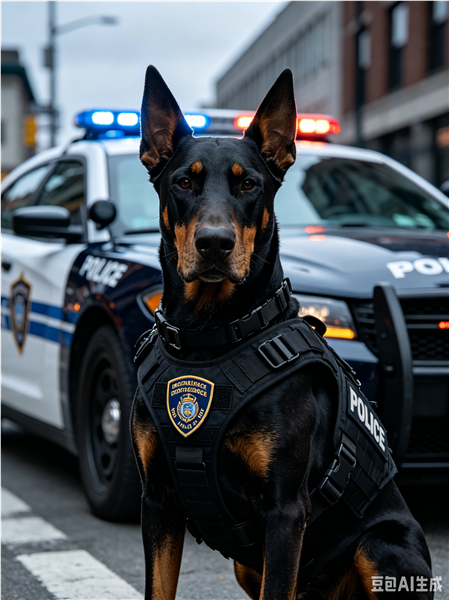
The owner's performance is under constant, subtle evaluation by the Doberman. This performance encompasses everything from emotional stability and confidence to physical competence and decision-making in stressful situations. A Doberman can detect uncertainty, fear, or hesitation in an owner. An owner who projects calm assurance, even in novel or potentially threatening scenarios, reinforces the dog's trust. Conversely, an owner who is nervous or erratic can trigger the dog to take matters into its own paws, potentially leading to undesirable behaviors. Therefore, the 100% trust is a two-way street: the dog trusts the owner to lead, and the owner must trust themselves and their training to provide that confident leadership.
This dynamic duo of proactive posting and absolute trust creates a remarkably effective team. In a home environment, it means a dog that is both a vigilant guardian and a relaxed family member, able to discern between normal daily chaos and genuine threat because it trusts the family's cues. In more specialized roles, it creates a working dog that is controllable, focused, and capable of immense restraint until the precise moment its skills are required. The Doberman's willingness to hold its position, to watch and wait based on its trust in the owner's forthcoming command, is what separates a well-trained protection dog from a dangerously reactive animal.
It is crucial to distinguish this trusted vigilance from anxiety-based behaviors. A Doberman lacking trust or clear leadership may exhibit similar posting behaviors but underpinned by stress, pacing, whining, or hyper-vigilance that is difficult to interrupt. The trusted Doberman is calm in its vigilance. It can be called off from its post with a single word or gesture, because its primary drive is to comply with the owner, not to act on its own escalating anxieties. This off-switch is the hallmark of a secure bond and complete trust.
In conclusion, the analysis of the Doberman Pinscher's proactive posting behavior and its 100% trust in the owner's performance reveals the pinnacle of the human-canine partnership. These traits are not accidental but the result of the breed's purposeful history and the dedicated efforts of a responsible owner. The proactive post is the Doberman's physical manifestation of its dedicated role, while its unwavering trust is the psychological glue that binds it to its human leader. This combination yields a companion of unparalleled loyalty, capability, and reliability—a true testament to the potential locked within this magnificent breed when nurtured with understanding, respect, and consistent, loving leadership. For an owner willing to invest the time and emotional energy, the reward is a bond defined by mutual respect and an unspoken, powerful understanding that operates seamlessly in both peace and potential peril.
Understanding this psychology also guides potential owners. A Doberman is not a pet for the passive or uncertain. It demands an owner who will actively perform the role of a confident, benevolent leader. Without that performance to trust in, the Doberman's powerful instincts can become directionless and problematic. But with it, the dog's natural tendencies are channeled into a harmonious and profoundly protective relationship. The Doberman does not just guard a home; it guards a relationship, a pact of trust forged through daily interactions, clear communication, and shared respect. This analysis ultimately shows that the Doberman's famed reliability is not a default setting, but a masterpiece of co-creation between a genetically gifted animal and a committed human being.